Still Not Seeing the Right Commercial Lighting Solution? Talk to Our Project Team.
If you have reviewed the website or already discussed options with sales but still need a clearer direction, send your request here. Our team will review your application, target specifications, and project constraints, then reply with a practical next step: what fits, what needs confirmation, and the fastest route to a quote and spec-ready files for your project.
Direct review of your application, specs, and project constraints for a clearer quote path.
Product matching across beam angle, CCT / CRI, drivers, dimming, and controls options.
Project documentation support, including cut sheets, wiring notes, and IES / LDT files where available.
OEM / ODM guidance for labels, packaging, housing finish, and private-brand requirements.
Get a Fast Quote for Commercial LED Lighting
Built for designers, architects, contractors, wholesalers, and project buyers. Share your application, quantity, and target specifications to get factory-direct pricing, lead-time guidance, and spec-ready support for US and EU projects.
Round vs Square Commercial Ceiling Lights: Which One Fits Better
Table of Contents
The Shape Debate Is Usually a Cover Story
Most buyers ask the wrong question.
Round or square?
Fine. Ask it. But I’ll say the quiet part first: fixture shape is rarely the root problem in a commercial lighting project, and when a project fails, it usually fails because the buyer ignored beam angle, glare, ceiling module, lumen package, driver quality, maintenance access, CRI, CCT, SDCM, and whether the fixture actually belongs in that room.
The shape matters. It just does not matter alone.
I’ve seen project teams obsess over round commercial ceiling lights because they “look softer,” then install them in a rigid 600 × 600 mm office grid where every circle looks like a coin dropped in the wrong place. I’ve also seen square commercial ceiling lights forced into hotel corridors where the ceiling becomes a row of cold little stamps. Both mistakes are expensive. Both were predictable.
So what fits better?
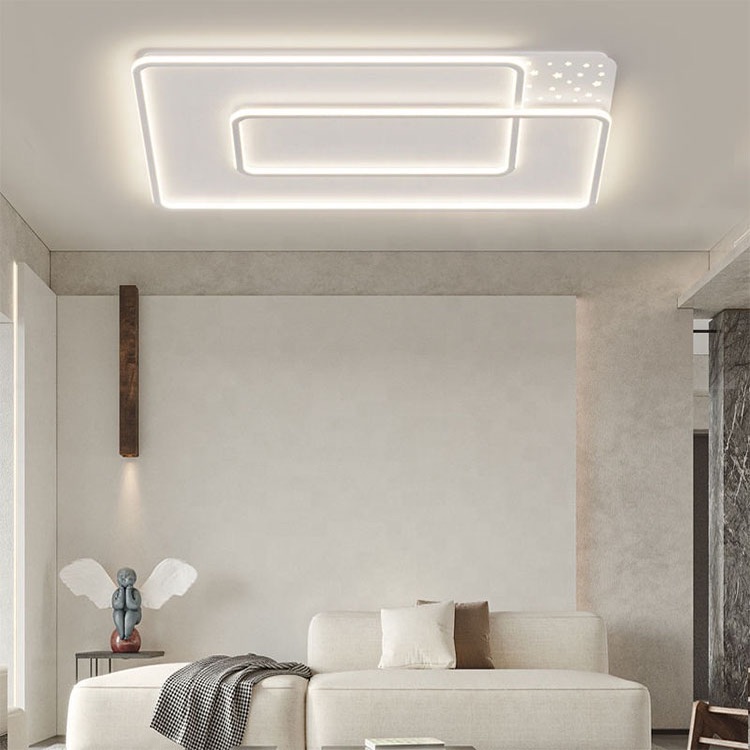
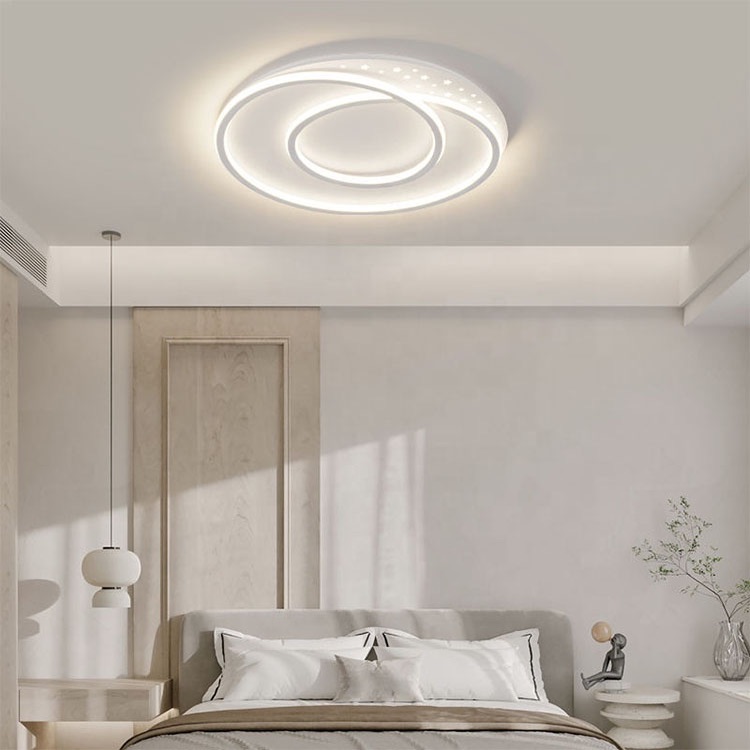
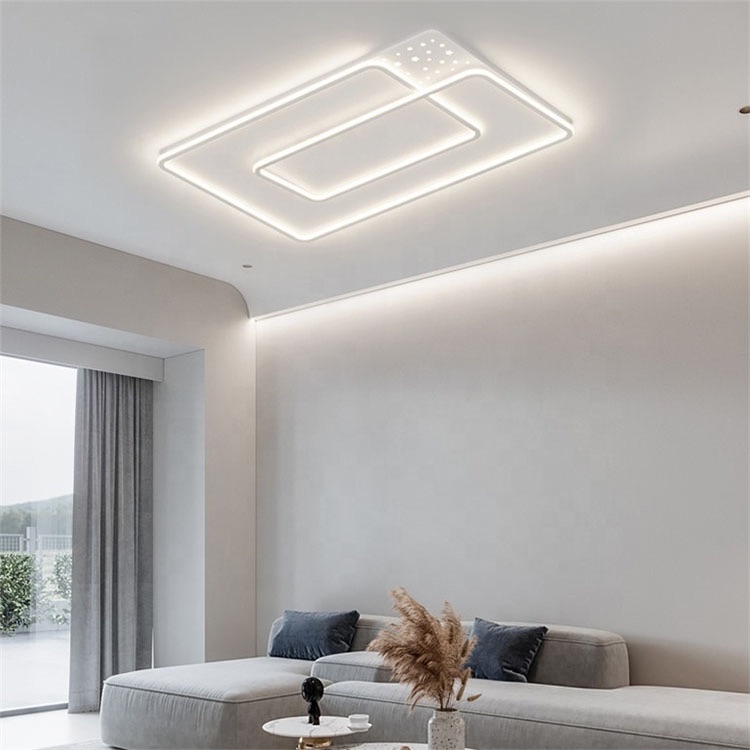
The honest answer: round commercial ceiling lights usually fit better in hospitality, lounges, corridors, lobbies, and interiors with curved furniture, soft finishes, or mixed ceiling conditions. Square commercial ceiling lights usually fit better in offices, retail rows, modular ceilings, and commercial spaces where alignment, repetition, and architectural discipline matter more than decorative softness.
That sounds simple. It is not.
The Data Nobody Wants to Discuss Before Choosing Commercial Ceiling Lights
Lighting is not wall art. It is infrastructure.
The U.S. Department of Energy LED Adoption Report estimated that LED adoption delivered 1.3 quadrillion Btu of annual U.S. energy savings in 2018, equal to $14.7 billion in consumer cost savings and about 5% of total building electricity use that year. The same report said the theoretical potential of efficient, connected LED products could exceed 5 quads, roughly four times the savings already achieved.
But here is the hard truth: energy savings do not rescue a bad ceiling.
A cheap 20W fixture with poor optics can technically save electricity and still make a lobby feel like a clinic, an office feel harsh, or a retail display look flat. That is why the shape debate must sit under a bigger question: how to choose commercial ceiling lights for the job people actually need the room to do.
The Lawrence Berkeley National Laboratory review on lighting controls in commercial buildings analyzed 240 savings estimates from 88 papers and case studies, with average lighting energy savings potential of 24% for occupancy controls, 28% for daylighting, 31% for personal tuning, 36% for institutional tuning, and 38% for multiple control approaches. Shape did not create those savings. Controls did. Layout did. Commissioning did.
And then there is compliance pressure. OSHA’s construction illumination rule states that construction areas, ramps, corridors, offices, shops, and storage areas must meet minimum illumination intensities while work is in progress, with Table D-3 listing foot-candle values by area type. The point is not that every finished office follows that table forever; the point is that lighting levels are measurable, inspectable, and tied to real safety expectations.
Shape is visible. Performance is auditable.
That is the industry’s uncomfortable split.
Round Commercial Ceiling Lights: Where They Actually Win
Round commercial ceiling lights work best when the ceiling should feel less rigid, less corporate, and less grid-dominated.
I like round fixtures in lobbies, hotel corridors, reception zones, cafés, wellness interiors, boutique retail, and transition areas. They sit naturally inside softer design languages. They also work well as recessed commercial ceiling lights where the downlight is meant to disappear into the ceiling rather than announce itself.
If I were specifying a lobby, I would start by reviewing a practical product class like Meagree’s LED ceiling lighting category, then narrow toward anti-glare optics, beam angle, CCT, CRI, and housing depth. The shape would come after that.
Round does three things well.
It reduces visual aggression. A circular aperture feels less severe than a square cutout, especially at 2700K, 3000K, or 3500K. In hotel and hospitality projects, that matters.
It hides small alignment sins. In renovation projects with imperfect ceiling conditions, round fixtures can forgive slight asymmetry better than square ones. Not always. Often.
It supports layered lighting. A round downlight can sit beside wall washers, track heads, linear coves, pendant fixtures, and decorative lighting without fighting every other geometry in the room.
But round is not magic.
Put too many round fixtures in a hard grid ceiling and they start looking cheap. Use shallow optics and high output, and the glare will punish people sitting underneath. Choose CRI 80 when the lobby needs CRI 90, R9 strength, or tight SDCM control, and the space will look technically lit but emotionally dead.
Square Commercial Ceiling Lights: The Grid Has a Reason
Square commercial ceiling lights belong where the building already speaks in lines.
Offices. Retail aisles. Classrooms. Clinics. Corridors with rectangular ceiling modules. Supermarkets. Back-of-house zones. Meeting rooms. Grid ceilings. Drywall ceilings with linear HVAC diffusers and rectangular acoustic panels.
In these spaces, square fixtures often look more intentional than round ones because they align with the architectural order already overhead. That is why LED panel lights for offices are so common. The ceiling grid is rectangular, the desks are rectangular, the HVAC diffusers are rectangular, the acoustic panels are rectangular, and the lighting follows the same logic.
Should every office use square fixtures?
No. That is lazy thinking.
But if the room is built around repeated rectangles, square commercial ceiling lights can make the ceiling feel organized instead of decorated. In open offices, square panels and square downlights can also simplify spacing, maintenance, and replacement because contractors can read the pattern quickly.
The danger is visual boredom.
Square fixtures can make a commercial interior feel institutional fast, especially when they are overused at 4000K or 5000K with flat diffusion and no accent layer. I would rather see a disciplined mix: square or rectangular ambient lighting for work planes, then selective round downlights, track heads, or wall washers for reception, signage, vertical surfaces, and brand moments.
This is where Meagree’s broader commercial LED lighting range is useful because the decision should not be trapped inside one fixture family. Ceiling lights, downlights, linear systems, spotlights, and track lighting all solve different problems.
Round vs Square Commercial Ceiling Lights: The Buyer’s Table
Decision Factor
Round Commercial Ceiling Lights
Square Commercial Ceiling Lights
My Blunt Take
Best-fit spaces
Lobbies, hotel corridors, lounges, cafés, reception areas, boutique retail
The Real Specification Stack: Stop Buying by Shape Alone
Here is the part some suppliers hate.
Commercial LED ceiling lights should not be approved from a catalog image. They should be approved from a specification stack.
Start with the room. Then the task. Then the ceiling. Then the optics. Then the controls. Then the shape.
For offices, I want to know desk layout, screen density, ceiling height, reflectance, daylight exposure, HVAC diffuser locations, and whether staff complain about glare. For retail, I care about shelf height, product color, vertical illuminance, CRI, R9, beam spread, track flexibility, and whether the lighting makes merchandise look more expensive than it is. For hospitality, I care about skin tone, shadows, warmth, dimming behavior, and whether the guest looks tired under the light.
The best ceiling lights for commercial spaces are not always the brightest ones. Often, they are the ones nobody complains about six months after opening.
If you need a technical framework, Meagree’s guide to 10 key parameters in commercial lighting design is the right kind of page to pair with this decision because it moves the conversation beyond shape into illuminance, uniformity, glare, beam angle, CCT, CRI, controls, reliability, and documentation.
The 2025 NREL ComStock measure documentation modeled an LED Lighting + HP-RTU Standard Performance + ASHP Boiler package and reported 17.8% total site energy savings for the U.S. commercial building stock, with electric interior lighting savings shown as 35.6% across all buildings and 37.9% across applicable buildings. That is the scale of money hidden inside better specifications.
But again: energy math is not permission to make ugly ceilings.
My Opinionated Rulebook for Offices, Retail, Hotels, and Lobbies
Offices
Use square commercial ceiling lights or LED panel lights for offices when the ceiling is modular and the main goal is stable, even task illumination.
Then break the monotony.
Add round recessed commercial ceiling lights at reception, meeting-room entries, collaboration zones, lounge corners, and circulation points. If every square panel is doing the same job at the same brightness all day, the office will feel flat. Workers may not describe it technically, but they will feel it.
Retail
Retail lighting should sell, not merely illuminate.
Square fixtures can organize aisles, especially in supermarkets or chain stores. Round downlights and spotlights can create hierarchy around display islands, checkout counters, fitting areas, and premium product zones. In fashion, cosmetics, jewelry, and hospitality retail, CRI 90 and strong R9 performance are often worth more than a lower fixture price.
This is where LED downlights can act as the visual pressure tool: they can pull attention, define zones, and make a product display feel deliberate.
Hotels and Corridors
Round usually wins.
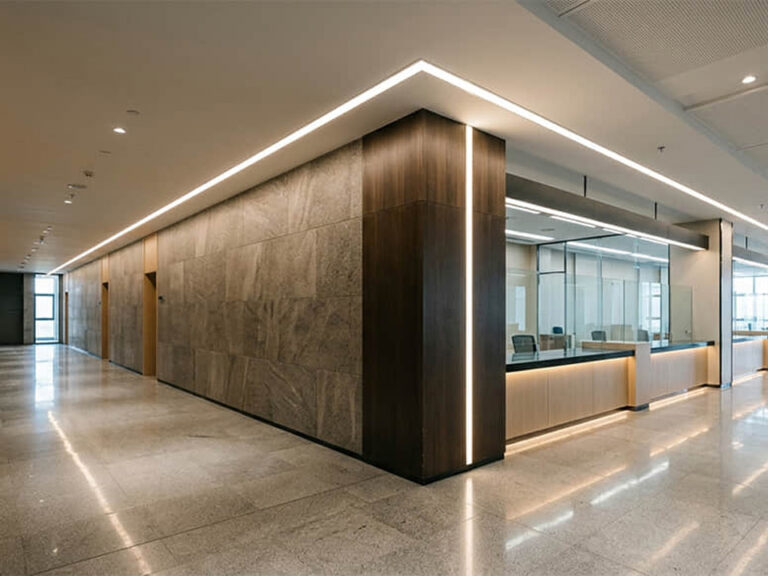
Hotel corridors are long, repetitive, and psychologically sensitive. Guests notice harshness there because they are walking slowly, looking for room numbers, and seeing the ceiling from a shallow angle. Round anti-glare downlights, linear ceiling lights, or carefully spaced recessed fixtures usually feel more residential than square panels.
Use 2700K or 3000K in many hospitality corridors. Keep glare low. Do not over-light the floor while ignoring room-number visibility and wall surfaces.
Lobbies
Round fixtures often feel better in lobbies, but square fixtures can work in corporate towers, galleries, and minimalist reception spaces.
The deciding factor is not taste. It is geometry.
If the lobby uses stone slabs, rectangular ceiling coffers, linear reception desks, and strong axial planning, square ceiling lights may look disciplined. If the lobby uses curved seating, warm materials, plants, hospitality cues, and softer circulation, round ceiling lights usually feel more natural.
The Procurement Trap: Why Cheap Commercial Ceiling Lights Become Expensive
A low unit price can be bait.
A buyer sees two fixtures: one round, one square. The cheaper one wins. Then the problems arrive: inconsistent CCT across batches, visible flicker, poor dimming, harsh glare, no IES file, missing LM-79 data, weak driver warranty, ugly trim finish, or a discontinued housing six months after the first purchase.
That is not savings. That is deferred pain.
For B2B sourcing, I would ask every supplier for these before approving either shape:
IES or LDT photometric files
CCT option: 2700K, 3000K, 3500K, 4000K
CRI 80 vs CRI 90 availability
R9 data where color quality matters
SDCM target, preferably ≤3 for visible commercial areas
Beam angle options, such as 15°, 24°, 36°, 60°
UGR target where office comfort matters
Driver brand, dimming protocol, and flicker behavior
Housing finish consistency
Thermal management notes
Warranty and reorder support
MOQ, sample lead time, bulk lead time, and packaging details
I do not trust “same as sample” unless the supplier can prove binning and production discipline. That sounds harsh. It is also how you avoid ceiling regret.
So, Are Round or Square Ceiling Lights Better?
Round ceiling lights are better when the project needs softness, visual comfort, hospitality tone, and flexibility across mixed ceilings. Square ceiling lights are better when the project needs grid alignment, clean repetition, modular replacement, and office or retail discipline.
But the best commercial ceiling lights are the ones that fit the ceiling plan, the room function, and the long-term maintenance model.
In plain English: round is usually the emotional choice, square is usually the architectural choice, and neither one saves a bad lighting layout.
FAQs
What are commercial ceiling lights?
Commercial ceiling lights are ceiling-mounted luminaires designed for offices, retail stores, hotels, corridors, lobbies, supermarkets, clinics, and other business spaces where light output, glare control, reliability, compliance readiness, maintenance access, and visual consistency matter more than decorative residential styling. They include recessed downlights, surface-mounted fixtures, LED panels, linear lights, and commercial LED ceiling lights.
In practice, the right fixture depends on ceiling height, task type, beam angle, CCT, CRI, driver quality, dimming method, and project quantity. Shape is part of the decision, but it should never be the first filter.
Are round commercial ceiling lights better than square commercial ceiling lights?
Round commercial ceiling lights are better for softer interiors such as lobbies, hospitality spaces, corridors, lounges, cafés, and reception zones, while square commercial ceiling lights are better for grid ceilings, offices, retail aisles, modular layouts, and spaces where visual alignment is more important than decorative warmth. The better choice depends on architecture and task.
I would not ask “Which shape is better?” in isolation. I would ask which shape fits the ceiling system, furniture geometry, visual comfort target, and maintenance plan.
When should I use square commercial ceiling lights?
Square commercial ceiling lights should be used when the ceiling already follows a rectangular or modular order, such as 600 × 600 mm office grids, retail rows, classrooms, clinics, supermarkets, and linear commercial interiors where repeated alignment makes the space look cleaner and more intentional. They work best when architecture favors straight lines.
They are especially useful when the project involves LED panel lights for offices, repeated replacement cycles, or multi-site rollouts where fixture consistency and installation speed matter.
When should I use round commercial ceiling lights?
Round commercial ceiling lights should be used when the project needs softer visual character, less rigid ceiling expression, better integration with hospitality design, or more forgiving placement in renovation conditions where perfect grid alignment is difficult. They are common in lobbies, corridors, boutique retail, hotel spaces, restaurants, and premium reception areas.
For visual comfort, I would prioritize anti-glare trims, deeper optics, appropriate beam angles, and warm-to-neutral CCTs such as 2700K, 3000K, or 3500K.
How do I choose commercial ceiling lights for an office?
To choose commercial ceiling lights for an office, start with work tasks, desk layout, ceiling height, screen use, daylight exposure, glare risk, and maintenance needs before selecting round or square fixture shapes. Most offices need controlled ambient light, comfortable uniformity, reliable drivers, and sometimes separate accent lighting for reception or meeting zones.
A square LED panel may work for open desk areas, while round recessed commercial ceiling lights may be better for reception, lounge areas, or executive rooms.
What are the best ceiling lights for commercial spaces?
The best ceiling lights for commercial spaces are fixtures that match the room’s function, ceiling structure, visual comfort target, energy strategy, maintenance plan, and brand atmosphere, rather than simply offering the highest wattage or lowest unit price. Good commercial lighting balances optics, efficiency, reliability, CCT, CRI, glare control, and documentation.
For many projects, the best answer is not one product type. It is a coordinated mix of downlights, panels, linear lighting, and accent fixtures.
Final Thoughts: Choose the Ceiling Logic Before the Fixture Shape
Do not start your next commercial ceiling lights project by asking for “round or square” quotes.
Start with the reflected ceiling plan, ceiling height, room function, target lux level, CCT, CRI, glare expectation, dimming requirement, finish preference, quantity, and reorder plan. Then choose the shape.
If you are planning an office, lobby, retail, hospitality, or corridor lighting project, review Meagree’s LED ceiling lighting and commercial LED lighting options, shortlist round and square candidates, request photometric files, and approve samples under real ceiling conditions before bulk ordering.