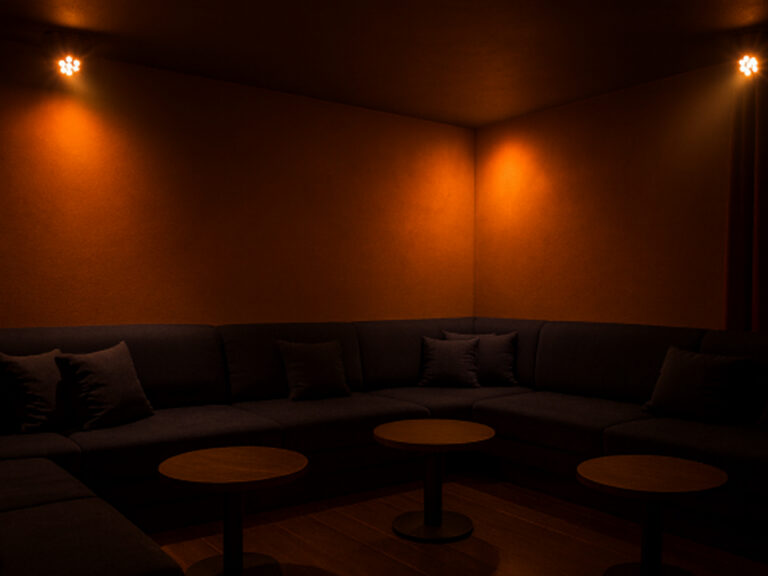
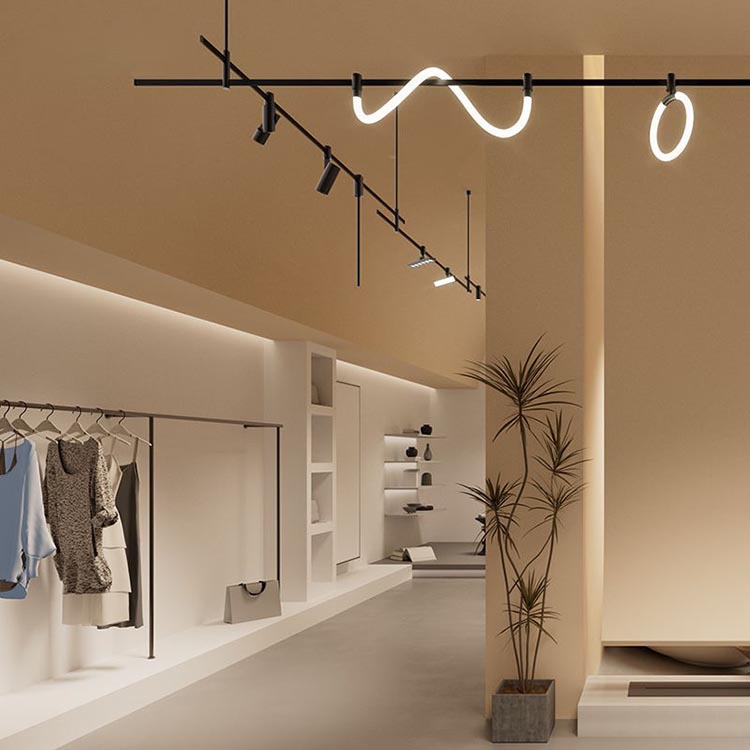
Still Not Seeing the Right Commercial Lighting Solution? Talk to Our Project Team.
If you have reviewed the website or already discussed options with sales but still need a clearer direction, send your request here. Our team will review your application, target specifications, and project constraints, then reply with a practical next step: what fits, what needs confirmation, and the fastest route to a quote and spec-ready files for your project.
Direct review of your application, specs, and project constraints for a clearer quote path.
Product matching across beam angle, CCT / CRI, drivers, dimming, and controls options.
Project documentation support, including cut sheets, wiring notes, and IES / LDT files where available.
OEM / ODM guidance for labels, packaging, housing finish, and private-brand requirements.
Get a Fast Quote for Commercial LED Lighting
Built for designers, architects, contractors, wholesalers, and project buyers. Share your application, quantity, and target specifications to get factory-direct pricing, lead-time guidance, and spec-ready support for US and EU projects.
A minimalist commercial interior can survive a slightly ordinary chair, a budget reception counter, or a flooring value-engineering decision, but it cannot survive a ceiling full of loud bezels, crooked trims, mismatched CCT, visible glare, and cheap-looking fixture rings shouting over the architecture. Why do so many “premium” projects still treat ceiling lights like late-stage accessories?
I have walked through enough office lobbies, boutique retail stores, hotel corridors, and showroom ceilings to say this bluntly: the ceiling usually tells me whether the project was designed by professionals or assembled by purchasing. Trimless recessed lighting wins in minimalist commercial lighting because it makes the ceiling plane behave. It removes the visible frame, reduces visual clutter, and lets the architecture carry the mood instead of letting fixture hardware fight for attention.
That is the point. Not drama. Not decoration. Control.
For project buyers, the best starting point is usually a supplier’s LED Downlights category when the brief calls for recessed anti-glare performance, and Meagree positions that range around commercial interiors needing efficient, comfortable, precise illumination for corridors, offices, hotels, and general ceiling lighting.
Why Trimless Recessed Lighting Became the Minimalist Default
Trimless recessed lighting is preferred in minimalist commercial interiors because it removes the visible fixture border, keeps the ceiling visually flat, and supports a cleaner architectural rhythm while still allowing designers to specify beam angle, CCT, CRI, dimming, and glare control for real commercial performance.
There is a hard truth here: minimalism is not “less design.” It is less forgiveness.
A standard recessed downlight with a visible trim can work in many commercial spaces. I am not against it. But in a minimalist office reception area, high-end boutique, private clinic, gallery corridor, or hotel lounge, the trim ring often becomes visual noise. One ring is fine. Forty rings become a dotted disease.
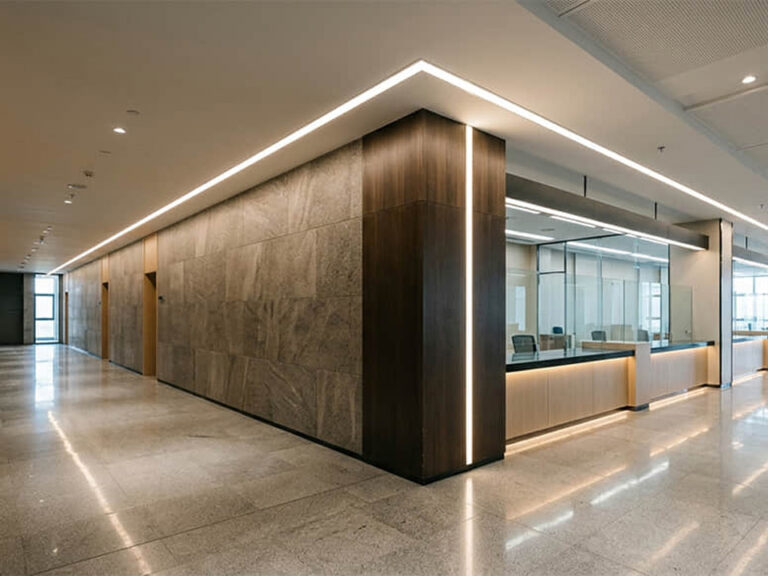
Trimless ceiling lights solve that by pushing the visual emphasis away from the fixture body and back onto the surface. The ceiling becomes a clean plane. The light appears to come from architecture, not from equipment. That is why trimless linear LED lighting for minimalist architectural interiors fits so naturally into offices, reception areas, corridors, retail settings, and contemporary commercial spaces where the lighting should blend into the ceiling or wall plane.
But do not confuse clean appearance with simple execution. Trimless downlights are less tolerant of bad plastering, sloppy cutouts, weak ceiling coordination, and rushed installation. If the gypsum edge is rough, everyone sees it. If the fixture spacing is lazy, everyone feels it. If the beam angle is wrong, the room looks expensive and uncomfortable at the same time.
That happens more often than manufacturers admit.
The Real Reason Designers Like Them: They Delete Hardware From the Story
Minimalist commercial interiors prefer frameless recessed lighting because the fixture stops behaving like a decorative object and starts behaving like part of the building. That matters in architecture-led spaces where the ceiling, walls, display surfaces, and circulation paths need to read as one controlled system.
I know this sounds almost ideological. It is not.
In commercial interiors, every visible component has a cost beyond its purchase price. A visible trim creates a line. A line creates contrast. Contrast creates attention. Attention steals value from the material palette, the merchandise, the reception desk, the art wall, or the hospitality experience. In minimalist design, the fixture should rarely be the loudest object in the room.
So the trim disappears.
When done properly, trimless recessed lighting makes a 3000K hotel corridor feel calmer, a 3500K office lobby feel sharper, and a 4000K commercial workspace feel more disciplined. In retail, a 24° or 36° beam can pull attention toward product while the ceiling remains quiet. In hospitality, a deep anti-glare trimless downlight with CRI 90+ can protect guest comfort better than a shallow fixture with a pretty datasheet.
And yes, I am skeptical of “minimalist” lighting specs that start with wattage. Wattage is not a design strategy. Beam control is. Glare control is. Cutoff is. CCT consistency is. SDCM ≤3 across a batch matters more than another empty claim about luxury.
For broader project packages, Meagree’s commercial LED lighting range is contextually relevant because it covers office, retail, hospitality, supermarket, and project applications rather than treating all ceiling fixtures as interchangeable products.
The Data Behind the Preference: Energy, Glare, and Operating Pressure
The market is not choosing trimless ceiling lights only because architects like clean ceilings. Energy pressure is rising, commercial buildings are under sharper scrutiny, and owners want lighting that looks premium while still supporting controls, lower connected load, longer service life, and cleaner maintenance planning.
According to the U.S. Energy Information Administration’s May 2026 Short-Term Energy Outlook, U.S. electricity consumption is forecast to reach almost 4,250 billion kWh in 2026, with commercial-sector growth, including data centers, leading demand growth; EIA also expects commercial electricity demand to surpass residential demand for the first time on record in 2027.
That matters for lighting. A ceiling package is no longer just a visual package. It is part of the building’s operating model.
The U.S. Department of Energy LED lighting guidance states that residential ENERGY STAR-rated LEDs use at least 75% less energy and last up to 25 times longer than incandescent lighting, and while commercial fixture economics differ, the direction is obvious: LED efficiency and longevity have changed how owners judge lighting value.
Then there is glare. OSHA’s computer workstation environment guidance warns that excessive lighting or glare on monitor screens can contribute to eyestrain, headaches, and awkward postures, and it specifically recommends minimizing glare from overhead lights, desk lamps, and windows.
That is why serious commercial recessed lighting specs should not stop at “10W, 15W, 20W.” I want to see UGR target, beam angle, cutoff, CCT, CRI, flicker performance, dimming protocol, driver quality, housing finish, thermal path, and photometric files. I also want to see whether the manufacturer can keep the same visual result across 100, 500, or 2,000 units.
Meagree’s Quality Control page is useful to connect here because trimless recessed lighting only works when repeatable finish, optics, driver behavior, and documentation support are treated as project requirements, not after-sales excuses.
Trimless vs Standard Recessed vs Surface-Mounted: The Uncomfortable Comparison
Not every ceiling needs trimless downlights. I dislike fake absolutism. A back-of-house corridor, storage area, budget restroom, or exposed technical ceiling may not justify the labor risk. But in minimalist commercial interiors where the ceiling is part of the brand experience, trimless fixtures usually win the argument.
Decision Factor
Trimless Recessed Lighting
Standard Recessed Lighting With Trim
Surface-Mounted Ceiling Lights
Visual impact
Lowest visible hardware; clean ceiling plane
Moderate hardware visibility; trim ring remains visible
Highest fixture visibility; becomes part of the ceiling design
Best use case
Minimalist offices, hotel corridors, boutiques, galleries, clinics, premium lobbies
General offices, retail back zones, corridors, mixed-budget projects
Beautiful when executed well, unforgiving when rushed
Safe but visually ordinary
Practical, but rarely invisible
A practical spec sequence is simple: choose the ceiling role first, then select the fixture. Ambient? Use wider beam trimless downlights or recessed linear systems. Accent? Use narrow or medium beam trimless spotlights. Corridor? Prioritize anti-glare and spacing. Retail? Prioritize CRI 90+, R9 when color matters, and beam discipline. Office? Prioritize glare, uniformity, dimming, and flicker behavior.
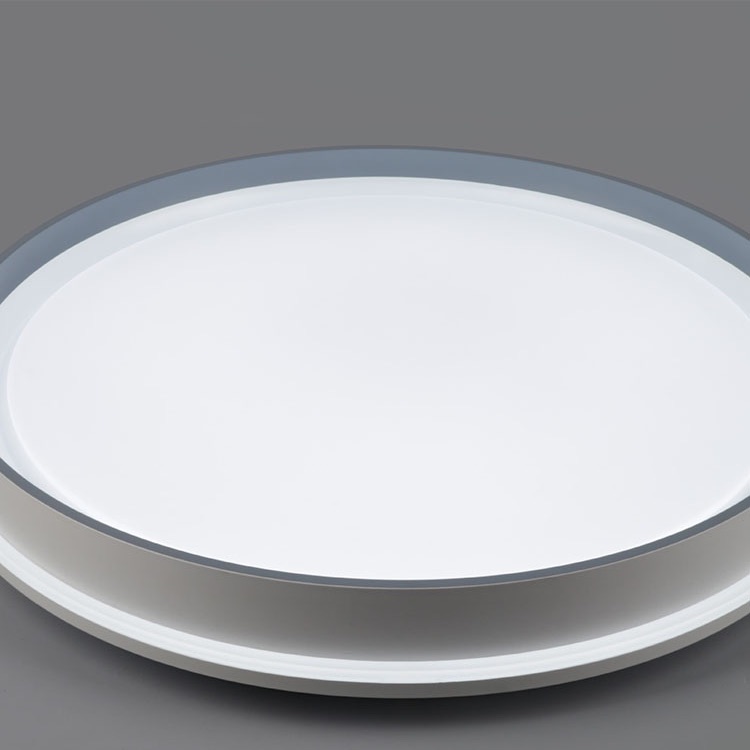
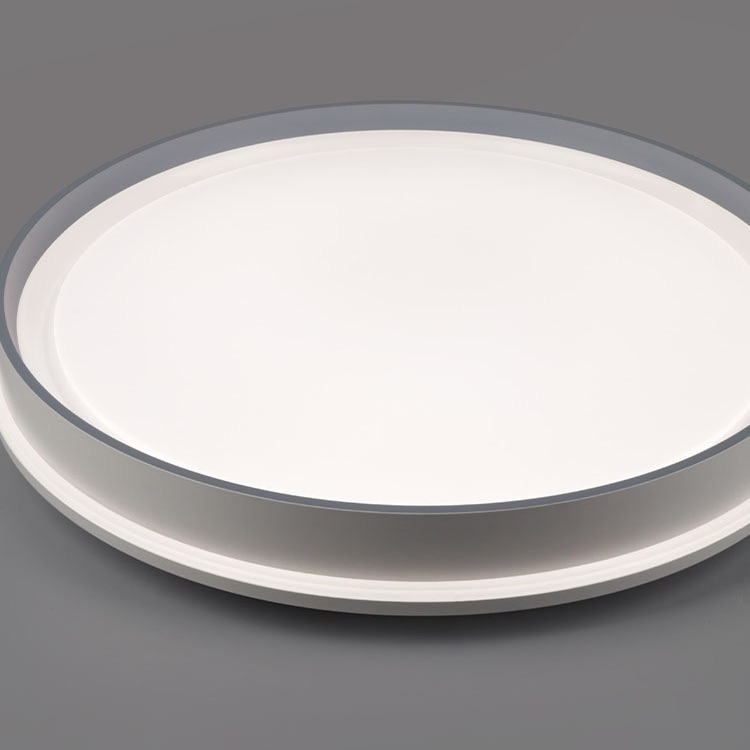
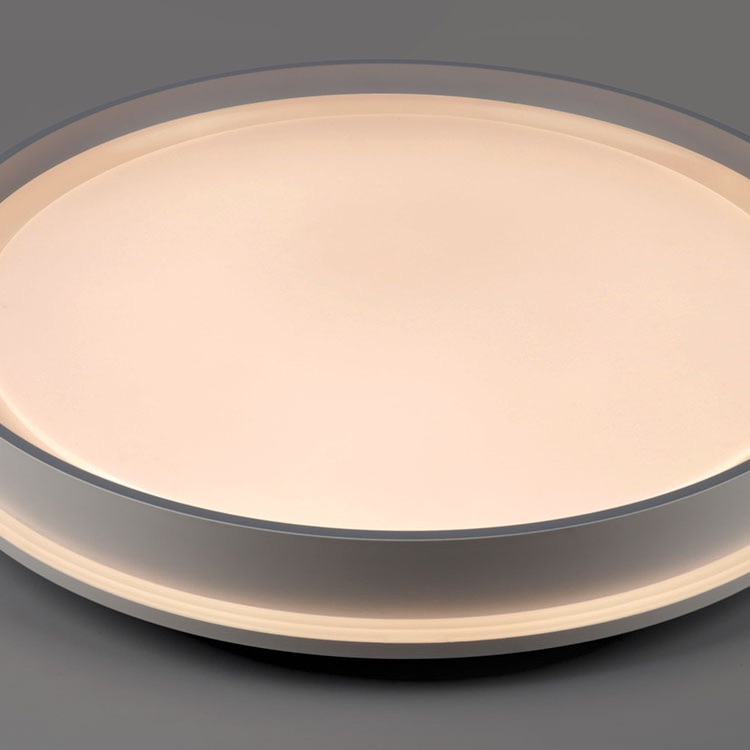
For ceiling-wide product mapping, Meagree’s LED Ceiling Lighting category is a logical internal path because it includes commercial-grade ceiling lighting for lobbies, public areas, and interior commercial spaces, while the LED Linear Lighting category fits offices, corridors, workspaces, and modern commercial ceilings.
What the Better Projects Know: Trimless Is a System, Not a Fixture
A trimless ceiling light does not fix bad lighting design. It makes bad lighting design easier to see.
This is where I get opinionated. The fixture is only one actor. The ceiling build-up, driver location, access strategy, beam layout, dimming curve, plaster detail, emergency lighting plan, and final commissioning all decide whether the result feels calm or cheap.
The Berkeley Lab open-plan office retrofit study tested workstation-specific lighting controls in an 86-cubicle federal office and reported 40% lighting energy savings compared with a baseline without advanced controls, while occupants generally preferred the lighting system.
A separate Berkeley Lab report on GSA lighting-control testbeds found average before-and-after savings of 46% across 10 demonstration sites, with individual sites ranging from 26% to 66%; it also reported average savings potential of 24% for occupancy controls, 28% for daylighting, 31% for personal tuning, 36% for institutional tuning, and 38% for multiple approaches.
So here is the uncomfortable part: many “luxury” trimless lighting projects still waste money because they buy the aesthetic but skip the control logic.
A clean ceiling with poor controls is still wasteful. A beautiful downlight with bad dimming is still annoying. A low-glare fixture installed in the wrong grid is still wrong. And a 3000K trimless downlight from one batch sitting beside a visibly different 3000K downlight from another batch is not minimalism. It is procurement failure.
The GSA Oklahoma City Federal Building Smart Buildings Case Study is not about trimless downlights specifically, but it proves the broader point: lighting controls were one of nine grid-interactive efficient building measures, and the five-building project was projected to save $13.5 million over the contract with a 41% total energy-use reduction and more than 3,100 metric tons of annual carbon reduction.
The Specification Details That Separate Good Trimless Ceiling Lights From Pretty Junk
Good trimless recessed lighting should be judged by optical control, thermal stability, finish consistency, driver reliability, ceiling integration, and documentation quality, not by wattage alone. If the supplier cannot support those basics, the product may look minimalist in a catalog but fail in a real commercial interior.
The details I would push for:
Optics and glare
A deep optical cup, black or low-reflectance baffle, controlled lens, and clean cutoff usually matter more than raw lumen output. For minimalist commercial interiors, I would rather accept slightly lower lumens with better visual comfort than blast the ceiling with cheap brightness.
CCT and color consistency
Common project choices include 2700K for warm hospitality, 3000K for boutique retail and hotel corridors, 3500K for soft office-lobby neutrality, and 4000K for sharper work areas. I would ask for SDCM ≤3, and for premium projects I would push harder.
CRI and R9
CRI 80 can be acceptable for some circulation areas, but retail, hospitality, gallery, and skin-tone-sensitive interiors usually deserve CRI 90+. If the space sells clothing, cosmetics, jewelry, food, art, or atmosphere, weak color rendering is a brand tax.
Dimming and controls
0-10V, TRIAC, DALI-2, DMX, occupancy sensing, daylight harvesting, and scheduling all belong in the conversation before purchase. Not after the ceiling is closed.
Materials and heat
Die-cast aluminum, proper heat-sink design, PMMA or PC optical components, stable drivers, and credible lifetime claims matter. A trimless fixture buried in a ceiling cavity with poor thermal design can degrade faster than the sales team will admit.
Documentation
Ask for cut sheets, IES or LDT files, driver information, wiring notes, dimming compatibility, LM-79 test data where available, LM-80/TM-21 support where relevant, CE/RoHS documentation for EU-linked projects, and batch-level QC records.
This is boring. Good. Boring documents prevent expensive ceilings from becoming litigation bait.
Where Trimless Ceiling Lights Make the Most Sense
Trimless ceiling lights make the most sense in commercial interiors where architecture, visual comfort, and brand perception are more valuable than the cheapest installation path. That usually includes hotel corridors, reception areas, boutiques, galleries, executive offices, clinics, premium restaurants, showrooms, and high-end residential-style commercial spaces.
Here is where I would actually specify them:
Hotel corridors and guest-facing hospitality zones
Use warm 2700K–3000K CCT, low glare, deep recessed optics, and spacing that avoids scalloped walls unless the wall effect is intentional. Guests notice glare before they can explain why the corridor feels cheap.
Boutique retail and jewelry display ceilings
Use trimless downlights or trimless spotlights with 15°, 24°, or 36° beams depending on shelf height, display distance, and merchandise. For premium retail, CRI 90+ is not vanity. It is sales infrastructure.
Office reception and executive zones
Use trimless recessed lighting where the ceiling must feel calm and architectural. Pair it with linear lighting, wall washing, or track accents when the space needs hierarchy instead of flat illumination.
Clinics and wellness interiors
Use clean ceiling lines, controlled brightness, and soft neutral CCT. The trick is to look clinical without feeling cold.
Galleries and showrooms
Use adjustable trimless downlights or architectural ceiling lights only when access and aiming are properly planned. Otherwise, use track or magnetic track where flexibility matters more than invisibility.
For minimalist offices and commercial ceilings where linear forms are part of the design language, the Trimless Linear LED Light 30W for Minimalist Architectural Interiors is especially relevant because its stated purpose is clean architectural lines and discreet lighting presence in offices, reception areas, corridors, retail settings, and other contemporary commercial spaces.
FAQs
What is trimless recessed lighting?
Trimless recessed lighting is a ceiling-mounted lighting method where the visible trim ring is removed or concealed, allowing the fixture aperture to sit flush with the surrounding ceiling surface so the light appears integrated into the architecture rather than attached as a separate decorative object. It is common in minimalist commercial interiors, hospitality corridors, boutiques, galleries, clinics, and high-end office reception areas.
In practical terms, the fixture housing is installed into the ceiling, the surrounding plaster or ceiling finish is worked tightly around the opening, and the visible edge is reduced. The result can look very clean, but the installation has to be precise.
Why do minimalist commercial interiors use trimless ceiling lights?
Minimalist commercial interiors use trimless ceiling lights because they reduce visual clutter, protect clean ceiling lines, and shift attention away from fixture hardware toward architecture, merchandise, materials, and spatial atmosphere while still allowing professional control of beam angle, color temperature, color rendering, dimming, and glare. This is why they show up in premium offices, hotels, boutiques, and galleries.
The fixture becomes quiet. That is the value. In a minimalist space, the ceiling should not look like a product catalog exploded above the user.
Are trimless downlights better than standard recessed lights?
Trimless downlights are better than standard recessed lights when the design priority is a seamless ceiling plane, reduced visible hardware, and a more architectural appearance, but they are not automatically better for every project because they require cleaner installation, tighter ceiling coordination, and more careful maintenance planning. In budget corridors or technical spaces, standard trims may be more practical.
I would specify trimless where the ceiling is part of the brand experience. I would not waste the budget where nobody sees the difference or where the site team cannot execute the finish.
What specifications matter most for trimless recessed lighting?
The most important specifications for trimless recessed lighting are beam angle, glare control, CCT, CRI, SDCM consistency, dimming compatibility, driver quality, thermal design, ceiling cutout detail, fixture depth, and photometric documentation such as IES or LDT files. These details decide whether the result feels architectural or merely expensive.
For commercial projects, I would look closely at 2700K, 3000K, 3500K, or 4000K options, CRI 90+ for premium zones, SDCM ≤3, UGR-aware layouts, and dimming protocols such as 0-10V or DALI-2.
Is trimless recessed lighting harder to install?
Trimless recessed lighting is harder to install than standard recessed lighting because the ceiling opening, plaster edge, alignment, fixture depth, driver access, and finishing tolerance must be more precise, and there is no visible trim ring to hide sloppy workmanship. The cleaner the final look, the less room there is for site mistakes.
That is why I treat trimless as a coordination item, not just a fixture order. The lighting supplier, ceiling contractor, electrical contractor, designer, and project manager all need to agree on the detail before installation starts.
Your Next Step: Specify the Ceiling Before You Buy the Fixtures
Do not buy trimless recessed lighting because the render looks clean. Buy it because the ceiling plan, beam logic, glare strategy, controls package, installation detail, and supplier documentation all support the design.
If you are planning a minimalist commercial interior, start by mapping each zone: reception, corridor, office, retail display, hospitality lounge, gallery wall, washroom, and back-of-house. Then define CCT, CRI, beam angle, dimming, finish, ceiling type, cutout, driver access, and required documents before asking for price.
For project-matched options, compare Meagree’s LED Downlights, LED Ceiling Lighting, and trimless architectural linear lighting before sending your fixture schedule. The smartest move is simple: request specs, samples, photometric files, and installation details before the ceiling closes.