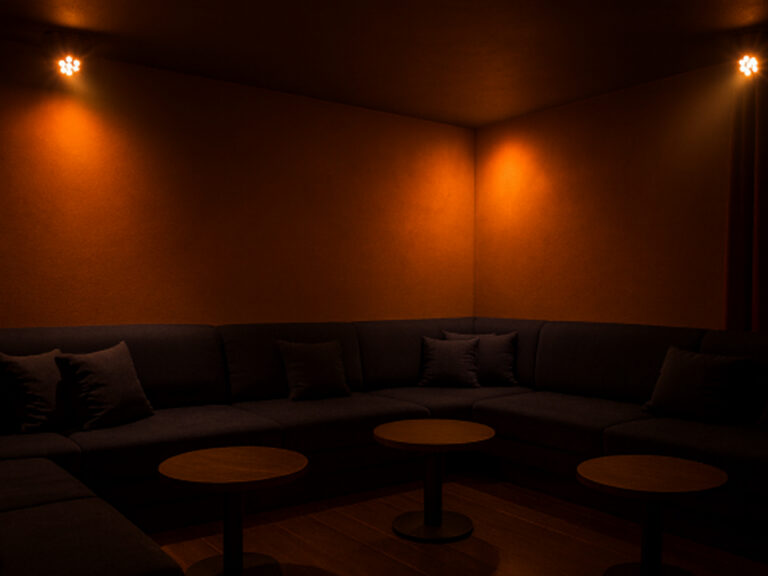
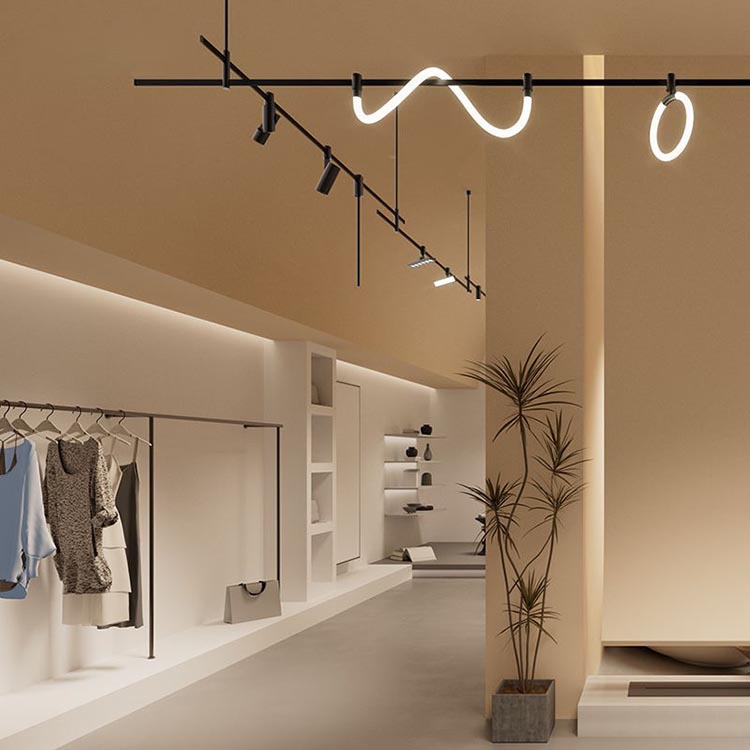
Still Not Seeing the Right Commercial Lighting Solution? Talk to Our Project Team.
If you have reviewed the website or already discussed options with sales but still need a clearer direction, send your request here. Our team will review your application, target specifications, and project constraints, then reply with a practical next step: what fits, what needs confirmation, and the fastest route to a quote and spec-ready files for your project.
Direct review of your application, specs, and project constraints for a clearer quote path.
Product matching across beam angle, CCT / CRI, drivers, dimming, and controls options.
Project documentation support, including cut sheets, wiring notes, and IES / LDT files where available.
OEM / ODM guidance for labels, packaging, housing finish, and private-brand requirements.
Get a Fast Quote for Commercial LED Lighting
Built for designers, architects, contractors, wholesalers, and project buyers. Share your application, quantity, and target specifications to get factory-direct pricing, lead-time guidance, and spec-ready support for US and EU projects.
The Dirty Secret: Most Lighting Specs Start in the Wrong Place
Wattage is bait.
I’ll be blunt: when a commercial lighting design starts with “How many watts?” instead of “What does this space need people to see, feel, buy, inspect, avoid, or remember?”, the project has already drifted into commodity thinking, and commodity thinking is where glare, shadow, flicker, over-lighting, and ugly energy bills breed.
So why do so many projects still buy light like it is bulk cable?
Because wattage is easy to quote. Lux, beam angle, UGR, CRI, CCT, SDCM, driver compatibility, emergency strategy, daylight response, and maintenance access require thinking. That is the unglamorous part of commercial lighting design, but it is also the part that separates a disciplined project from a ceiling full of expensive regret.
The numbers matter. The U.S. Energy Information Administration says lighting accounted for about 17% of U.S. commercial building electricity consumption in 2018, equal to 208 billion kWh, according to the EIA lighting electricity FAQ. The U.S. General Services Administration later reported that lighting can consume 10% to 25% of a building’s electricity depending on building age and system type, while LED conversions typically save 50% versus fluorescent baselines and controls can save an additional 80% of lighting energy in suitable applications, according to its 2024 LED lighting and controls guidance.
That is not decoration. That is operating cost.
For project buyers comparing fixture families, the first internal stop should be a full commercial LED lighting range for office, retail, hospitality, and project spaces, not a random product image forwarded from a distributor chat. The right commercial lighting design guide begins with the application, then works backward into optics, controls, compliance, and supply reality.
The 10 Parameters That Decide Whether the Project Works
1. Illuminance: Stop Guessing Lux Levels
Illuminance is the measured amount of light landing on a surface, usually expressed in lux or foot-candles, and it should be set by task, risk, age of users, contrast, ceiling height, reflectance, and operating hours rather than copied blindly from another project.
In office lighting design guidelines, 300–500 lux is often discussed for general work areas, but that is only the opening move. A luxury retail wall, a supermarket meat counter, a hotel corridor, and a warehouse picking zone are not the same animal. Treating them that way is amateur.
Hard truth: more lux can make a room worse. If the ceiling is bright but the vertical surfaces are dead, people feel trapped. If the floor is bright but the merchandise is flat, the store feels cheap. If the reception desk is lit but faces are shadowed, the lobby feels hostile.
Commercial lighting design parameters should include horizontal illuminance, vertical illuminance, and target-to-background contrast. If you only ask for “bright enough,” you will probably get “cheap enough.”
2. Uniformity: The Parameter Nobody Brags About, Until It Fails
Uniformity describes how evenly light is distributed across a work plane, circulation zone, shelf face, or display surface, and poor uniformity is one of the fastest ways to make a commercial interior feel accidental.
I have a strong view here: bad uniformity is more damaging than slightly low average lux. People can tolerate a carefully layered dim environment. They hate patchy light, hot spots, zebra-striped aisles, and dark corners that make them wonder whether the project ran out of fixtures.
For corridors, lobbies, washrooms, meeting rooms, and back-of-house zones, recessed and anti-glare LED downlights for commercial interiors are usually safer than decorative fixtures pretending to be performance lighting. But the layout still has to earn its keep. Spacing-to-mounting-height ratio, ceiling reflectance, beam spread, and fixture aiming all matter.
A lighting layout for commercial buildings should not be a dot pattern. It should be a risk map.
3. Glare Control: The Silent Project Killer
Glare is visual discomfort or visibility loss caused by excessive brightness, poor shielding, bad fixture placement, reflective surfaces, or uncontrolled beam direction, and it is one of the most common reasons a technically “bright” space feels cheap, tiring, or hostile.
This is where UGR, cut-off angle, deep recessing, honeycomb louvers, baffles, low-brightness reflectors, and controlled optics come in. Designers talk about ambience. Facilities managers hear complaints. Retail owners watch dwell time drop and blame merchandising.
But the culprit may be the ceiling.
For commercial LED lighting design, glare control should be written into the specification, not negotiated after installation. In offices, UGR <19 is commonly used as a design target for screen-heavy environments. In hospitality and galleries, the conversation shifts toward shielding angle, beam edge quality, and fixture visibility. In retail, the balance is harsher: make the product pop without assaulting the shopper.
For museums, showrooms, boutiques, and rotating displays, adjustable LED track lighting for retail and gallery layouts gives teams more control than fixed grids. Flexibility matters because merchandising changes faster than ceilings do.
4. Beam Angle: The Difference Between Drama and Disaster
Beam angle is the angular spread of light from a luminaire, and it determines whether a fixture produces a tight accent, a controlled wash, a general illumination field, or an awkward pool of light that misses the object it was supposed to highlight.
Here is the industry sin: people choose beam angles from catalog thumbnails. A 15° beam can be beautiful on jewelry and useless on a wide retail gondola. A 60° beam can soften a lobby and flatten a premium product display. A linear beam can define circulation, or it can make an office feel like a parking garage.
Ask better questions:
Parameter
Bad Specification
Professional Specification
Beam angle
“Spotlight”
15°, 24°, 36°, or 60° based on mounting height and target size
Illuminance
“Bright”
300 lux average, 0.6 uniformity, measured on 0.8 m work plane
Correlated color temperature, or CCT, describes the apparent warmth or coolness of white light in Kelvin, and it influences perceived comfort, brand mood, product appearance, visual alertness, and how surfaces behave under illumination.
3000K can make hospitality feel intimate. 4000K can make offices feel alert. 2700K can make a restaurant feel expensive or make a supermarket look sleepy. 5000K can support task visibility or make a boutique feel like a clinic.
Context wins.
The lazy answer is “use 4000K everywhere.” The smarter answer is to build a CCT map: entrance, circulation, display, task, lounge, checkout, back-of-house, washroom, exterior transition. When a commercial space moves from daylight at the facade to 2700K in the interior without thought, the eye notices. The customer may not name the problem, but the body keeps score.
6. Color Rendering: CRI Alone Is Not Enough
Color rendering describes how accurately a light source reveals object colors compared with a reference source, and it matters most in retail, hospitality, galleries, food display, healthcare-adjacent spaces, and any environment where material, skin tone, texture, or product color affects trust.
CRI ≥80 is not a premium claim. It is a baseline in many commercial conversations. CRI ≥90 is better, but even that can hide weakness in saturated red rendering. Ask for R9 when red, wood, leather, meat, cosmetics, fashion, or skin tone matters. Ask for TM-30 data if the project has serious color demands.
I’ll say the unpopular part: many “high CRI” claims are marketing fog unless the supplier can provide tested photometric and color data. The U.S. Department of Energy’s FEMP guidance for commercial and industrial LED luminaires uses measurable efficiency requirements, including luminous efficacy thresholds such as 120 lm/W to 140 lm/W for common commercial troffer categories and 175 lm/W for high-bay luminaires, which is the kind of evidence-based procurement mindset buyers should apply to color claims too through DOE FEMP LED luminaire purchasing guidance.
Pretty renderings do not pass a submittal review. Data does.
7. Efficiency: Lumens Per Watt Is Not the Whole Story
Efficiency in commercial lighting design is the relationship between useful delivered light, input power, control strategy, operating schedule, maintenance burden, and code compliance, not just a high lm/W number printed on a datasheet.
A 150 lm/W fixture with bad optics can waste light. A 120 lm/W fixture with better distribution can deliver more usable illumination. A dimmable fixture paired with vacancy sensing, daylight response, and scheduling can beat a “high efficiency” fixture left at full output for 14 hours a day.
This is why energy codes matter. The U.S. Department of Energy notes that the most widely adopted model energy codes are the IECC and ASHRAE 90.1, and ASHRAE 90.1 provides minimum energy-efficiency requirements for most commercial buildings except low-rise residential buildings through the Building Energy Codes Program. ASHRAE also describes Standard 90.1 as a long-running benchmark for commercial building energy codes and a basis for codes and standards worldwide in its Standard 90.1 overview.
So no, “LED” is not the strategy. It is the starting line.
8. Controls: The Money Is in the System, Not the Fixture
Lighting controls are the sensors, dimming protocols, schedules, zoning logic, daylight response, scene settings, and commissioning rules that determine when luminaires operate, at what output, and under whose authority.
Controls are where good projects make money quietly.
Occupancy sensors in storage rooms. Vacancy logic in private offices. Daylight harvesting near facades. Scene control in conference rooms. Time schedules in public zones. DALI-2 where addressability matters. 0-10V where simplicity wins. Emergency override where life safety rules demand it.
The GSA’s 2024 guidance is direct: LED conversion can save a large share of electricity, and controls can produce additional savings where properly applied; it also ties federal lighting decisions to the BRIGHT Act, passed in September 2022, which required federal buildings to use life-cycle cost-effective and energy-efficient lighting products.
That is the point. Commercial lighting design is no longer just fixture placement. It is controls architecture.
9. Reliability: Heat, Driver Quality, and Maintenance Access
Reliability is the ability of a lighting system to maintain safe, stable, predictable performance over time, and it depends on thermal management, driver quality, LED package selection, installation conditions, surge protection, service access, and manufacturing consistency.
This is where cheap projects get expensive.
A fixture can look identical in a catalog and fail differently in the ceiling. Driver temperature, capacitor quality, heat sink mass, ventilation, dust, switching cycles, and ambient temperature all eat into life. If the project is a hotel, mall, supermarket, or multi-site rollout, failure is not just replacement cost. It is labor, lift rental, guest complaints, brand damage, and reorder chaos.
For private-label or multi-location rollouts, teams should discuss OEM/ODM commercial LED lighting support early, especially when they need stable CCT bins, housing finishes, packaging, barcode labels, drawings, or repeatable SKUs across batches.
The fixture is not alone. It is part of a supply chain.
10. Documentation: If It Is Not on Paper, It Is Not a Specification
Documentation is the formal package of datasheets, photometric files, wiring notes, installation instructions, certificates, test reports, warranty terms, drawings, and control schedules that allows designers, contractors, owners, and inspectors to verify what is being purchased and installed.
This is where professional buyers should be ruthless.
Ask for IES or LDT files. Ask for LM-79 test data where available. Ask about LM-80 and TM-21 for LED lifetime claims. Ask for CE, RoHS, DLC, or other market-specific documentation when relevant. Ask for driver model, dimming compatibility, flicker data, surge rating, IP rating, IK rating, operating temperature, and warranty conditions.
And yes, ask before the deposit.
For projects that need submittal discipline, the internal resource to connect is LED standards and compliance guidance for commercial projects. Documentation is not paperwork theatre. It is how buyers protect the project from substitution, vague claims, and late-stage disputes.
The Parameter Stack: What Each Space Really Needs
Commercial lighting design is not one formula. It is a stack of decisions.
A retail store needs contrast, vertical brightness, color fidelity, beam flexibility, and scene control. A modern office needs glare control, uniformity, visual comfort, occupancy logic, daylight response, and low flicker. A hotel corridor needs quiet ceilings, warm CCT, low glare, reliable emergency integration, and maintenance access. A supermarket needs high output, color strategy by category, thermal durability, and repeatable SKU supply.
Warm CCT, low glare, even spacing, emergency logic
Recessed downlights, linear wall/cove effects
Supermarket
Poor product color and high operating hours
High efficacy, category-specific CCT/CRI, robust thermal design
Linear systems, track systems, high-output downlights
Gallery / museum
Object damage perception and glare
Tight beam control, high color quality, low visual noise
Adjustable spotlights, anti-glare track heads
Lobby
Weak first impression
Layered light, vertical brightness, decorative plus architectural balance
Downlights, wall washers, accent fixtures
Notice what is missing? “Cheapest wattage.”
Hard Truths Buyers Learn Too Late
Commercial lighting design fails in procurement more often than design.
The drawing may be fine. The rendering may be persuasive. The supplier may sound confident. But if the buyer does not freeze the parameters, the project becomes vulnerable to silent substitutions: lower CRI, cheaper driver, wider beam, different CCT bin, weaker heat sink, no tested dimming compatibility, missing IES file, and a “similar” fixture that is only similar to someone who will not have to live under it.
That is why best commercial lighting design practices are not glamorous. They are boring, repetitive, and defensive:
Confirm dimming protocol and driver compatibility.
Demand documentation before mass production.
Treat maintenance access as a design parameter.
Protect CCT and finish consistency across batches.
Do not let “equivalent” mean “unverified.”
Commission the controls after installation.
This is not overkill. This is how professional projects avoid becoming complaint files.
FAQs
What are the key parameters in commercial lighting design?
The key parameters in commercial lighting design are illuminance, uniformity, glare control, beam angle, color temperature, color rendering, energy efficiency, controls, reliability, and documentation, because these factors determine visual comfort, operating cost, compliance readiness, maintenance burden, and whether the space supports its real commercial purpose.
In plain terms, do not start with fixture shape. Start with what the space must accomplish. A retail display, office desk, hotel corridor, and supermarket aisle all need different commercial lighting design parameters even when they use the same LED technology.
How many lux are needed for commercial lighting design?
Lux requirements in commercial lighting design depend on the task, user profile, contrast level, surface reflectance, operating risk, and visual comfort target, so the right value is not a universal number but a project-specific range confirmed through layout calculations and, for important spaces, mockup testing.
For offices, designers often discuss 300–500 lux as a practical working range, but retail, hospitality, galleries, corridors, warehouses, and food displays need their own targets. Average lux alone is weak. Uniformity, glare, vertical brightness, and contrast matter just as much.
Why is glare control so important in commercial LED lighting design?
Glare control is important in commercial LED lighting design because LEDs produce high luminance from small sources, and without proper shielding, beam control, recessed depth, diffuser quality, and fixture placement, a space can meet lux targets while still causing eye strain, discomfort, reflections, and poor visual quality.
This is where many low-cost projects fail. They buy “bright” fixtures and discover later that staff complain, customers avoid certain zones, or screens reflect ceiling points. Anti-glare optics, correct aiming, and layout discipline are not luxury details. They are core design work.
What is the best CCT for commercial lighting design?
The best CCT for commercial lighting design is the color temperature that supports the brand mood, task visibility, material palette, daylight condition, and user expectation of the space, typically ranging from warm 2700K–3000K hospitality environments to neutral 3500K–4000K offices and commercial work areas.
The mistake is forcing one CCT across every zone. A restaurant, boutique, corridor, office, showroom, and supermarket fresh-food section may each need different visual warmth. CCT should be mapped, not guessed.
How do lighting controls improve commercial lighting design?
Lighting controls improve commercial lighting design by matching light output to occupancy, daylight, schedules, scenes, and operational needs, reducing wasted energy while giving owners better flexibility over comfort, branding, maintenance, and code-aligned performance across offices, retail spaces, hospitality interiors, and other commercial buildings.
Controls should be planned early. Adding sensors after the ceiling is closed is possible, but it is rarely elegant. DALI-2, 0-10V, occupancy sensors, daylight dimming, time schedules, and emergency overrides should be part of the design conversation before products are ordered.
Your Next Steps
Do not buy fixtures yet.
Take the 10 parameters above and turn them into a project checklist: lux target, uniformity, glare target, beam angle, CCT, CRI/R9, efficacy, control protocol, reliability requirements, and documentation package. Then send that checklist to the supplier before you ask for final pricing.
If you are planning a retail, office, hospitality, supermarket, showroom, or multi-site commercial lighting project, start with the right product family, request photometric files, and force the conversation away from wattage. The cheapest quote is rarely the cheapest project.