Still Not Seeing the Right Commercial Lighting Solution? Talk to Our Project Team.
If you have reviewed the website or already discussed options with sales but still need a clearer direction, send your request here. Our team will review your application, target specifications, and project constraints, then reply with a practical next step: what fits, what needs confirmation, and the fastest route to a quote and spec-ready files for your project.
Direct review of your application, specs, and project constraints for a clearer quote path.
Product matching across beam angle, CCT / CRI, drivers, dimming, and controls options.
Project documentation support, including cut sheets, wiring notes, and IES / LDT files where available.
OEM / ODM guidance for labels, packaging, housing finish, and private-brand requirements.
Get a Fast Quote for Commercial LED Lighting
Built for designers, architects, contractors, wholesalers, and project buyers. Share your application, quantity, and target specifications to get factory-direct pricing, lead-time guidance, and spec-ready support for US and EU projects.
How to Choose Wattage for Commercial Ceiling Lights
Table of Contents
Wattage Is the Wrong First Question
Wattage lies.
I have watched too many buyers ask for “18W ceiling lights” before they know the ceiling height, target lux, beam angle, fixture spacing, surface reflectance, driver quality, or what the people in the room actually do under those lights.
Why does this keep happening?
Because wattage is easy to quote, easy to compare, and easy to misunderstand. It looks like a clean number. It is not. In modern commercial LED lighting, wattage tells you energy input, not usable light output. The real buying question is not “how many watts for commercial ceiling lights?” The real question is: how many lumens, delivered where, at what visual comfort level, with what power draw?
The market data makes this more than a design argument. The U.S. Energy Information Administration says lighting used about 17% of electricity consumption in U.S. commercial buildings in 2018, equal to 208 billion kWh, according to its lighting electricity FAQ. (美国能源信息署) That is why a lazy commercial ceiling lights wattage decision becomes a cost decision every single month.
And the pressure is getting worse. Reuters reported on May 12, 2026 that the EIA projected U.S. power demand to rise from 4,195 billion kWh in 2025 to 4,248 billion kWh in 2026 and 4,379 billion kWh in 2027, with commercial electricity demand expected to pass residential demand in 2027 for the first time on record.
So no, this is not just about picking a pretty fixture.
For project teams starting from the product side, I would first compare Meagree’s commercial LED ceiling lighting solutions because the category already frames ceiling lights around hotels, offices, lobbies, retail spaces, recessed designs, surface-mounted formats, and trimless options. Meagree describes that range as commercial LED ceiling lighting for offices, hotels, retail spaces, lobbies, and other interior projects.
The Hard Truth: Watts Do Not Equal Brightness
A 20W LED fixture can outperform a 35W fixture if the optic, LED package, thermal design, and driver are better. I know that sounds inconvenient. It is.
The buyer sees “20W.” The engineer sees lumens per watt, beam spread, room cavity ratio, lens loss, lumen maintenance, power factor, driver temperature, CCT binning, CRI, glare, and whether the fixture still performs after 6,000 operating hours.
That is the gap where bad projects are born.
The U.S. Department of Energy explains that LEDs are solid-state lighting devices and says LEDs use up to 90% less energy and last up to 25 times longer than traditional incandescent bulbs. Its Lighting Choices to Save You Money page also notes that LED technology appears in recessed fixtures, track lights, task lighting, outdoor area lights, and products with daylight or motion sensors.
But here is my unpopular opinion: buyers have abused LED efficiency claims. They hear “LED saves energy,” then they under-spec fixtures, ignore glare, skip photometric files, and call the result value engineering.
It is not value engineering. It is cost shifting.
The complaint moves from procurement to facilities. Then to staff. Then to the landlord. Then, if the site is customer-facing, to sales performance.
Start With Lumens, Lux, and the Room’s Real Job
Commercial ceiling light wattage should be calculated backward from required illuminance, not forward from a catalog wattage.
Here is the rough logic:
Target lux × floor area = required lumens before loss factors
Then you adjust for fixture efficiency, ceiling height, beam angle, surface reflectance, spacing, dirt depreciation, aging, and whether you need task lighting or general ambient light.
Simple? Barely.
That is why a commercial lighting wattage calculator can help with first-pass budgeting, but it should never replace a lighting layout. A calculator usually gives you an estimate. A real layout shows you where the light lands.
If the room is an office, the best wattage for office ceiling lights depends on workstation density, screen use, ceiling height, furniture layout, daylight exposure, and whether the lighting is direct, indirect, recessed, surface-mounted, or linear. If it is a hotel corridor, you care about wayfinding, low glare, shadows near doorways, and a calm nighttime impression. If it is retail, vertical illumination and product color matter more than floor brightness.
That is why Meagree’s 10 key parameters in commercial lighting design is a smart internal reference point: the article pushes buyers past wattage and into lux, beam angle, UGR, CRI, CCT, SDCM, driver compatibility, daylight response, and maintenance access.
The Quick Formula I Actually Trust
Use this as a rough planning tool, not a final design stamp:
A small office zone needs roughly 24,000 delivered lumens. The selected commercial LED ceiling light produces 120 lumens per watt at system level. On paper:
24,000 ÷ 120 = 200W total fixture load
That could mean ten 20W fixtures, eight 25W fixtures, five 40W panels, or a different layout entirely.
But wait.
If the ceiling is high, the walls are dark, the diffuser is cheap, the beam is too wide, or the fixture spacing is poor, those 24,000 lumens may not give you the working-plane result you expected. This is why I dislike wattage-only RFQs. They look efficient until the room is built.
A Practical Wattage Table for Commercial Ceiling Lights
Use the table below as a starting point for commercial LED ceiling lights wattage. Not gospel. Not a substitute for IES files.
Dimming, video calls, face lighting, scene control
Public circulation zone
2.7–4.0 m
10W–30W
Wayfinding, emergency strategy, low maintenance
Here is the trap: two fixtures can both say 24W, but one may deliver 2,400 lumens and the other 3,600 lumens. That is a 50% output difference at the same wattage.
I have seen buyers fight for a lower fixture price and then lose the saving through extra fixtures, labor, dimmer incompatibility, and ugly ceiling density. But the spreadsheet looked good at purchase time, didn’t it?
Lumens vs Watts for Commercial Lighting: The Calculation That Saves Money
The commercial ceiling light lumens target should come before the wattage target.
For LED projects, the better comparison is:
Delivered lumens per watt at system level
Not LED chip efficacy. Not a lab fantasy. Not a marketing number pulled from a best-case test condition.
System-level efficacy includes the LED source, driver loss, optical loss, thermal behavior, and fixture design. A fixture claiming 150 lm/W at chip level may perform far lower once the full product is built.
The General Services Administration said in 2024 that lighting can consume 10% to 25% of a building’s electricity depending on building age and system type, while LED conversions typically save 50% over fluorescent baselines and lighting controls can save an additional 80% of lighting energy in suitable applications. See the GSA’s energy-efficient lighting guidance announcement.
That is the financial reason not to guess.
If a supplier cannot provide IES or LDT photometric files, system wattage, lumen output, CCT, CRI, beam angle, dimming protocol, and driver information, I would not treat the offer as serious. Harsh? Maybe. Useful? Definitely.
Meagree’s LED downlights range fits naturally into this decision because recessed downlights are often where buyers confuse “small fixture” with “low-risk fixture.” In reality, downlights can create harsh glare fast if the beam, cutoff, trim design, and spacing are wrong.
Why Ceiling Height Changes Everything
Low ceilings punish overpowered fixtures. High ceilings punish weak optics.
A 12W ceiling light can work beautifully in a narrow hotel corridor with a 2.6 m ceiling. Put that same wattage into a tall lobby with dark stone walls and a glossy floor, and it may look dead. Now take a 30W fixture with poor glare control and place it in a low office ceiling. Staff will hate it by Wednesday.
This is where commercial LED ceiling lights wattage must be tied to beam angle:
Narrow beam: more punch, stronger accent, higher risk of harsh spots
Medium beam: useful for many ceiling applications
Wide beam: smoother coverage, less intensity, may need higher wattage or tighter spacing
Asymmetric beam: useful near walls, shelves, corridors, and display zones
For linear office ceilings, Meagree’s LED linear lighting systems are more relevant than round downlights because linear fixtures can create cleaner rows, better visual rhythm, and more even general illumination across work zones. The site describes linear lighting as suitable for offices, corridors, workspaces, and modern commercial ceilings.
Compliance Is Not Design, But Ignore It at Your Own Risk
Lighting codes do not make a room beautiful. They set the floor.
The U.S. eCFR version of OSHA’s construction illumination rule says construction areas, ramps, runways, corridors, offices, shops, and storage areas must be lighted to at least the minimum intensities in Table D-3 while work is in progress. See 29 CFR 1926.56 Illumination.
That matters because “bright enough” is not a legal strategy, and it is not a design strategy either.
Professional buyers should separate three things:
Minimum safety lighting
Functional task lighting
Brand and comfort lighting
Bad projects blend these into one number. Good projects do not.
If you are planning reception areas, public interiors, and customer-facing spaces, Meagree’s article on choosing High-CRI LED ceiling lights for lobby areas gives useful context on CRI 90, R9, TM-30, glare control, beam angle, CCT, SDCM, and dimming. That is exactly the kind of detail missing from wattage-only buying.
My Field Rule: Choose Wattage Last, Not First
I use a blunt sequence.
First, define the task. Then pick the light level. Then choose fixture type. Then check beam angle. Then check glare. Then check lumens. Then check wattage.
Wattage comes late.
For a standard commercial LED ceiling light wattage decision, I would ask for these numbers before approving a sample:
Specification Item
Why It Matters
Buyer’s Red Flag
System wattage
Shows real power draw
Only chip wattage is listed
Delivered lumens
Shows usable output
Supplier gives “brightness” words only
Lumens per watt
Links output to energy use
Efficacy looks inflated or untested
Beam angle
Controls spread and intensity
Same wattage offered for every ceiling
CCT and SDCM
Protects color consistency
“Warm white” with no bin tolerance
CRI and R9
Affects skin, fabric, food, wood, finishes
CRI 80 used for premium spaces
UGR or glare data
Protects comfort
No optical control details
Driver and dimming
Protects compatibility
“Dimmable” with no protocol
IES/LDT file
Enables layout proof
Catalog image replaces photometrics
Here is the uncomfortable part: some suppliers avoid this conversation because they know their numbers do not survive it.
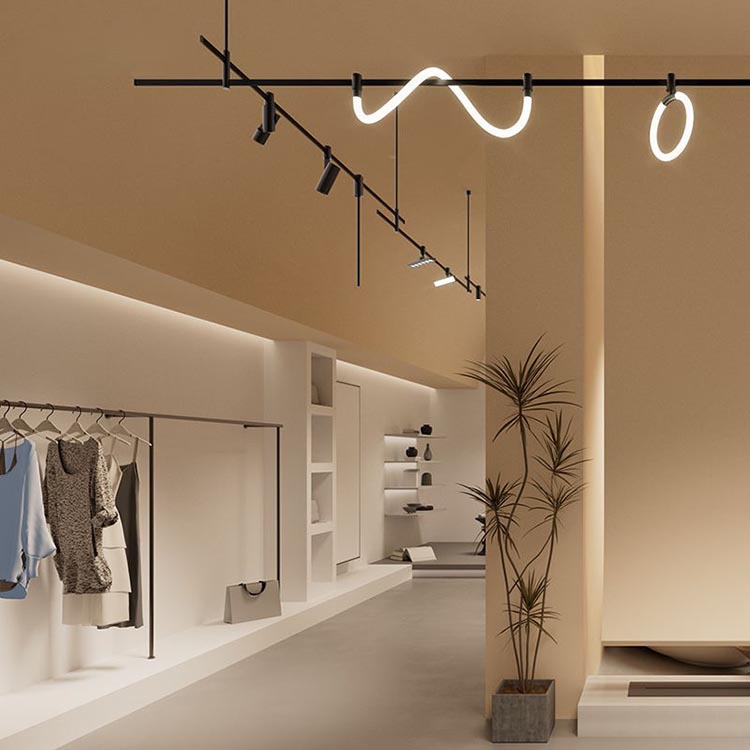
For buyers comparing fixture types beyond ceiling lights, Meagree’s LED track lighting solutions are worth linking in project content because track fixtures solve a different wattage problem: they are less about general ambient coverage and more about aiming, display hierarchy, and retail or showroom flexibility.
Common Wattage Mistakes I Still See in Commercial Projects
Mistake 1: Buying the Highest Wattage Because It Feels Safer
More watts can create glare, heat, wasted energy, uneven brightness, and dimming headaches. I have no patience for “just make it brighter” as a design method. That is not expertise. That is fear with a purchase order.
Mistake 2: Comparing Watts Across Different Fixture Types
A 24W recessed downlight, 24W linear light, 24W panel, and 24W track fixture do not behave the same way. The optic changes everything.
Mistake 3: Ignoring Controls
Occupancy sensors, daylight dimming, DALI-2, 0-10V, scheduling, and scene control can change the real operating cost. Wattage tells you installed load. Controls influence actual use.
Mistake 4: Forgetting Maintenance
A fixture that performs well for six months but shifts color, flickers, overheats, or fails drivers early is not cheap. It is deferred expense.
Mistake 5: Treating Offices, Corridors, and Retail Like One Category
The best wattage for office ceiling lights is not the same as hotel corridor wattage or retail accent wattage. One wants comfortable task visibility. One wants navigation and calm. One wants product drama.
Meagree’s hotel corridor ceiling light guide is a good supporting internal page for this point because corridors punish glare, poor spacing, and cold color temperature faster than many teams expect.
A Better Commercial Ceiling Lights Wattage Workflow
Use this workflow before sending an RFQ:
Step 1: Identify the Space Type
Office, lobby, corridor, retail, supermarket, hotel, meeting room, showroom, clinic, gallery, public corridor. Name it precisely.
Step 2: Define the Target Result
Do you need high desk visibility, merchandise punch, low-glare circulation, face-friendly reception lighting, or flexible scenes?
Step 3: Estimate Lumens
Use floor area and target lux for an early estimate. Then apply loss factors.
Step 4: Select Fixture Type
Downlight, surface-mounted ceiling light, linear light, panel, track light, magnetic track, or mixed system.
Step 5: Match Beam Angle and Spacing
Do not approve wattage without beam angle. That is like approving a pipe size without knowing flow direction.
Step 6: Check System Efficacy
Compare delivered lumens per watt, not raw watts.
Step 7: Confirm Glare, CCT, CRI, Driver, and Controls
This is where the real project quality hides.
Step 8: Request Photometric Files
If the supplier cannot provide IES or LDT data, you are guessing.
FAQs
What is the best wattage for commercial ceiling lights?
The best wattage for commercial ceiling lights is the system power level that delivers the required lumens and lux for a specific room, ceiling height, beam angle, fixture spacing, surface reflectance, glare target, and operating schedule without wasting energy or creating visual discomfort for users.
In practice, many commercial ceiling fixtures fall between 6W and 60W, but that range is too broad to use blindly. A corridor may need 6W–18W fixtures, while a supermarket aisle or tall lobby may need 24W–60W depending on optics and spacing.
How do I calculate commercial ceiling lights wattage?
Commercial ceiling lights wattage is calculated by estimating the delivered lumens needed for the space, then dividing that lumen target by the selected fixture’s real system efficacy in lumens per watt, while adjusting for ceiling height, beam angle, surface reflectance, maintenance factors, and fixture layout.
A rough example: if a zone needs 24,000 delivered lumens and the chosen fixture performs at 120 lm/W, the estimated total installed wattage is 200W. You could distribute that across multiple fixtures, but the final layout should be checked with photometric data.
Are lumens more important than watts for commercial lighting?
Lumens are more important than watts when choosing commercial lighting because lumens measure light output while watts measure power consumption, so a buyer must compare how much useful light a fixture delivers per watt rather than assuming higher wattage automatically means better brightness or better performance.
That said, lumens alone are not enough. You also need beam angle, glare control, CCT, CRI, fixture spacing, driver quality, and delivered illumination at the working plane.
What wattage should I use for office ceiling lights?
Office ceiling light wattage should be selected according to desk-level illumination needs, ceiling height, fixture efficacy, glare limits, screen reflections, dimming requirements, and layout spacing, with many modern LED office ceiling fixtures commonly landing in the 18W–40W range depending on room design.
For open offices, I usually care more about uniformity, UGR, 3500K–4000K CCT, dimming behavior, and visual comfort than the raw wattage printed on the fixture box.
Can I use a commercial lighting wattage calculator?
A commercial lighting wattage calculator is useful for early budgeting because it can estimate total lumens and fixture load from room size, target lux, and fixture efficacy, but it should not replace a proper lighting layout using photometric files, real ceiling conditions, and application-specific design targets.
Use calculators to avoid wild guesses. Then ask for IES or LDT files and confirm the result with a layout. That second step is where cheap assumptions get exposed.
Final Thoughts: Stop Buying Watts, Start Buying Proof
Here is the hard conclusion: commercial ceiling lights wattage is not a design strategy.
It is one line in a much bigger specification.
Before you buy, ask your supplier for delivered lumens, system wattage, beam angle, CCT, CRI, SDCM, driver details, dimming protocol, glare information, IES/LDT files, and recommended spacing. Then compare fixtures by room outcome, not by wattage alone.
Your next step is simple: review the right Meagree product category for your project, starting with LED ceiling lighting, LED downlights, LED linear lighting, or LED track lighting, then request a wattage recommendation tied to lumens, layout, optics, and controls before approving samples.