Still Not Seeing the Right Commercial Lighting Solution? Talk to Our Project Team.
If you have reviewed the website or already discussed options with sales but still need a clearer direction, send your request here. Our team will review your application, target specifications, and project constraints, then reply with a practical next step: what fits, what needs confirmation, and the fastest route to a quote and spec-ready files for your project.
Direct review of your application, specs, and project constraints for a clearer quote path.
Product matching across beam angle, CCT / CRI, drivers, dimming, and controls options.
Project documentation support, including cut sheets, wiring notes, and IES / LDT files where available.
OEM / ODM guidance for labels, packaging, housing finish, and private-brand requirements.
Get a Fast Quote for Commercial LED Lighting
Built for designers, architects, contractors, wholesalers, and project buyers. Share your application, quantity, and target specifications to get factory-direct pricing, lead-time guidance, and spec-ready support for US and EU projects.
3000K vs 3500K vs 4000K for Commercial Ceiling Lights
Table of Contents
The Dirty Secret Behind “Neutral White” Commercial Lighting
Color has consequences.
When a project team treats 3000K, 3500K, and 4000K as three harmless catalog toggles rather than as a combined decision about mood, surface color, vertical brightness, glare, fixture optics, and operating hours, the ceiling becomes a permanent argument between architecture and operations.
Why pay for that argument every day?
I have seen projects where the buyer picked 4000K because it sounded “professional,” then watched a hotel corridor turn cold and cheap. I have also seen 3000K used in office areas where people spent eight hours under a sleepy amber cast, then blamed the furniture, the paint, or the employees. The light was not broken. The decision was lazy.
Here is my hard rule: 3000K is emotional, 3500K is diplomatic, and 4000K is operational.
That does not mean one is always better. It means each color temperature tells the room what kind of behavior it expects.
The energy stakes are not small either. The U.S. Energy Information Administration reported that lighting used about 17% of electricity consumption in U.S. commercial buildings in 2018, equal to 208 billion kWh. And in May 2026, Reuters reported from EIA data that U.S. power demand is projected to rise from 4,195 billion kWh in 2025 to 4,379 billion kWh in 2027, with commercial demand expected to pass residential demand for the first time on record.
So no, this is not just a decorative question.
For commercial ceiling lights, color temperature becomes a financial, operational, and brand decision.
3000K vs 3500K vs 4000K: The Practical Difference Nobody Explains Cleanly
Correlated color temperature, or CCT, measures the apparent warmth or coolness of white light in Kelvin. Lower numbers such as 2700K and 3000K look warmer and more yellow. Higher numbers such as 4000K and 5000K look cleaner, whiter, and sometimes slightly cooler.
The U.S. Department of Energy describes white tuning as the ability to shift light from warm to neutral to cool for different aesthetic and functional needs in its LED color-tunable product guidance. That is the polite version.
My version is rougher: CCT changes how people judge the room before they judge the product.
A lobby under 3000K can feel premium, calm, and residential. The same lobby under 4000K can feel efficient, sharper, and more corporate. A clinic under 3000K may feel too soft for visual tasks. A boutique under 4000K may make warm wood, skin tones, leather, and gold finishes look flatter than the designer intended.
And 3500K?
That is the compromise specifiers use when they do not want the warmth of 3000K or the sharper edge of 4000K. I like 3500K in offices, mixed-use retail, reception areas, beauty retail, showrooms, and commercial interiors where people need comfort without falling into the yellow zone.
Quick Comparison Table for Commercial Ceiling Lights
Can look indecisive if mixed badly with 3000K or 4000K nearby
My safest middle choice for commercial interiors with both comfort and work needs
4000K
Neutral white, cleaner, brighter-feeling
Offices, clinics, supermarkets, classrooms, back-of-house, public areas
Can feel cold, cheap, or institutional in hospitality and luxury retail
Use when task visibility, cleanliness, and sharper perception matter
5000K+
Daylight/cool daylight
Inspection, warehouses, industrial task zones, some medical or technical areas
Often too harsh for customer-facing interiors
Avoid in most hospitality and boutique commercial ceiling lights
3000K Commercial Ceiling Lights: Warm, Profitable, and Easy to Misuse
3000K sells comfort.
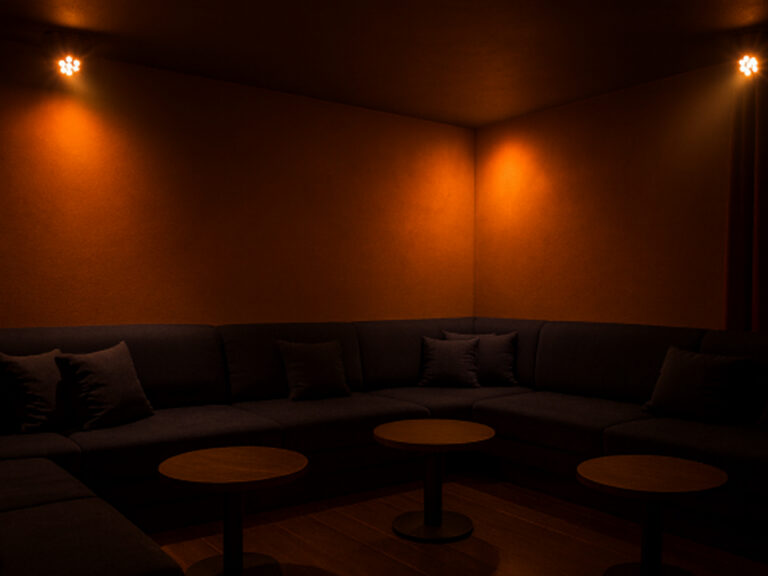
It makes hotel corridors feel less like tunnels. It softens restaurants. It helps wood, bronze, warm stone, cream paint, and residential-style interiors feel intentional. In boutique retail, 3000K can flatter warm materials and create a slower, more intimate buying mood.
But here is the trap.
A 3000K ceiling light with poor lumen output, wide uncontrolled optics, CRI 80, and a shallow exposed LED source is not “warm and premium.” It is just yellow glare. I have watched buyers pay for a warm ambiance and receive a ceiling full of cheap-looking amber dots.
That is why I would not discuss color temperature without also checking commercial ceiling lights wattage and lumen planning. CCT does not rescue under-lighting. A 3000K fixture still needs the right delivered lumens, spacing, beam angle, and ceiling-height assumptions.
My field opinion: 3000K belongs in commercial ceiling lights when the space is customer-facing, emotionally driven, and not heavily task-based.
Use 3000K for:
Hotel corridors and guest-facing circulation
Restaurants and cafés
Warm luxury retail
Spas, wellness clinics, and lounges
Residential-style office lounges
Hospitality lobbies with warm finishes
Avoid 3000K when the space needs high alertness, clean white perception, or technical accuracy. In a finance office, pharmacy, supermarket aisle, or school corridor, 3000K may feel underpowered even when the lux meter says the level is acceptable.
That sentence matters.
People do not experience light as a spreadsheet.
3500K Commercial Lighting: The Underused Middle Ground
3500K is the color temperature I wish more commercial buyers understood.
It sits between warm white and neutral white. It avoids the amber softness of 3000K but does not push into the cooler discipline of 4000K. In the real world, 3500K commercial lighting is often the best choice for spaces where staff work all day but customers still need to feel welcome.
Think office lobbies, coworking lounges, reception desks, beauty retail, galleries, consulting rooms, premium corridors, and high-end commercial interiors where 4000K feels too clinical.
I like 3500K because it hides fewer mistakes than 3000K but makes fewer enemies than 4000K.
Still, it has a weakness: availability. Some suppliers stock 3000K, 4000K, 5000K, and 6000K as standard, while 3500K may require confirmation by fixture series, LED package, minimum order quantity, or lead time. That is where buyers need to stop asking, “Can you do 3500K?” and start asking for binning, SDCM, lead time, and replacement consistency.
For a deeper spec checklist, Meagree’s guide on commercial lighting design parameters is the kind of internal reference I would connect here because CCT is only one parameter among CRI, beam angle, glare, lumen output, dimming, and installation conditions.
Here is the uncomfortable truth: 3500K only works if the whole project respects consistency.
Mixing 3500K ceiling lights with 3000K wall washers, 4000K panels, and random decorative pendants can create a visual mess. The human eye will notice. The project team will pretend it does not.
4000K Ceiling Lights: Clean, Efficient, and Brutally Honest
4000K is where commercial ceiling lights start to feel more operational.
Office managers like it because it feels bright. Supermarkets like it because products appear cleaner. Clinics like it because it suggests hygiene. Schools, public interiors, back-of-house areas, and high-traffic corridors often use it because it supports visibility and a sharper visual environment.
But 4000K has no mercy.
Bad paint looks worse. Cheap flooring looks cheaper. Faces can look flatter. Warm wood may lose richness. If the fixture has poor glare control, 4000K makes the discomfort more obvious because the light feels visually harder.
Research backs part of this instinct, but it should not be abused. A workplace intervention study in the Journal of Circadian Rhythms found that a high correlated color temperature lighting intervention in a call center was associated with improved self-reported concentration, fatigue, alertness, daytime sleepiness, and work performance. But that study involved 17000K fluorescent lighting, not normal 4000K commercial LEDs, so I would not use it as a lazy excuse to blast every workplace with cool light.
The lesson is narrower and more useful: higher CCT can influence alertness and perceived activity, but human response is not a simple “cooler equals better” equation.
For 4000K ceiling lights, I usually want:
CRI 80 minimum for general commercial use
CRI 90+ where faces, food, fabric, or brand colors matter
SDCM ≤3 for visible ceiling grids and premium interiors
UGR control for offices, classrooms, and screen-heavy spaces
Dimming compatibility tested before bulk ordering
IES or LDT files for layout validation
And yes, beam angle matters. A 4000K downlight with the wrong beam can make a lobby look like a service corridor. This is why I would connect any serious color-temperature discussion to beam angle for commercial ceiling lighting, not leave it as a separate optical topic.
The Real Decision Matrix: Match CCT to the Room’s Job
Here is how I would specify commercial ceiling lights if nobody in the meeting was allowed to hide behind vague words like “bright,” “premium,” or “modern.”
Offices
For open offices, I usually start at 3500K or 4000K. Use 3500K when the office has warm materials, hospitality-style interiors, or client-facing areas. Use 4000K when the priority is desk work, visual clarity, and a cleaner corporate feel.
Do not forget screens.
A ceiling can meet the target illuminance and still cause eye fatigue if glare, reflections, and contrast are mishandled. CCT is not a painkiller for bad optics.
Retail Stores
Retail is not one category.
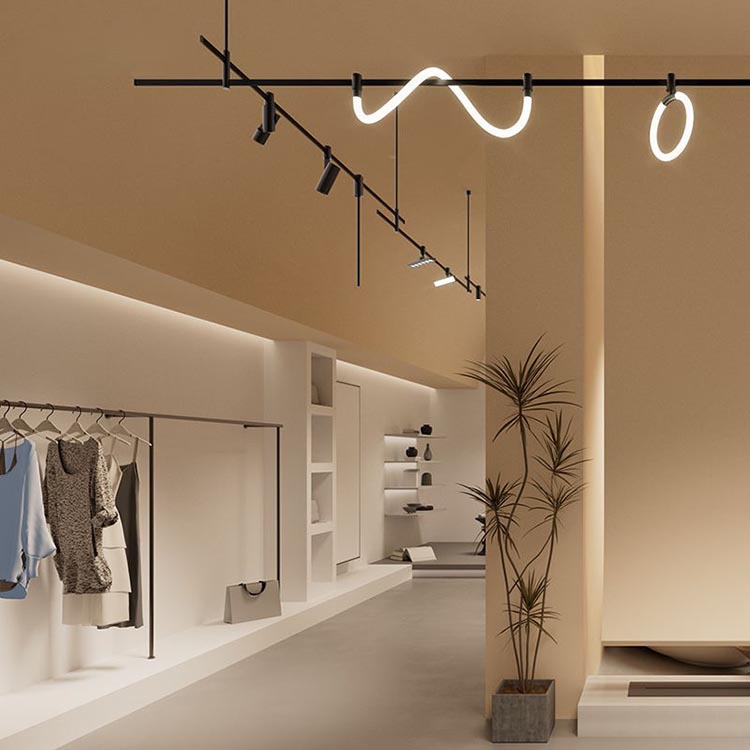
A cosmetics store, supermarket, jewelry counter, fashion boutique, and electronics shop should not share one CCT rule. For warm luxury retail, I would test 3000K or 3500K. For supermarkets and practical merchandise zones, 4000K often feels cleaner. For fashion, CRI and TM-30 behavior may matter more than the Kelvin number printed on the datasheet.
If you sell texture, skin tone, food, fabric, leather, or cosmetics, do not buy from CCT alone.
Ask for samples.
Hotels and Hospitality
3000K usually wins in corridors, lounges, guest-facing circulation, and warm lobby zones. 3500K can work in sharper lobby concepts, hotel retail corners, or business-hotel reception zones. 4000K is risky in guest-facing hospitality unless the design language is intentionally crisp and minimal.
For minimalist interiors, Meagree’s article on trimless recessed lighting for commercial interiors fits naturally because trimless ceilings expose every inconsistency in CCT, glare, beam control, and fixture alignment.
Minimalism is not forgiving.
Clinics and Healthcare Interiors
4000K is often the safer starting point for clinics, exam-adjacent areas, pharmacies, and clean public zones. But waiting rooms and wellness-style areas may need 3500K or even 3000K to reduce the cold institutional feeling.
Do not use one CCT across an entire healthcare project without separating task zones from comfort zones.
That is how clinics end up looking either sleepy or sterile.
Corridors and Public Circulation
Corridors are underrated.
A corridor has fewer design distractions, so the ceiling light becomes more visible. Warm 3000K works in hotels and residential-style corridors. 3500K works in office lobbies and mixed commercial circulation. 4000K works in hospitals, schools, service corridors, and transit-like commercial interiors.
But fixture spacing and beam angle will decide whether the corridor feels calm or striped.
The Mistakes I See Buyers Make Again and Again
Mistake 1: Comparing 3000K vs 4000K Lighting Without Looking at CRI
CCT tells you whether white light appears warm or cool. CRI tells you how accurately colors are rendered compared with a reference source.
A low-quality 3000K fixture can make interiors look muddy. A good 4000K fixture with high CRI can make colors appear cleaner than expected. A poor 4000K fixture can make skin tones look gray and product displays look lifeless.
So when buyers ask, “What color temperature is best for commercial ceiling lights?” my answer is usually, “Show me the CRI, SDCM, beam angle, and application first.”
Annoying? Yes.
Accurate? Also yes.
Mistake 2: Mixing Color Temperatures Without a Scene Logic
A 3000K lounge beside a 4000K work zone can work. A 3000K downlight randomly mixed with 4000K panels in the same ceiling usually looks like a procurement accident.
The difference is scene logic.
If you change CCT, make the boundary intentional: different room, different ceiling plane, different function, different control zone. Do not create accidental patchwork across one open area.
Mistake 3: Treating 4000K as “Brighter”
4000K often feels brighter than 3000K at the same lumen level because the light appears cleaner and cooler. But perceived brightness is not the same as delivered illuminance.
This matters when buyers replace 3000K fixtures with 4000K and then reduce wattage too aggressively. The space may look sharper at first glance, but task visibility, vertical illumination, or comfort can still fail.
Use photometric data.
Do not trust your first five seconds in the showroom.
Mistake 4: Ignoring Procurement Reality
If your project needs 3500K, confirm whether the supplier can maintain that CCT across repeat orders. Ask about LED binning, SDCM, replacement SKUs, warranty terms, dimming drivers, and documentation.
For RFQs, the boring paperwork protects the final ceiling. Meagree’s guide on documents needed before requesting a commercial lighting quote fits this exact moment because a CCT request without reflected ceiling plans, fixture schedules, and layout assumptions is only half a request.
Half requests create full problems.
My Specification Rules for 3000K, 3500K, and 4000K
I would rather be blunt than universally agreeable.
Use 3000K when the customer’s emotional comfort matters more than high-alert task performance. Use 3500K when the space has to balance welcome and productivity. Use 4000K when clarity, cleanliness, and operational visibility matter more than warmth.
But never specify CCT alone.
A serious commercial ceiling lights specification should include:
CCT: 3000K, 3500K, or 4000K
CRI: 80 minimum, 90+ for retail, hospitality, food, beauty, and people-facing areas
SDCM: ≤3 for premium spaces or visible fixture grids
Beam angle: common ranges include 15°, 24°, 36°, 60°, and wider distributions
Glare control: UGR target or anti-glare structure where relevant
Delivered lumens: not just wattage
Driver: flicker behavior, dimming protocol, and power factor
Controls: occupancy sensing, daylight dimming, scheduling, or scene control
Photometric files: IES or LDT files before approval
Sample review: ideally tested under real ceiling height and finish conditions
For broader buying context, I would point project teams to a commercial LED lighting buying guide before they start comparing unit prices. Cheap fixtures can survive a spreadsheet and fail a room.
That is the industry in one sentence.
FAQs
What color temperature is best for commercial ceiling lights?
The best color temperature for commercial ceiling lights is usually 3000K for warm hospitality spaces, 3500K for balanced commercial interiors, and 4000K for offices, clinics, supermarkets, and task-oriented areas where cleaner visual clarity matters more than warmth. The final choice should also consider CRI, glare, beam angle, ceiling height, and surface finishes.
In practice, I would not approve a CCT until I know the room function. A hotel corridor and an accounting office may both use ceiling lights, but they do not ask the light to do the same job.
Is 3000K or 4000K better for commercial lighting?
3000K is better for warm, customer-facing commercial lighting, while 4000K is better for cleaner, task-driven commercial lighting where visibility, alertness, and a neutral appearance matter more. Neither is universally better because the right choice depends on whether the space is designed for comfort, selling, working, inspection, or circulation.
For 3000K vs 4000K lighting, I usually ask one question first: should this room make people relax or stay visually alert? That answer gets you closer than any generic chart.
When should I use 3500K commercial lighting?
3500K commercial lighting should be used when a space needs a balanced neutral-warm appearance that feels cleaner than 3000K but softer than 4000K. It works well in office lobbies, reception areas, salons, mixed-use retail, galleries, premium corridors, and commercial interiors where comfort and productivity both matter.
My warning is supply consistency. If you choose 3500K, confirm binning, SDCM, lead time, and replacement availability before you commit to a full project rollout.
Are 4000K ceiling lights too harsh for offices?
4000K ceiling lights are not automatically too harsh for offices; they often work well in task-heavy workspaces when paired with good glare control, proper spacing, suitable illuminance, and stable dimming. The harshness usually comes from exposed LEDs, poor optics, reflective surfaces, bad layouts, or excessive contrast rather than from 4000K alone.
I like 4000K in many offices, but I do not like cheap 4000K fixtures. There is a difference.
Can I mix 3000K and 4000K in one commercial space?
You can mix 3000K and 4000K in one commercial space when each color temperature serves a clear zone, scene, or function, such as warm lounge lighting beside neutral task lighting. Random mixing in the same ceiling plane usually looks inconsistent and should be avoided unless the design intentionally separates the visual zones.
A controlled transition can look sophisticated. A random mix looks like a late substitution.
Final Thoughts: Choose the Ceiling Color Like It Affects Revenue
Pick the CCT last? No.
Pick it with the layout, optics, CRI, wattage, controls, and finishes on the table. For commercial ceiling lights, 3000K vs 3500K vs 4000K is not a beauty contest. It is a decision about how the space behaves when customers arrive, employees work, products sit under the beam, and the electricity bill keeps coming.
My blunt recommendation is this: use 3000K for hospitality warmth, 3500K for premium balanced interiors, and 4000K for clean commercial performance. Then demand proof—IES files, CCT binning, CRI data, SDCM tolerance, beam angle, dimming compatibility, and samples.
Before approving your next commercial ceiling lights order, send your reflected ceiling plan, target space type, preferred CCT, ceiling height, and fixture schedule to a supplier who can review the full lighting package—not just quote a box price.