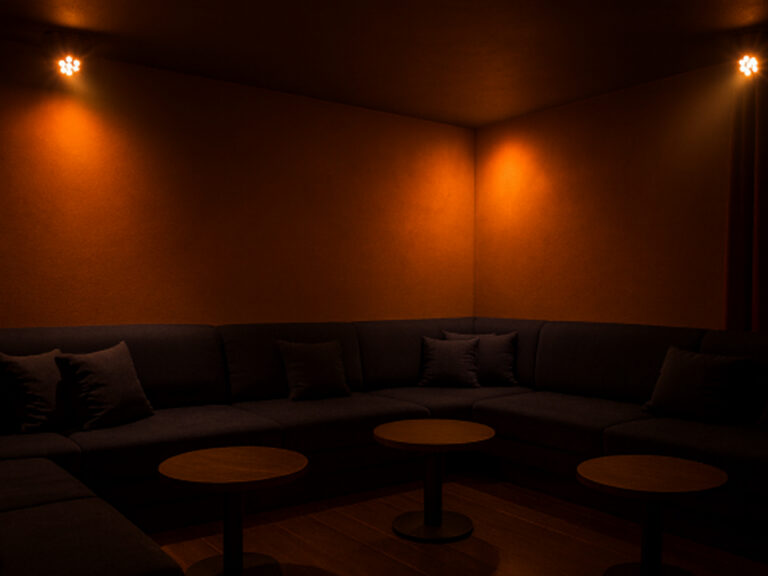
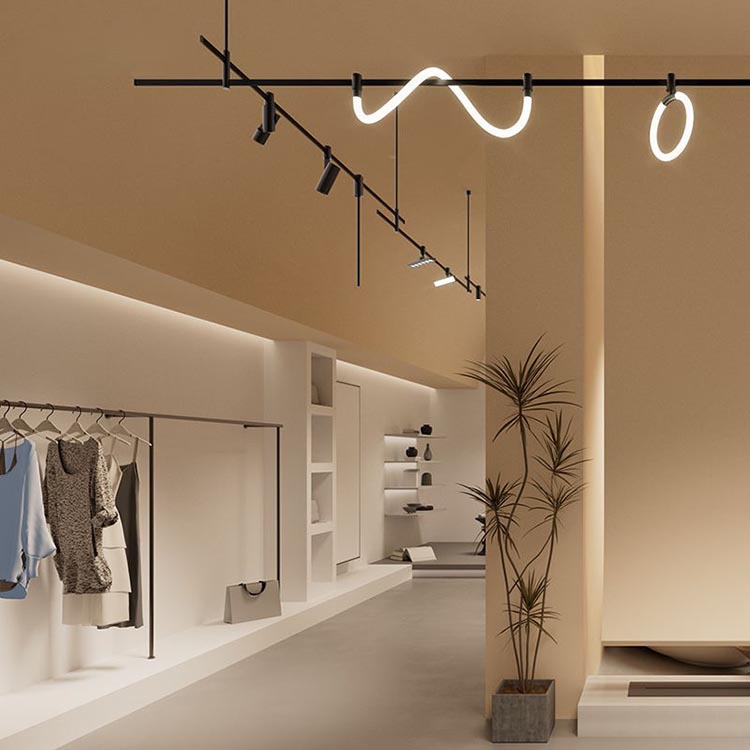
Still Not Seeing the Right Commercial Lighting Solution? Talk to Our Project Team.
If you have reviewed the website or already discussed options with sales but still need a clearer direction, send your request here. Our team will review your application, target specifications, and project constraints, then reply with a practical next step: what fits, what needs confirmation, and the fastest route to a quote and spec-ready files for your project.
Direct review of your application, specs, and project constraints for a clearer quote path.
Product matching across beam angle, CCT / CRI, drivers, dimming, and controls options.
Project documentation support, including cut sheets, wiring notes, and IES / LDT files where available.
OEM / ODM guidance for labels, packaging, housing finish, and private-brand requirements.
Get a Fast Quote for Commercial LED Lighting
Built for designers, architects, contractors, wholesalers, and project buyers. Share your application, quantity, and target specifications to get factory-direct pricing, lead-time guidance, and spec-ready support for US and EU projects.
How to Choose a Commercial Lighting Manufacturer in China
Most buyers don’t.
I have watched procurement teams spend days squeezing a supplier for a $1.20 unit-price concession, then lose that “saving” ten times over in rework, delayed approvals, dimming instability, ugly beam distribution, weak packaging, and the dead silence that arrives right after a factory realizes the buyer is finally asking smart questions.
Why is that still normal?
When people search for commercial lighting manufacturers in China, they usually think the answer is simple: compare catalogs, compare MOQ, compare price, move on. I think that is lazy buying. The U.S. Department of Energy says LED lighting could deliver more than 569 TWh in annual energy savings by 2035, with the biggest gains coming from commercial, industrial, and outdoor applications where operating hours are long and mistakes stay expensive. That means manufacturer selection is not a sourcing detail. It is an operating-cost decision.
My view is blunt.
A good China lighting manufacturer is not a company with a pretty booth, a polished Alibaba page, and twenty copied SKUs. It is a factory that can prove engineering depth, compliance discipline, batch consistency, and adult communication when the project gets ugly.
Table of Contents
Price Is the Loudest Distraction in the Room
Cheap quotes spread.
I get nervous when a supplier answers fast on FOB pricing but slow on LM-79, LM-80, TM-21, IES/LDT files, driver brand, MacAdam SDCM, CRI 90, PF >0.90, THD <20%, 0-10V, DALI-2, emergency compatibility, and warranty failure handling, because that usually means you are not talking to a serious commercial LED lighting manufacturer at all.
So what should come first?
The table below is the filter I would use before I even care about the quote.
What I check first
What I ask for
Green flag
Red flag
Factory identity
Registered entity, factory address, production photos, audit trail
Same company appears across quote, report, factory, carton, and bank info
“Factory” is really a sales office with outsourced production
Engineering proof
LM-79, IES/LDT, driver data, LED package info, thermal notes
Reports match the exact model family and wattage
Generic reports from a different housing or older revision
Compliance discipline
CE, RoHS, FCC, DLC, UL strategy, market-specific claim limits
Supplier explains what is certified, what is component-level, and what is project-only
Everything is called “certified” with no scope explanation
Clear answers on upstream sourcing and IP exposure
Evasive answers, vague indemnity, no traceability
What Separates a Real Factory from a Polished Trader
Engineering proof before sales theater
Three words only.
I do not trust any commercial lighting manufacturer in China that cannot explain why a 24° beam behaves differently from a 36° beam at a 3.2 m mounting height, why 3000K and 4000K change finish perception, or why a driver swap from one vendor to another can quietly wreck dimming curves, flicker performance, and long-run consistency.
A federal case study makes the point well: in the U.S. Department of Energy’s Forrestal Building retrofit, roughly 35,000 troffers were upgraded, lighting energy use fell by about 50%, annual savings hit about 2.4 million kWh, and annual energy-cost savings approached $258,000. That project worked because compatibility, specification discipline, and performance verification were treated as procurement work, not as afterthoughts.
QC that survives the reorder
Reorders expose lies.
Any factory can make one decent pre-production sample if the sales rep is scared enough and engineering is watching closely. The real test is whether batch No. 4 still matches batch No. 1 on finish, color binning, beam shape, driver behavior, and carton labeling when the pressure is gone and the container deadline is real.
Would you bet your project on optimism?
This is where a serious LED lighting quality control page matters more than a hundred glamour shots. I want to see incoming inspection, in-process control, aging, pre-shipment inspection, and traceability. If the supplier cannot explain how it catches a bad driver lot, a reflector tolerance drift, or a powder-coat color mismatch before the goods leave the plant, then it is not reliable. It is lucky.
Application fluency beats product dumping
One fixture family.
But five different mistakes can hide inside that family, because office lighting, retail lighting, hospitality lighting, supermarket lighting, and corridor lighting do not want the same beam logic, aperture look, glare profile, or maintenance pattern.
A lot of buyers still act as if patent risk is something that happens only to famous global brands, but the hard truth is simpler: if you are buying optics, LED tube structures, driver designs, or product lookalikes with weak upstream discipline, you can inherit a legal problem you did not price into the PO.
Want proof?
Reuters reported on December 26, 2024 that a German court ordered the recall and destruction of some Signify lighting products in a patent dispute brought by Seoul Semiconductor, with possible fines of up to 250,000 euros per violation for non-compliance. That is not a niche annoyance. That is a reminder that lighting IP still bites.
My rule is harsh.
If a supplier gets awkward when I ask who designed the optic, who owns the tooling, whether similar housings are built for competing brands, and what indemnity language they will accept, I assume the risk is real.
Supply-chain compliance is now a pricing issue
Customs remembers.
A “cheap” commercial lighting supplier in China can become very expensive once detention risk, upstream sourcing opacity, and forced-labor compliance get dragged into the conversation, especially for buyers shipping into the United States, Canada, the UK, or the EU.
Do you want a low quote or released cargo?
Reuters reported in September 2024 that U.S. Customs and Border Protection had reviewed more than 9,000 shipments valued at over $3.5 billion under the Uyghur Forced Labor Prevention Act, denied entry to nearly 4,000 shipments, and had already detained more than $1.63 billion worth of shipments in 2024 alone. Even more uncomfortable: the article notes that detention risk can follow upstream inputs across borders, not just goods shipped directly from China.
That changes buyer behavior.
I now treat upstream aluminum, LED package sourcing, driver sourcing, assembly location, and supplier declarations as part of commercial due diligence. Not legal paperwork at the end. Commercial due diligence at the start.
The Document Stack I Ask for Before I Approve a Sample
Paper matters.
I want one clean email with the following stack attached or clearly scheduled: product spec sheet, IES or LDT file, LM-79 test report, LED package and driver make/model, CCT and CRI target, SDCM commitment, finish and material notes, installation drawing, packaging spec, carton marks, warranty terms, sample lead time, mass-production lead time, and revision-control ownership.
Why so much friction?
Because soft documentation creates hard disputes. If the sample was approved at 3000K / CRI 90 / black RAL finish / 24° beam / 0-10V / Ra tolerance unspecified, then somebody will absolutely reinterpret that at production stage unless the revision trail is clean.
I also want case proof.
That is where a page like commercial lighting case studies earns its place. I do not need a fake miracle story. I need enough project evidence to tell whether the manufacturer has actually worked in hotel, retail, mixed-use, and branded commercial environments where visual comfort, consistency, and repeat orders matter.
The Questions I Would Send Every Supplier on Day One
Here is my preferred pressure test.
“Who is the actual manufacturer of this fixture, and will that name match the quote, carton, and supporting reports?”
“Which test reports apply to this exact housing and wattage, not just a similar family?”
“What are the exact LED package and driver brands for the quoted version?”
“What is your standard SDCM target: 3-step, 5-step, or wider?”
“How do you control glare, beam consistency, and color shift across batches?”
“What changes the MOQ: housing, finish, CCT, optics, dimming protocol, or packaging?”
“What is your failure-handling process after installation: spare ratio, driver replacement, full fixture replacement, or local parts support?”
“Can you show one example of a repeat order where the spec remained stable for at least twelve months?”
Weak suppliers hate those questions.
Good suppliers answer them fast, specifically, and without sounding offended.
FAQs
What is a commercial lighting manufacturer in China?
A commercial lighting manufacturer in China is a factory-based company that designs, tests, and produces luminaires for offices, retail, hospitality, warehouses, and outdoor projects, usually with control over engineering, sourcing, assembly, quality checks, and export documentation rather than acting only as a trading intermediary. I look for real control over optics, drivers, housing, QC, and documentation, not just access to a product catalog.
How do I verify a reliable lighting supplier in China?
A reliable lighting supplier in China is a company that can consistently prove product performance, compliance records, batch traceability, engineering response speed, and shipment discipline across multiple orders, while giving clear answers on LM-79, driver brands, lead time, warranty handling, and after-sales accountability. I verify that by matching factory identity, reports, sample behavior, and communication quality against the same model code.
What documents should I ask from an OEM commercial lighting manufacturer in China?
The core document set from an OEM commercial lighting manufacturer in China should include specification sheets, IES or LDT files, test reports, BOM-level driver and LED information, certification records, QC flow charts, warranty terms, packaging details, and a sample approval process tied to revision control. If those documents arrive late, incomplete, or inconsistent, I assume the project will become expensive in exactly the same way.
Why do patent and trade risks matter when choosing a China lighting manufacturer?
Patent and trade risks matter because a luminaire that appears cheap at quotation stage can become expensive or unsellable after import detention, compliance review, or IP claims, especially when the supplier cannot prove upstream sourcing, component legitimacy, or lawful use of optics, drivers, and packaging. Buyers who ignore this are not being practical. They are borrowing trouble.
What is the biggest mistake buyers make when choosing commercial lighting manufacturers in China?
The biggest mistake buyers make is treating commercial lighting like a simple unit-price purchase instead of a performance-and-risk purchase, which causes them to underweight engineering evidence, QC discipline, compliance scope, application fit, and post-shipment accountability. I see this constantly, and I almost never see it end cheaply.
Your Next Step
Start smaller.
Do not ask ten factories for ten random quotes and hope the lowest number reveals the truth. Shortlist three suppliers, send the same RFQ pack to each one, force them onto the same spec language, and compare how they answer, not just what they charge.