Still Not Seeing the Right Commercial Lighting Solution? Talk to Our Project Team.
If you have reviewed the website or already discussed options with sales but still need a clearer direction, send your request here. Our team will review your application, target specifications, and project constraints, then reply with a practical next step: what fits, what needs confirmation, and the fastest route to a quote and spec-ready files for your project.
Direct review of your application, specs, and project constraints for a clearer quote path.
Product matching across beam angle, CCT / CRI, drivers, dimming, and controls options.
Project documentation support, including cut sheets, wiring notes, and IES / LDT files where available.
OEM / ODM guidance for labels, packaging, housing finish, and private-brand requirements.
Get a Fast Quote for Commercial LED Lighting
Built for designers, architects, contractors, wholesalers, and project buyers. Share your application, quantity, and target specifications to get factory-direct pricing, lead-time guidance, and spec-ready support for US and EU projects.
Surface-Mounted vs Recessed Commercial Lighting: How to Choose
Table of Contents
The Real Fight Is Not “Modern vs Old-Fashioned”
Let’s be blunt.
Most people frame surface mounted vs recessed lighting as a design preference. That is the lazy version of the argument. In real commercial projects, the fixture choice often exposes whether the team understands ceiling structure, labor hours, service access, glare, photometrics, and who will be blamed when the ceiling looks like it was attacked with a hole saw.
I care about the ceiling first, not the catalog. If the ceiling is concrete, shallow, crowded with ducts, or already finished, surface-mounted commercial lighting often beats the “cleaner” recessed option before we even discuss aesthetics. But if the project has a coordinated suspended ceiling, decent plenum depth, and a design brief that demands quiet architectural lines, recessed commercial lighting can look sharper and feel more intentional.
So why do buyers still get this wrong?
Because fixture price is visible. Installed risk is hidden.
The U.S. Department of Energy says LEDs are highly efficient and notes that recessed downlights are common in office and commercial settings; it also estimates more than 600 million recessed downlights are installed in U.S. homes and businesses. That tells me something uncomfortable: recessed lighting is familiar, but familiarity does not make it automatically correct.
Surface-Mounted Commercial Lighting: The Honest Workhorse
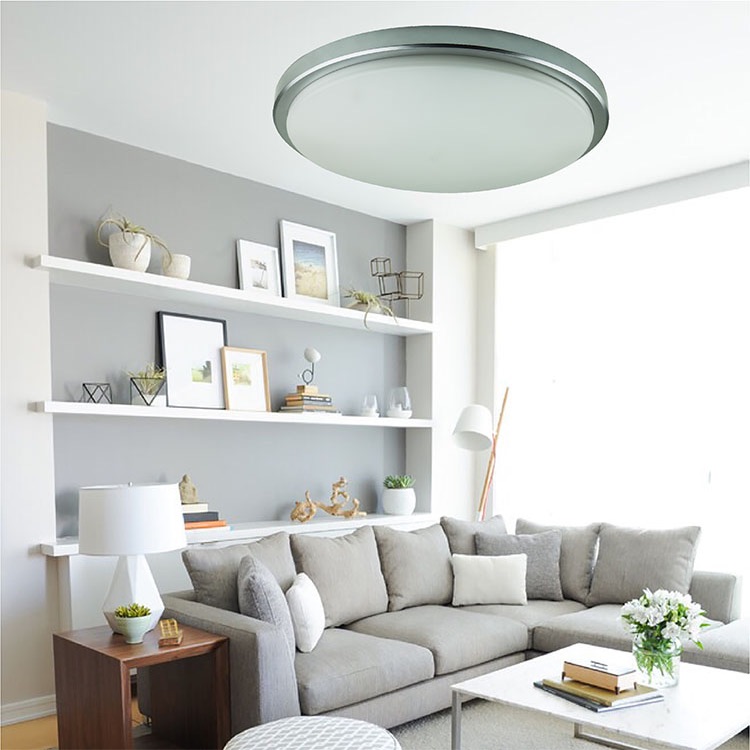
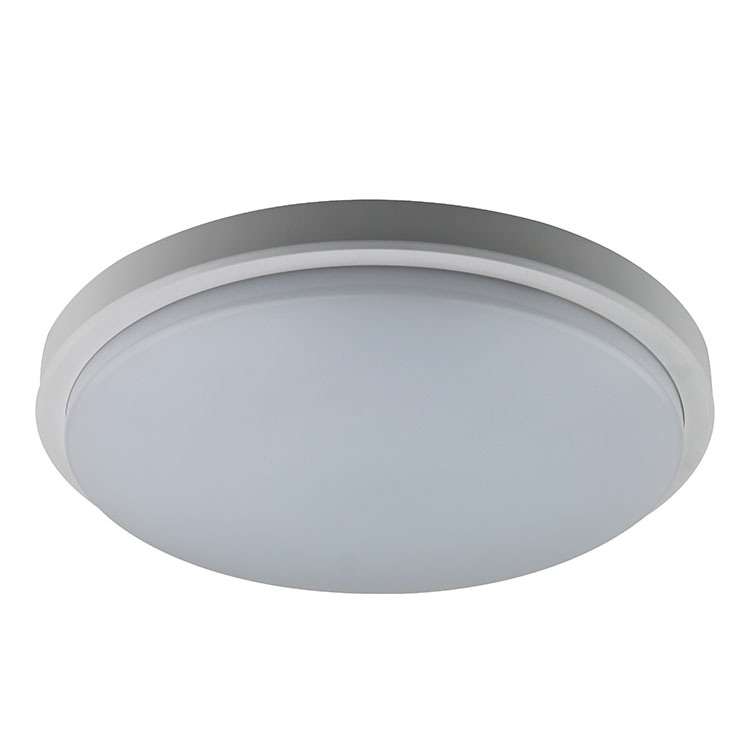
Surface-mounted commercial lighting attaches directly to the ceiling surface. No deep ceiling void. No major cutout. No pretending the installer has infinite space above the tiles.
That matters.
In renovation work, especially offices, corridors, retail refreshes, schools, clinics, and concrete-slab buildings, surface-mounted fixtures can save the project from slow approvals and ugly surprises. A good 12W surface mounted LED ceiling downlight can give a commercial interior a clean enough look without forcing the contractor to carve into a ceiling system that was never designed for recessed cans.
But here is the hard truth: surface-mounted fixtures are visible, and cheap visible fixtures look cheap from across the room.
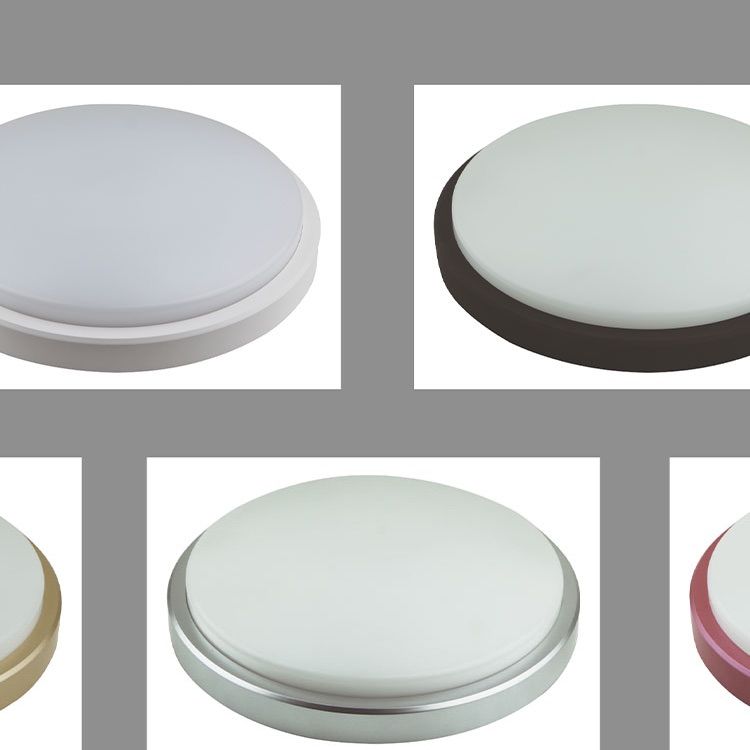
The housing finish, trim thickness, optic depth, driver quality, CCT binning, CRI, and glare control all show up in the final space. A bad surface mount LED downlight gives you ceiling acne. A good one looks deliberate.
Where Surface-Mounted Fixtures Usually Win
Surface mounted commercial lighting is often the better call when the building has limited ceiling depth, hard concrete ceilings, exposed MEP services, uncertain as-built drawings, or a tight retrofit schedule. I would also lean surface-mounted when maintenance teams need fast access to drivers and replacements.
Think corridors. Think back-of-house areas. Think lobbies where the ceiling is already finished and the client does not want dust, downtime, and a subcontractor debate over cutting tolerance.
And think rollout work. In multi-site retail or hospitality upgrades, repeatability beats design romance. The Department of Energy’s Interior Lighting Campaign reported that Target completed nearly 130,000 LED lighting installations across 107 sites, saving 26 million kWh annually with an estimated 1.6-year payback. That is the kind of rollout logic where installation speed and repeatable SKUs matter more than showroom theory.
Recessed Commercial Lighting: Beautiful, Expensive, and Often Misused
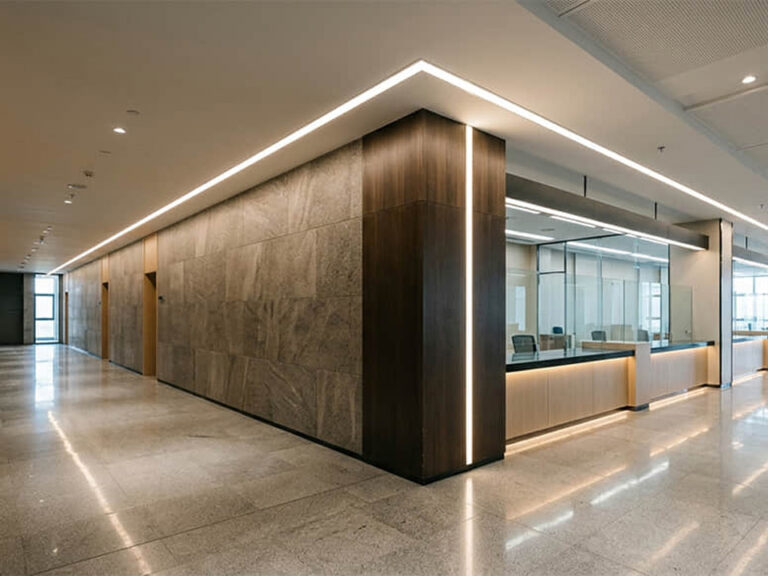
Recessed commercial lighting sits inside the ceiling. The visible plane is cleaner. The fixture disappears. Architects like it. Owners like the renderings. Tenants like the absence of clutter.
I like it too.
But I do not like it when teams specify recessed LED ceiling lights commercial spaces cannot physically support. A recessed fixture needs space above the ceiling, a clean cutout, safe driver placement, thermal breathing room, access for service, and coordination with sprinklers, ducts, cable trays, insulation, acoustic panels, and sometimes fire-rated assemblies.
Miss one of those, and the “premium” fixture becomes a site problem.
For offices, hotels, boutiques, and reception areas, a deep recessed aperture can reduce glare and make the ceiling feel calmer. A 6W anti-glare recessed LED ceiling spotlight fits that type of visual brief. For offices and meeting rooms where clean lines matter, a 20W recessed linear LED light can create a disciplined ceiling rhythm without the object-heavy look of surface fixtures.
Still, recessed is not magic. It is a trade.
Where Recessed Fixtures Usually Win
Recessed commercial lighting usually wins in high-design spaces: hotel corridors, boardrooms, reception areas, luxury retail, galleries, showrooms, executive offices, and any interior where the ceiling should feel calm rather than busy.
The big advantage is visual quiet. The second advantage is optical control. Deep-set reflectors, baffles, narrow beam options, and anti-glare trim designs can keep the light source out of direct view. That matters because glare complaints are not theoretical. OSHA’s workstation guidance warns that bright light sources and uneven lighting can create contrast problems, eye fatigue, and headaches; it also recommends indirect or shielded lighting where possible.
The Comparison Table Buyers Should Have Before Asking for a Quote
Decision Factor
Surface-Mounted Commercial Lighting
Recessed Commercial Lighting
Best fit
Renovations, concrete ceilings, shallow ceilings, corridors, utility spaces, fast rollouts
New builds, premium interiors, suspended ceilings, hotels, offices, retail display areas
Ceiling requirement
Can mount directly to finished ceiling or slab
Needs ceiling void, cutout, access, and coordination
Visual effect
Fixture is visible; can look clean or bulky depending on housing quality
Fixture is more hidden; cleaner architectural ceiling plane
Installation labor
Usually faster and less invasive
Usually slower, more coordinated, and more dependent on ceiling conditions
Maintenance access
Easier access to fixture body and driver in many layouts
Can be harder if driver or fixture is buried above ceiling
Glare control
Depends heavily on diffuser, lens, optic depth, and mounting height
Often stronger when using deep baffles, reflectors, and anti-glare trims
Retrofit risk
Lower risk when ceiling conditions are unknown
Higher risk if as-built ceiling information is weak
Cost reality
Fixture may cost similar, but installed labor is often lower
Fixture may look better, but labor and ceiling repair can raise total cost
Good product direction
Surface mount LED downlights, ceiling-mounted linear fixtures, low-profile commercial ceiling lights
Recessed LED downlights, trimless downlights, recessed linear lights, deep anti-glare spotlights
That is the part many buyers miss, because a lighting quote often separates product price from the real-world pain of installation. Recessed commercial lighting may require ceiling cutting, patching, alignment, plenum checks, fire considerations, and more inspection time. Surface mounted commercial lighting may reduce that burden, but it exposes the product body, which means poor finish quality becomes immediately visible.
We need to talk about total installed cost, not just unit cost.
For commercial lighting fixtures, I would ask these questions before approving either option:
Does the ceiling have enough depth for recessed housings and drivers? Are there sprinkler lines, ducts, beams, cable trays, or insulation conflicts? Will maintenance teams be able to replace drivers without damaging ceiling tiles? Is the client buying an aesthetic effect or just copying another project? Are there lighting controls involved, such as 0-10V, DALI, TRIAC, Casambi, or occupancy sensors?
And one more: who pays when the fixture does not fit?
Commercial buyers should also review the broader range of commercial LED ceiling lighting solutions before locking the layout. If the space needs recessed fixtures, compare recessed LED downlights against trimless, deep anti-glare, and adjustable options instead of choosing the first round downlight that fits the wattage column.
Codes, Foot-Candles, and the Minimum-Compliance Trap
Minimum light is not good light.
OSHA’s construction illumination rule lists minimum foot-candle levels such as 5 foot-candles for indoor warehouses, corridors, hallways, and exitways, and 30 foot-candles for first aid stations, infirmaries, and offices during construction work. Those figures are legal safety floors, not a lighting design strategy for a finished commercial interior.
Shipyard rules show the same pattern: OSHA lists 5 foot-candles for general landside corridors, exits, stairs, and walkways, 10 foot-candles for work areas like machine shops and warehouses, and 30 foot-candles for offices and first aid spaces. Again, useful as a compliance reference. Not enough as a design philosophy.
This is where a lot of bad commercial lighting packages die slowly. They meet a number. They fail the room.
The best lighting for commercial spaces needs the right illuminance, yes, but also reasonable uniformity, low glare, suitable CCT, stable CRI, clean dimming behavior, and drivers that do not buzz after six months. For offices, I would rather see a careful layout with shielded optics and sensible task lighting than a ceiling packed with high-lumen fixtures that make every workstation feel like an interrogation room.
My Decision Rule: Use the Ceiling as the Witness
I would not start with the fixture catalog. I would start with the ceiling.
If the ceiling says “I am shallow, crowded, finished, expensive to cut, or impossible to patch cleanly,” then surface-mounted lighting deserves serious consideration. If the ceiling says “I am suspended, accessible, coordinated, and part of a premium interior concept,” then recessed lighting may justify its extra coordination.
Here is the practical decision path:
Choose Surface-Mounted Lighting When
The project is a renovation, the ceiling depth is limited, installation speed matters, future maintenance access matters, or the owner wants a lower-risk replacement path. Surface mount LED downlights and surface-mounted linear fixtures are especially useful in corridors, retail refreshes, general offices, utility zones, and commercial interiors where cutting the ceiling adds more trouble than value.
Choose Recessed Lighting When
The project is a new build or well-coordinated fit-out, the ceiling has proper depth, the interior needs a clean architectural finish, and glare control is a major design requirement. Recessed LED ceiling lights commercial teams specify for hotels, boutiques, boardrooms, and reception areas should be selected for optics first, wattage second.
Choose Neither Until You Check the Submittals
This is my unpopular opinion: if the supplier cannot provide photometric data, cutout dimensions, driver information, dimming compatibility, finish options, CCT/CRI details, and quality control evidence, the fixture is not ready for a serious commercial project.
Energy Savings Are Real, But Bad Lighting Still Loses
LED efficiency is not the debate anymore.
The DOE projects that LED lamps and luminaires could represent 84% of all lighting installations by 2035 and that LED lighting could top 569 TWh in annual energy savings if program goals are achieved. Most projected 2035 savings are expected from commercial and industrial buildings and outdoor lighting because those applications have high output and long operating hours.
That should push commercial buyers toward LEDs, but not toward careless specification.
A bad recessed layout can waste money through overlighting. A bad surface-mounted layout can create glare and ceiling clutter. A cheap driver can flicker. A poor thermal design can shorten life. A mismatched CCT batch can make a hotel corridor look patched together.
So the real question is not whether LED wins. It does.
The question is whether your fixture format supports the room, the ceiling, the workers, the maintenance team, and the budget after installation.
FAQs
What is the difference between surface-mounted and recessed commercial lighting?
Surface-mounted commercial lighting is installed on the ceiling surface, while recessed commercial lighting is installed inside a ceiling cutout or ceiling void, so the real difference is not just appearance but also construction access, glare control, maintenance strategy, ceiling type, and installed cost. Surface-mounted fixtures are usually easier to retrofit, while recessed fixtures usually create a cleaner ceiling plane.
Is recessed lighting better for commercial spaces?
Recessed lighting is better for commercial spaces when the project has a finished ceiling, enough ceiling depth, coordinated HVAC and sprinkler layouts, and a design brief that values a clean architectural plane over fast access, because the fixture disappears visually but demands more planning before installation. It is not automatically better for renovations or concrete ceilings.
Are surface mount LED downlights good for offices?
Surface mount LED downlights are good for offices when ceiling access is limited, slab ceilings cannot be cut, budgets need tighter labor control, or future maintenance matters more than a flush visual line, but they still need proper optics, spacing, and shielding to avoid glare. Do not use shallow, exposed, high-brightness fixtures over desks without checking visual comfort.
How do you choose between surface mounted and recessed lighting?
Choose between surface mounted and recessed lighting by checking ceiling construction first, then comparing visual intent, installation labor, glare tolerance, fixture depth, maintenance access, controls compatibility, and long-term replacement risk, because the better fixture is usually the one that fits the building, not the brochure. Start with ceiling reality, then review photometrics.
What is the best lighting for commercial spaces?
The best lighting for commercial spaces is a coordinated LED system that matches the task, ceiling type, mounting method, glare limits, CCT, CRI, controls, maintenance access, and budget, rather than a single fixture style chosen only for appearance or wattage. Offices, hotels, retail stores, and corridors often need different fixture families.
Final Thoughts: Pick the Fixture the Building Will Tolerate
Do not ask, “Which looks better?” first.
Ask what the ceiling can accept, what the maintenance team can service, what the installer can repeat cleanly, and what the occupants will tolerate for eight hours a day. Surface-mounted commercial lighting is not second-class. Recessed commercial lighting is not automatically premium. Both can be excellent. Both can be abused.
If you are choosing commercial lighting fixtures for an office, hotel, corridor, retail store, or multi-site rollout, send your ceiling type, target CCT, CRI, wattage range, quantity, drawings, and installation constraints to Meagree’s team through the commercial LED lighting quote page. Ask for fixture matching, cut sheets, beam options, driver details, and project-ready recommendations before the ceiling gets cut.