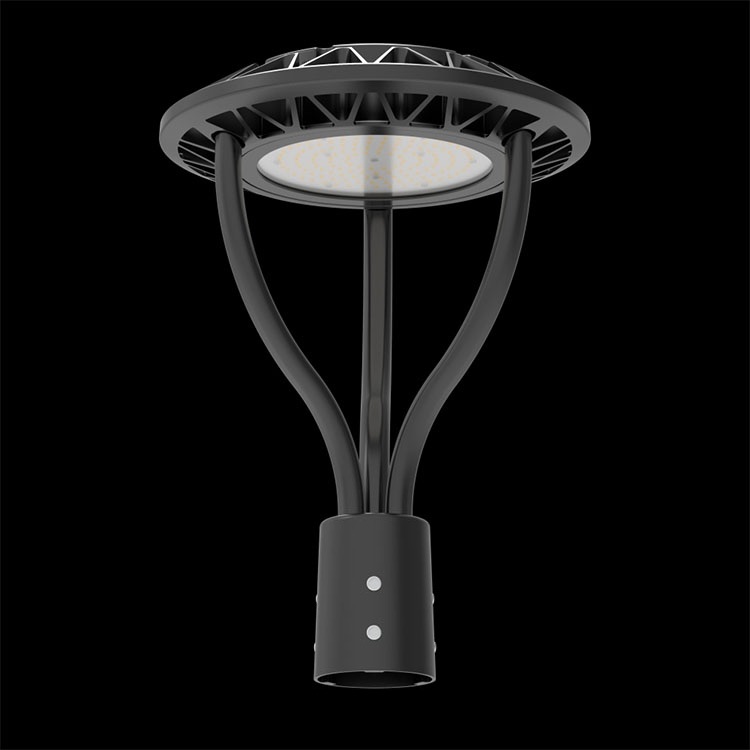
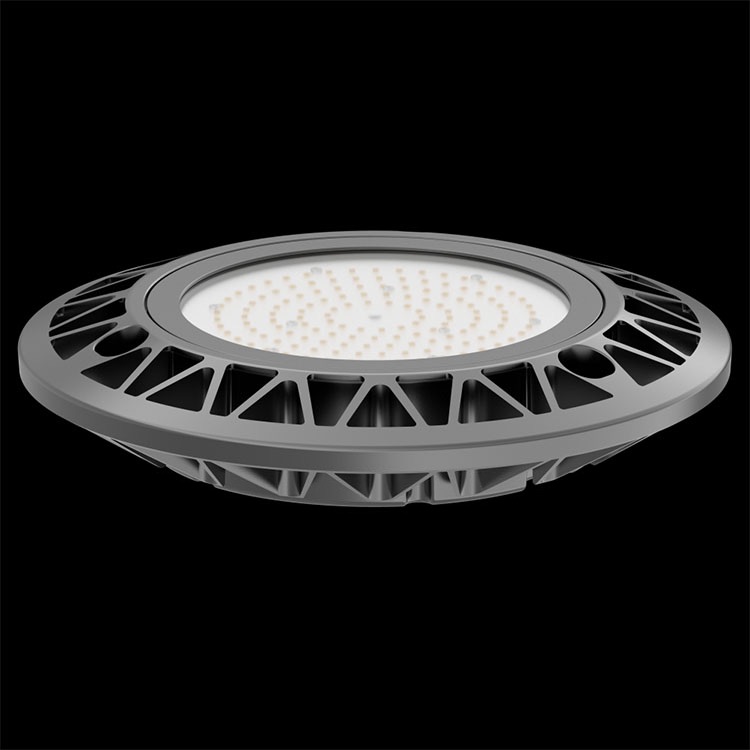
Still Not Seeing the Right Commercial Lighting Solution? Talk to Our Project Team.
If you have reviewed the website or already discussed options with sales but still need a clearer direction, send your request here. Our team will review your application, target specifications, and project constraints, then reply with a practical next step: what fits, what needs confirmation, and the fastest route to a quote and spec-ready files for your project.
Direct review of your application, specs, and project constraints for a clearer quote path.
Product matching across beam angle, CCT / CRI, drivers, dimming, and controls options.
Project documentation support, including cut sheets, wiring notes, and IES / LDT files where available.
OEM / ODM guidance for labels, packaging, housing finish, and private-brand requirements.
Get a Fast Quote for Commercial LED Lighting
Built for designers, architects, contractors, wholesalers, and project buyers. Share your application, quantity, and target specifications to get factory-direct pricing, lead-time guidance, and spec-ready support for US and EU projects.
How to Combine Ambient, Accent, and Decorative Lighting in Commercial Interiors
Table of Contents
The Ugly Truth: Most “Layered Lighting” Is Just Expensive Guesswork
Light exposes mistakes.
When a commercial interior uses ambient, accent, and decorative lighting without a hierarchy, the result usually looks bright on the reflected ceiling plan, acceptable in a supplier catalog, and strangely dead after installation because every layer is fighting for the same visual job. Why pretend a pendant can rescue a bad lighting schedule?
I’ll be blunt: commercial interior lighting is not about “making the space bright.” That is junior-level thinking. The real work is controlling what people notice first, what they ignore, how long they feel comfortable staying, and whether the owner can maintain the system without calling three subcontractors and a priest.
We have all seen it. A hotel lobby with glamorous decorative fixtures and dead corners. A boutique with expensive merchandise under flat, gray light. An office reception area where the ceiling is brighter than the people standing under it. The invoice says “premium lighting.” The room says otherwise.
Start with the project logic, not the fixture catalog. Meagree’s commercial LED lighting range is useful here because it separates fixture families by application: downlights, linear lights, track lights, spotlights, ceiling lights, magnetic track systems, and outdoor fixtures. That is how professionals should think. Not “Which light looks nice?” but “Which layer is doing which job?”
The Three-Layer Stack: Ambient, Accent, Decorative
Commercial lighting design should behave like editing. Remove noise. Direct attention. Leave only what matters.
Ambient lighting is the base layer. It gives the room usable visibility, sets the visual floor, and keeps circulation safe. In offices, the Canadian Centre for Occupational Health and Safety notes that 300–500 lux is a common office lighting range when no task lamp is used, while also warning that glare and excessive contrast matter as much as raw light level. That last part is where many projects fail. They hit the lux target and still irritate everyone in the room.
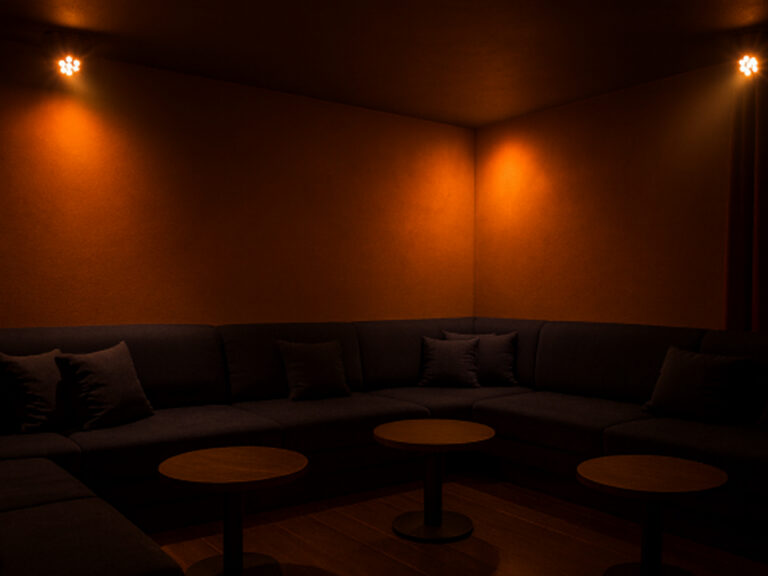
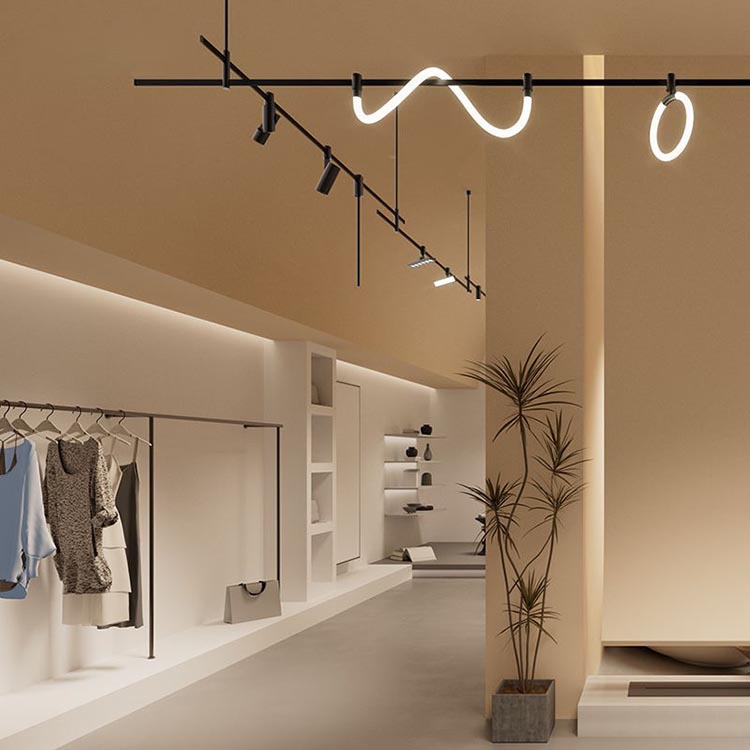
Accent lighting is the weapon. It gives the eye a reason to move. It pulls attention to a reception wall, display shelf, artwork, menu board, textured column, fresh-food counter, or hotel check-in desk. This is where LED track lighting earns its place, especially when the layout changes or the target surfaces are not perfectly fixed.
Decorative lighting is the visible character. Pendants, wall sconces, chandeliers, glowing coves, and sculptural fixtures tell the customer what kind of place they walked into. But here is the hard truth: decorative lighting should almost never be trusted as the main working light in a commercial interior. It is too often selected by mood board, not by beam data.
Lighting Layer
Real Job
Typical Fixture Families
Useful Technical Targets
Common Failure
Ambient lighting
Baseline visibility and comfort
Downlights, linear lights, ceiling fixtures, panels
3000K–4000K, CRI 80–90+, UGR control, 0-10V or DALI dimming
Too flat, too bright, or full of glare
Accent lighting
Visual hierarchy and focus
Track lights, spotlights, adjustable downlights, magnetic track heads
Scene presets, daylight response, after-hours schedules
Installed but never commissioned properly
Ambient Lighting: Stop Worshiping Wattage
The ambient layer should be boring in the best way.
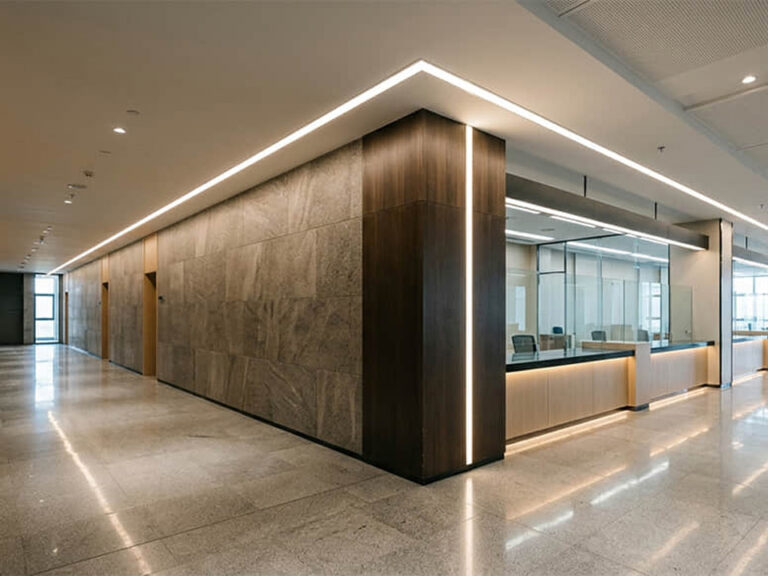
I do not want people staring at the ceiling unless the ceiling is the product. In most commercial interiors, ambient lighting should quietly support movement, faces, surfaces, and safety. That often means LED downlights for lobbies, corridors, meeting rooms, hotels, and reception areas, or LED linear lighting for offices, retail aisles, circulation zones, and clean architectural ceilings.
But wattage is not a design strategy. A 15W downlight with poor optics can be worse than a 12W fixture with controlled glare, clean beam distribution, and proper spacing. Buyers hate hearing that because wattage is easy to compare on a spreadsheet. Beam quality is not.
For commercial interior lighting, I would rather see a lower ambient level with strong control and smart accenting than a ceiling full of overpowered fixtures. Over-lit rooms age badly. They make finishes look cheap, flatten faces, punish screens, and waste energy.
Use ambient lighting for:
Safe movement through the room
General visibility across work zones
Soft vertical brightness on walls
A stable base for accent and decorative layers
Day-to-night scene flexibility
And test it before rollout. One mockup bay can save a multi-site project from a very public mistake.
Accent Lighting: The Layer That Sells the Room
Accent lighting in interior design is where commercial spaces become persuasive.
Retailers know this, at least the good ones do. Hotels know it too. Museums obsess over it. Offices often ignore it, which is why so many reception areas feel like airport corridors with a logo slapped on the wall.
The point of accent lighting is not “more light.” The point is contrast. If everything is equally lit, nothing matters. For merchandise, textured materials, wall graphics, artwork, and reception features, adjustable spotlights or track-mounted heads let the designer create priority without rebuilding the ceiling every time the layout changes.
This is where magnetic track light systems can make sense in premium interiors. They support modular layouts, cleaner ceiling lines, and easier repositioning. But I would not use them just because they look fashionable. Use them when the project needs flexibility, not because the render looks expensive.
A practical accent plan should answer five questions before any fixture is ordered:
What exact object or surface deserves attention?
What is the mounting height?
What beam angle fits the target size?
What glare risk exists from normal viewing positions?
What happens when the tenant changes the layout?
For commercial lighting design tips, this one is ugly but true: if nobody is responsible for aiming the lights after installation, the accent layer is unfinished.
Decorative Lighting: The Jewelry, Not the Skeleton
Decorative lighting for commercial spaces has one job: make the interior memorable.
That can mean a warm pendant cluster over a hotel lounge, a slim linear glow behind a reception desk, a sculptural chandelier in a restaurant, or wall-mounted luminaires that add rhythm to a corridor. Decorative fixtures signal price, brand, and mood before a customer reads a single sign.
But decorative lighting is also where budgets go to die.
I have seen project teams spend heavily on visible fixtures while treating drivers, dimming compatibility, glare control, and service access as afterthoughts. That is backwards. A beautiful decorative fixture with bad dimming is not premium. It is a complaint waiting for opening night.
Use decorative lighting to:
Reinforce brand style
Add scale to large interiors
Create warmth in hospitality and dining spaces
Support wayfinding and visual rhythm
Make premium zones feel intentional
Do not use it to compensate for a weak ambient plan. That trick rarely works.
The Data Says Controls Are Not Optional
Here is where the industry gets uncomfortable: the best lighting projects are no longer just fixture projects. They are systems projects.
The U.S. Department of Energy reported that its Interior Lighting Campaign participants installed or upgraded more than 2.8 million lighting fixtures and control systems, cutting energy use by an average of 54% and saving $68 million on energy bills. The same DOE article states that lighting accounts for 15%–20% of electricity consumed annually by U.S. buildings, and that lighting energy savings can reach up to 80% when controls such as dimmers, timers, and occupancy sensors are added.
Berkeley Lab’s study of The New York Times Building is even more useful for designers because it was not just about replacing lamps. The project used automatically dimmable lighting, occupancy controls, daylight response, and automated shades. The result: 56% annual lighting energy savings across a 40-foot-deep perimeter zone, with 78% of surveyed occupants very satisfied with overall lighting quality.
Another Berkeley Lab “living lab” project on a 40,000-square-foot New York office floor found that advanced lighting and automated shades reduced lighting energy use by 79% in the 40-foot perimeter zone, while peak lighting electric demand dropped 74%. That is not decoration. That is operational leverage.
So yes, dimming matters. Occupancy sensing matters. Daylight harvesting matters. Scene control matters. And commissioning matters most because an uncommissioned control system is just expensive wall clutter.
How I Would Layer a Real Commercial Interior
Let’s stop talking in slogans.
For a 300 m² boutique, I would keep the ambient layer restrained. Use recessed downlights or linear slots to support circulation and cash-wrap visibility. Then I would put the budget into adjustable accent lighting with CRI 90+, narrow and medium beams, and careful aiming on merchandise faces, not aisle floors. Decorative pendants would appear only where they reinforce brand memory: fitting lounge, checkout, feature table.
For a hotel lobby, I would separate vertical brightness from sparkle. Ambient downlights alone often make lobbies feel dead. Add wall grazing, reception-desk accents, warm decorative pendants, and dimmed evening scenes. Use 2700K–3000K in lounge zones, maybe 3000K–3500K at reception if face recognition and paperwork matter.
For an office reception area, I would avoid the “corporate aquarium” effect: too many cool white ceiling lights and no visual depth. Use clean architectural ambient light, a controlled accent on the logo wall, and decorative elements only where guests pause. If the ceiling is minimal, a trimless downlight or linear grille approach can work, but only with glare control.
For restaurants, I would design from the table upward. Not from the ceiling downward. Food, faces, menus, and circulation need different treatment. Decorative fixtures can carry mood, but they should dim smoothly and never create harsh shadows across plates.
For more application planning, Meagree’s commercial lighting design section is the internal resource I would connect readers to because it groups ideas around beam control, anti-glare comfort, layout thinking, and application fit.
A Practical Specification Checklist Before You Approve Anything
Most bad lighting decisions happen before procurement. The buyer thinks they are comparing products. They are actually comparing incomplete promises.
Before approving commercial interior lighting fixtures, ask for:
IES or LDT photometric files
Beam angle options such as 15°, 24°, 36°, and 45°
CCT options such as 2700K, 3000K, 3500K, and 4000K
CRI data, preferably CRI 90+ for retail and hospitality
TM-30 data when color quality really matters
SDCM binning target, ideally SDCM ≤3 for visible consistency
Driver brand and dimming type: 0-10V, TRIAC, DALI, or DALI-2
Flicker performance information
UGR or glare-control structure where relevant
Thermal design details and lifetime claims
Access method for driver replacement
Finish sample under the actual CCT
Warranty terms and project documentation
The DOE’s solid-state lighting optimization work, led by Pacific Northwest National Laboratory, says advanced lighting systems need to deliver the right amount and spectrum to the right place at the right time, and notes that basic lighting controls have historically produced 24%–38% energy savings estimates while roughly two-thirds of commercial buildings have no controls beyond a light switch. That is a giant gap between what the technology can do and what many buildings actually use.
Layered Lighting Design by Space Type
Commercial Interior Type
Ambient Strategy
Accent Strategy
Decorative Strategy
My Strong Opinion
Retail boutique
Moderate general light with clean ceiling rhythm
Track or magnetic track on merchandise, displays, and feature walls
Pendants or wall features near checkout and lounge zones
Spend more on beam control than decorative drama
Hotel lobby
Warm ambient downlights plus vertical brightness
Reception desk, artwork, columns, plants, signage
Statement fixtures, sconces, cove glow
The lobby should feel expensive before it looks bright
Office reception
Low-glare downlights or linear lighting
Logo wall, seating zone, material samples
Minimal pendants or wall lights
Avoid cold, flat corporate lighting
Restaurant
Soft ambient circulation light
Tables, bar shelves, textured walls
Warm pendants, chandeliers, wall sconces
Design for faces and food, not ceiling photos
Gallery or museum
Controlled low ambient light
Narrow-beam, high-CRI spotlights
Usually restrained or absent
The object is the hero, not the fixture
Supermarket fresh area
Efficient ambient grid with good uniformity
Produce, meat, bakery, promotional zones
Limited decorative use
Color rendering can change perceived freshness
The Order of Operations I Trust
Here is the sequence I would use on a serious commercial interiors project:
1. Define the visual hierarchy
Pick the first three things a visitor should notice. If the answer is “everything,” the design has no spine.
2. Set the ambient baseline
Choose downlights, linear fixtures, or ceiling systems that give safe, comfortable visibility without flattening the room. Keep glare under control from the beginning.
3. Add accent lighting only where it earns attention
Use track lighting, adjustable spotlights, or magnetic heads to shape focus. Do not sprinkle accent fixtures randomly across the ceiling like confetti.
4. Place decorative lighting where people pause
Decorative lighting works best at thresholds, waiting zones, lounges, dining tables, reception desks, and brand moments. It performs poorly when used as a lazy substitute for a real lighting layer.
5. Build scenes and controls before handover
A layered lighting design without scenes is half a design. Day mode, evening mode, cleaning mode, after-hours mode, presentation mode, and emergency behavior should be discussed before installation, not after the owner complains.
FAQs
What is commercial interior lighting?
Commercial interior lighting is the planned use of general, task, accent, decorative, emergency, and control-based lighting to make revenue-producing or public spaces visible, comfortable, code-ready, and brand-appropriate while managing glare, energy use, maintenance access, and fixture performance over time properly. It covers offices, hotels, restaurants, retail stores, showrooms, supermarkets, galleries, clinics, and mixed-use interiors.
How do you combine ambient, accent, and decorative lighting?
You combine ambient, accent, and decorative lighting by assigning each layer a job: ambient light sets safe baseline visibility, accent light controls visual priority, and decorative lighting gives the room identity without being allowed to carry the full functional load. After that, dimming scenes and commissioning make the layers work together instead of competing.
What is the best color temperature for commercial interiors?
The best CCT for commercial interiors is the color temperature that supports the activity, finish palette, daylight exposure, and brand mood, with 2700K–3000K often suiting hospitality, 3000K–3500K retail, and 3500K–4000K offices or service spaces when glare is controlled and surfaces are tested. Always review samples under the actual fixture, not just under office ceiling light.
Why is accent lighting important in interior design?
Accent lighting matters in interior design because it gives the eye a hierarchy, using focused beam angles, contrast ratios, and controlled glare to pull attention toward merchandise, artwork, reception desks, food displays, textured walls, or architectural features instead of leaving the whole room visually flat. Without accent lighting, even expensive interiors can feel generic.
What are the biggest mistakes in layered lighting design?
The biggest commercial lighting mistakes are choosing wattage before beam angle, ignoring glare, mixing random CCTs, treating decorative fixtures as working light, skipping dimming compatibility, and approving samples without checking CRI, TM-30 data, driver quality, thermal design, and maintenance access. These mistakes are boring, common, and expensive.
Which fixtures are most useful for commercial interior lighting?
The most useful fixtures for commercial interior lighting are downlights for controlled ambient light, linear lights for clean architectural brightness, track lights and spotlights for accent control, magnetic track systems for flexible premium layouts, and decorative fixtures for visible brand character. The best mix depends on ceiling type, room use, maintenance plan, and visual priority.
Your Next Step: Build the Lighting Schedule Before You Buy Fixtures
Do not start with a fixture list. Start with a lighting hierarchy.
Map the ambient layer. Mark the accent targets. Choose where decorative lighting should be seen. Then demand photometric files, driver details, CCT and CRI options, dimming compatibility, glare-control information, and maintenance access before approving samples.
If you are planning a retail, hospitality, office, showroom, or commercial fit-out project, use Meagree’s contact page for commercial LED lighting quotes and send the room type, ceiling height, floor plan, desired CCT, beam angle needs, quantity, control method, and target installation schedule. The faster those facts are clear, the faster a supplier can stop guessing and start giving you lighting that actually works.