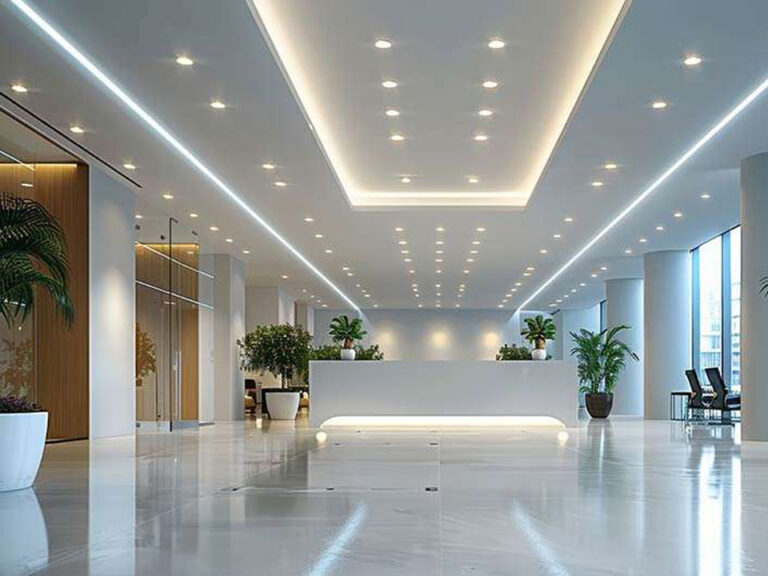
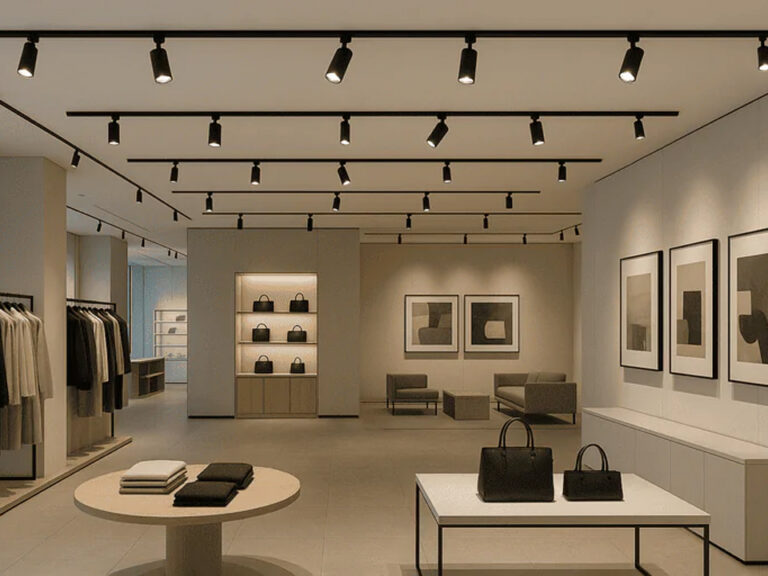
Still Not Seeing the Right Commercial Lighting Solution? Talk to Our Project Team.
If you have reviewed the website or already discussed options with sales but still need a clearer direction, send your request here. Our team will review your application, target specifications, and project constraints, then reply with a practical next step: what fits, what needs confirmation, and the fastest route to a quote and spec-ready files for your project.
Direct review of your application, specs, and project constraints for a clearer quote path.
Product matching across beam angle, CCT / CRI, drivers, dimming, and controls options.
Project documentation support, including cut sheets, wiring notes, and IES / LDT files where available.
OEM / ODM guidance for labels, packaging, housing finish, and private-brand requirements.
Get a Fast Quote for Commercial LED Lighting
Built for designers, architects, contractors, wholesalers, and project buyers. Share your application, quantity, and target specifications to get factory-direct pricing, lead-time guidance, and spec-ready support for US and EU projects.
Which Commercial Lighting Fixtures Are Easier to Maintain Long Term
Maintenance costs hide.
A fixture can look cheap on a quote sheet, clean in a render, and “long life” on a datasheet, yet still punish the building owner five years later because the driver is buried, the optics yellow, the trim cannot be removed cleanly, or the installer needed a lift just to reach a failed module.
Why pretend otherwise?
I have seen procurement teams obsess over wattage and unit price while ignoring the boring question that actually decides long-term cost: Can someone service this thing quickly, safely, and without damaging the ceiling or merchandise below it? That is the difference between good commercial lighting fixtures and expensive ceiling jewelry.
The short answer: track lighting, magnetic track systems, and surface-accessible LED linear lighting are usually easier to maintain long term than deeply recessed, trimless, sealed, or custom-integrated fixtures. Good downlights can still perform well, but only when the driver is accessible, the cutout is standard, and the supplier keeps replacement parts stable.
Table of Contents
The Hard Truth: “LED” Does Not Mean Low Maintenance
Commercial LED lighting fixtures are easier to maintain than fluorescent, halogen, and metal halide systems in one obvious way: fewer lamp changes. The U.S. Department of Energy states that LED products can use at least 75% less energy and last up to 25 times longer than incandescent lighting; that matters, but it does not excuse lazy fixture selection.
Here is my unpopular opinion: the driver matters more than the LED chip in real commercial lighting maintenance. Many buyers ask for “50,000 hours” or “100,000 hours” like it is a magic shield. It is not. Pacific Northwest National Laboratory noted in its DC lighting research that LED lifetime figures often describe lumen output, not the whole fixture, and that the LED driver is commonly the weak point. In one referenced DOE accelerated driver test, 64% of drivers failed within 6,000 hours of accelerated testing. That is not a small warning sign; that is the maintenance story hiding in plain sight. PNNL’s DC Lighting and Building Microgrids paper makes the point clearly.
So when I judge long lasting commercial light fixtures, I do not start with the LED brand. I start with access. Can the driver be reached? Can the module be replaced? Can the beam angle be changed? Can the fixture be cleaned? Can the system survive dust, heat, vibration, dimming, and daily switching?
That is where the winners separate themselves.
Maintenance Ranking: Which Fixture Types I Would Trust First
Fixture Type
Long-Term Maintenance Rating
Why It Is Easier or Harder
Best Use Case
My Field Opinion
LED Track Lighting
Very High
Heads can usually be repositioned, replaced, or upgraded without opening the ceiling
Retail, galleries, showrooms, supermarkets
Best choice when layouts change often
Magnetic Track Light
Very High
Modular 48V systems allow fast fixture swaps, cleaner reconfiguration, and less ceiling disruption
Premium retail, offices, hotels, display zones
Excellent if the system is standardized
Surface / Suspended LED Linear Lighting
High
Easier access to housings, lenses, drivers, and wiring than deeply recessed fixtures
Offices, corridors, open commercial interiors
Boring, practical, often smart
Standard Recessed LED Downlights
Medium
Good if driver access is planned; painful if the driver is trapped above hard ceilings
Lobbies, corridors, hospitality, offices
Depends on ceiling access
Trimless Recessed Downlights
Medium-Low
Beautiful finish, but patching and access can become expensive
Minimalist offices, hotels, luxury interiors
I like the look, not the service risk
Outdoor Flood / Spike / Facade Fixtures
Mixed
IP65/IP66/IP67 helps, but heat, water ingress, gaskets, and corrosion decide lifespan
Exterior walls, signage, landscape lighting
Buy cheap here and regret it
Legacy Fluorescent / HID Fixtures
Low
Lamps, ballasts, mercury handling, warm-up time, and lift access create recurring work
Existing warehouses, parking, older offices
Replace when the numbers support it
For a buyer comparing categories, I would start with LED Track Lighting or Magnetic Track Light when the project needs flexible accent lighting. For offices and corridors, LED Linear Lighting deserves more respect than it gets. And for general commercial interiors, the safest product family is usually a standardized LED Commercial Lighting range with stable SKUs, documented optics, and real replacement support.
The Data Says Commercial Lighting Maintenance Is Not a Side Issue
The commercial sector is not a light-use environment. The DOE’s 2020 U.S. Lighting Market Characterization estimated that commercial buildings had about 1.643 billion lighting installations in 2020, with average daily operating hours of 10.1 and annual lighting electricity use of 168 TWh. That same report says many commercial linear fluorescent sources are being replaced by LED lamps and luminaires because LEDs offer greater lifetime, performance, and efficiency.
That is why commercial lighting maintenance is different from residential maintenance. A restaurant may run lights 12–16 hours per day. A hotel corridor may run nearly 24/7. A supermarket fixture over fresh food is not just illumination; it is merchandising, safety, color perception, and customer trust.
Small failures multiply.
Pacific Northwest National Laboratory’s Interior Lighting Campaign 2015–2019 Results tracked nearly 4,000 sites and more than 3.5 million luminaires installed or pledged, reporting 799 million kWh in site energy savings and $84.42 million in electricity dollar savings. Those numbers explain why LED upgrades keep moving through commercial buildings, but they also prove something else: scale makes bad maintenance decisions brutally expensive.
And there is a safety angle that too many lighting salespeople skip. OSHA reports that falls were the leading cause of death in construction, with 421 fatal falls to a lower level out of 1,075 construction fatalities in 2023. If your fixture choice forces repeated ladder, scaffold, or lift work, maintenance is not just a cost line. It is a risk profile. OSHA’s fall prevention campaign is worth reading before anyone signs off on hard-to-access ceiling fixtures.
Fixture-by-Fixture Verdict: What Is Actually Easier to Maintain?
LED Track Lighting: The Maintenance Favorite for Changing Spaces
If a retail store, gallery, showroom, or supermarket asks me for easy to maintain LED lights, I usually look at track systems first.
Not always. But often.
Track lighting wins because the fixture head is accessible, directional, replaceable, and movable. If a display wall changes, you do not need to cut a new ceiling hole. If a beam angle is wrong, you can swap optics or heads. If one fixture fails, a technician can usually replace the head without disturbing the rest of the ceiling system.
That makes commercial LED track lighting one of the best commercial lighting fixtures for long-term maintenance in retail-heavy projects.
The catch? Track quality varies wildly. Cheap adapters loosen. Poor thermal design cooks the driver. Inconsistent CCT bins make replacement heads visibly different from older ones. I would rather pay more for stable CCT, CRI 90+, SDCM ≤3, proper heat sinking, and known driver options than explain to a brand manager why one wall suddenly looks blue-white after a replacement.
Magnetic Track Light: Easy Maintenance, If You Control the System
Magnetic track lighting is one of the most service-friendly systems when it is specified properly. A 48V magnetic track setup can support spotlights, linear modules, pendant modules, and wall-washer elements in one clean rail system. That is useful.
It can also become a parts nightmare.
The maintenance advantage comes from modularity. Fixtures can be removed and repositioned quickly. The ceiling remains clean. Designers get flexibility, and facility teams avoid opening the ceiling for every layout change. For retail, hospitality, and modern offices, the complete guide to magnetic track lighting is the kind of planning resource buyers should review before they treat magnetic systems like decoration.
But here is the warning: do not mix random magnetic track ecosystems unless compatibility is documented. Voltage, rail profile, adapter geometry, dimming method, and driver architecture need to match. “Looks similar” is not a specification.
LED Linear Lighting: The Underrated Workhorse
LED linear lighting is not glamorous. Good.
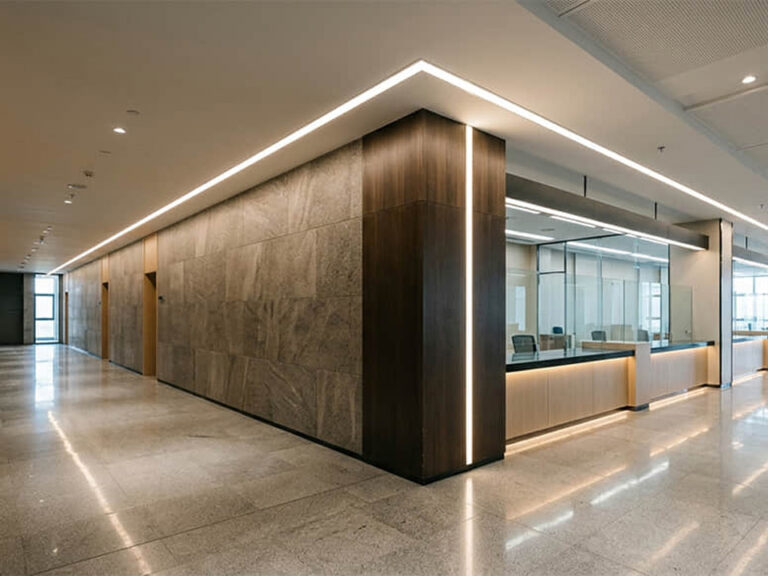
For offices, corridors, schools, supermarkets, and back-of-house spaces, surface-mounted or suspended linear fixtures are often easier to maintain than recessed architectural fittings. Lenses can be cleaned. Drivers are usually easier to reach. Fixture rows can be standardized. Replacement planning is simpler.
If the building has open ceilings, exposed services, or accessible ceiling zones, linear fixtures can be a maintenance gift. The best versions use aluminum housings, stable diffusers, clean wiring access, 0–10V or DALI dimming options, and replaceable drivers.
Where buyers go wrong is chasing ultra-thin profiles with poor thermal mass. Heat kills electronics. I do not care how elegant the profile looks in the catalog if the driver is baking above 50°C in a poorly ventilated ceiling slot.
LED Downlights: Good When Standardized, Bad When Buried
LED downlights are everywhere because they solve a lot of architectural problems. They work in lobbies, corridors, reception areas, hotel guestrooms, retail ceilings, restaurants, and offices. A good LED Downlights range can be a clean, long-term solution.
But downlights are not automatically low maintenance.
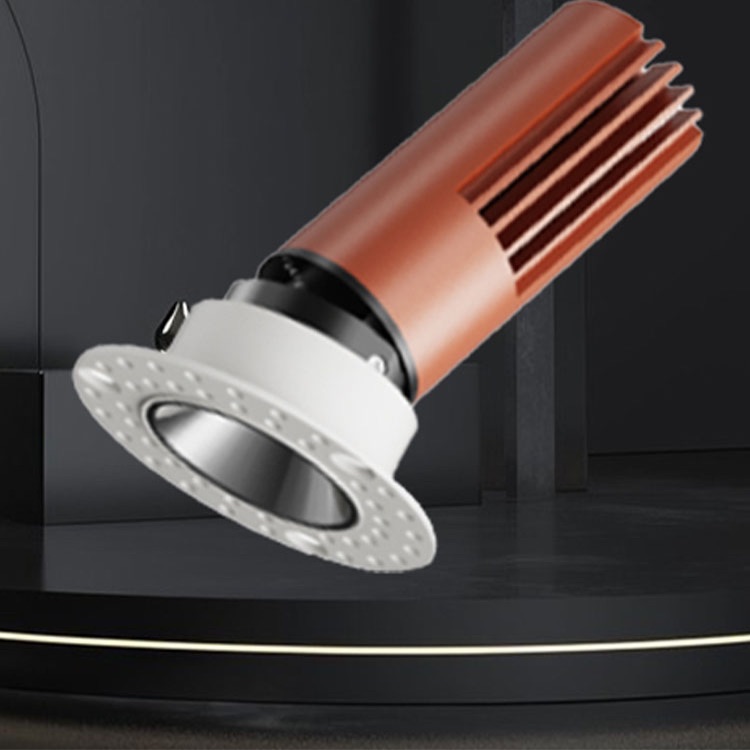
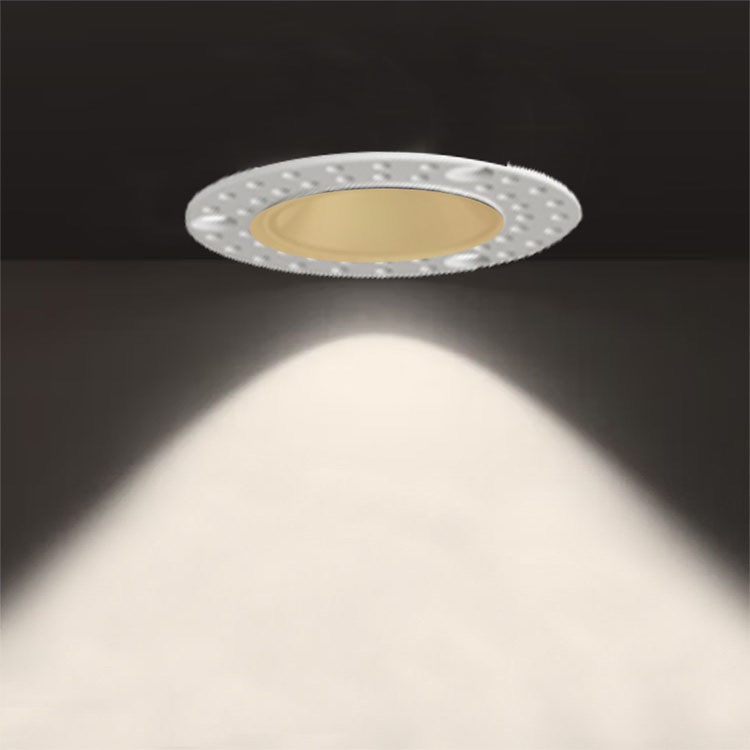
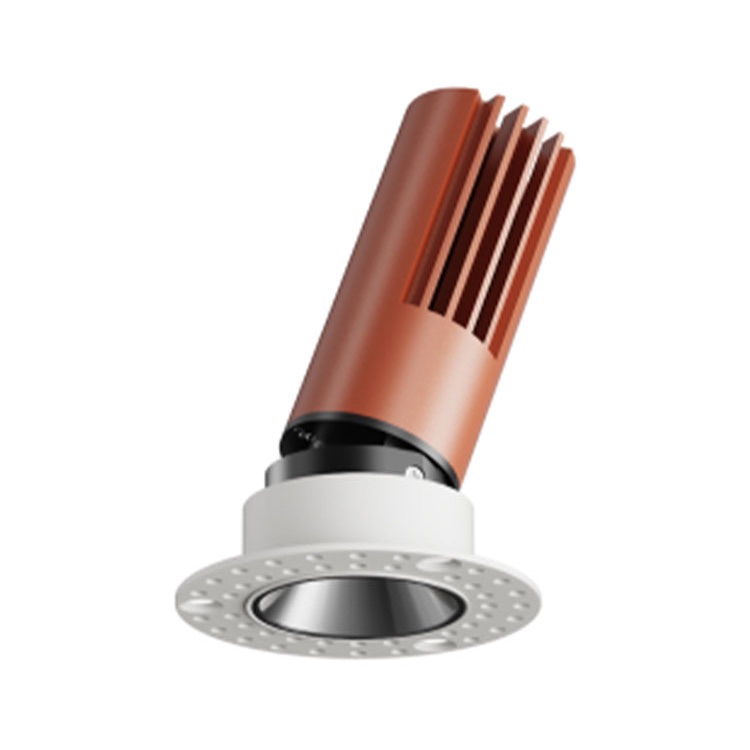
The difference is access. A standard recessed downlight with a removable trim, known cutout size, accessible remote driver, and repeatable replacement module is manageable. A trimless downlight with a hidden driver above a fixed gypsum ceiling is not friendly. It may look beautiful on day one and become a drywall invoice on year six.
My rule is simple: if the ceiling is hard to open, the driver must be reachable from below or through a planned access point. Otherwise, the fixture is not “premium.” It is a future argument.
Outdoor LED Fixtures: Maintenance Depends on Water, Heat, and Gaskets
Outdoor commercial lighting fixtures have a different enemy list: rain, dust, UV, insects, salt air, thermal cycling, and bad sealing. IP65 may be enough for sheltered exterior areas. IP66 or IP67 may be needed for harsher locations. But the IP rating alone does not save a poorly built fixture.
I want powder coating that survives, stainless screws where needed, silicone gaskets that do not shrink early, proper cable glands, pressure balance where appropriate, and thermal design that keeps the driver alive. Outdoor fixtures fail ugly. Water ingress does not negotiate.
If the project involves facade lighting, signage, pathways, or landscape accents, do not buy by wattage alone. Ask for installation diagrams, beam angles, IK rating where impact is possible, corrosion notes, and service instructions.
The Hidden Maintenance Killers Nobody Puts on the Quote
Here is the part that makes some sales teams uncomfortable: most maintenance failures are predictable before purchase.
The first killer is driver access. If the driver is not replaceable without ceiling surgery, you are accepting future labor pain. The second is thermal design. Compact fixtures with weak heat sinking may pass a short demo and still age badly in real operating hours. The third is poor optical stability. Yellowing lenses, dust-trapping reflectors, and cheap diffusers can make a space look tired even when the LEDs still work.
Controls can also create headaches. Dimming problems with 0–10V, TRIAC, DALI, Bluetooth mesh, or sensor-based systems may be blamed on the fixture when the real issue is driver compatibility. Ask for dimming test data. Ask what minimum dimming level is stable. Ask whether flicker has been checked.
And please, stop treating “warranty” as the same thing as maintenance. A five-year warranty does not pay for store disruption, lift rental, scaffolding, night labor, ceiling repair, or angry tenants. It only says someone might replace a component after paperwork.
Fluorescent and HID Fixtures: The Old Maintenance Tax
Legacy fluorescent and HID systems are not just old technology; they come with recurring tasks. Lamps fail. Ballasts fail. Metal halide shifts color. Fluorescent tubes need handling. High-bay fixtures require lifts. Parking fixtures may need night service.
There is also waste management. Under federal universal waste rules, lamps must be managed to prevent releases, and broken or damaged lamps must be cleaned up and contained properly. The eCFR rules under 40 CFR Part 273 spell out requirements for managing lamps in containers that prevent breakage and leakage.
That is one reason low maintenance commercial lighting fixtures usually mean well-specified LED systems, not legacy lamp-and-ballast setups. But I will say it again: LED only wins when the fixture is serviceable.
How to Maintain Commercial Lighting Fixtures Without Burning the Budget
Start with a fixture schedule that records model number, wattage, beam angle, CCT, CRI, driver type, dimming protocol, installation location, mounting height, and purchase batch. That sounds tedious. It saves money later.
For most commercial buildings, I would run a visual inspection every 6 months and a deeper lighting audit every 12 months. High-use spaces such as supermarkets, hotels, restaurants, and 24/7 corridors should be checked more often. Look for flicker, color drift, dimming failure, loose adapters, dust build-up, water marks, lens yellowing, driver noise, and hot spots.
Cleaning matters too. Dust reduces output and traps heat. In retail, it also makes expensive merchandise look cheaper. Use fixture-safe cleaning methods, not random solvents that attack lenses or coatings.
For replacement planning, keep spare drivers, modules, and fixture heads from the same series when possible. For multi-site rollouts, require supplier support for stable SKUs over several years. If the manufacturer changes the housing, lens, LED bin, or driver without warning, your maintenance team inherits the mess.
FAQs
Which commercial lighting fixtures are easiest to maintain long term?
The easiest commercial lighting fixtures to maintain long term are modular LED track lights, magnetic track systems, and surface-accessible LED linear fixtures because technicians can usually reach, clean, reposition, or replace key parts without cutting ceilings, disturbing tenants, or renting special access equipment for every routine service issue.
In practical terms, track and magnetic systems win in retail and display environments, while linear fixtures win in offices, corridors, and open commercial ceilings. Downlights can be good too, but only when the driver and module are accessible.
Are commercial LED lighting fixtures maintenance-free?
Commercial LED lighting fixtures are not maintenance-free; they simply reduce the frequency of lamp replacement compared with older fluorescent, halogen, and HID systems, while still requiring cleaning, driver checks, dimming verification, thermal inspection, lens review, and occasional replacement of electronic components over the service life.
The phrase “maintenance-free LED” is marketing shorthand. I do not use it. Better wording is “lower maintenance,” and even that depends on the fixture design, installation quality, environment, and operating hours.
Are downlights harder to maintain than track lights?
Downlights are usually harder to maintain than track lights because recessed fixtures often place drivers, springs, trims, and wiring inside ceiling cavities, while track heads are typically visible, reachable, and replaceable from below without disturbing the ceiling structure or surrounding architectural finish.
This does not mean downlights are bad. It means the specification must include accessible drivers, standard cutout sizes, stable product families, and clear replacement instructions. Trimless downlights need extra caution.
What should I ask before buying low maintenance commercial lighting fixtures?
Before buying low maintenance commercial lighting fixtures, ask whether the driver is replaceable, whether spare modules will remain available, whether IES files and datasheets are provided, whether dimming compatibility has been tested, and whether the fixture can be serviced safely from below or through planned access points.
I would also ask for LM-80, TM-21, photometric files, warranty terms, driver brand, surge protection rating, operating temperature range, IP rating for outdoor use, and replacement part policy. If the supplier cannot answer, the cheap quote is not cheap.
How often should commercial lighting maintenance be scheduled?
Commercial lighting maintenance should usually be scheduled with a visual inspection every 6 months and a more detailed annual audit, while high-hour sites such as hotels, supermarkets, hospitals, restaurants, parking areas, and 24/7 corridors may need quarterly checks for flicker, dust, driver noise, water ingress, and color shift.
The goal is not to touch every fixture constantly. The goal is to catch patterns early: one batch failing, one circuit flickering, one exterior zone leaking, or one dimming system causing premature driver stress.
Final Thoughts: Spec for the Technician, Not the Brochure
The best commercial lighting fixtures for long-term maintenance are not always the prettiest ones. They are the ones with accessible drivers, modular parts, stable SKUs, clean optics, good thermal control, documented dimming behavior, and realistic support after installation.
So here is my blunt recommendation: choose LED track lighting or magnetic track systems for flexible retail and display zones, choose serviceable LED linear lighting for offices and corridors, and choose downlights only when the access plan is clear before the ceiling closes.
If you are planning a commercial lighting project, do not send only wattage and quantity. Send the ceiling type, operating hours, mounting height, control method, CCT / CRI target, beam requirements, and maintenance access limits. Then ask for a fixture recommendation that a technician will not hate in five years.