Vous n'avez toujours pas trouvé la bonne solution d'éclairage commercial ? Parlez-en à notre équipe de projet.
Si vous avez consulté le site web ou si vous avez déjà discuté des options avec le service des ventes, mais que vous avez encore besoin d'une orientation plus claire, envoyez votre demande ici. Notre équipe examinera votre application, les spécifications visées et les contraintes du projet, puis vous répondra en vous indiquant la marche à suivre : ce qui convient, ce qui doit être confirmé et la voie la plus rapide pour obtenir un devis et des fichiers prêts à l'emploi pour votre projet.
Examen direct de votre application, des spécifications et des contraintes du projet pour un devis plus clair.
Correspondance des produits en termes d'angle de rayonnement, de CCT / CRI, de pilotes, de gradation et d'options de contrôle.
Soutien à la documentation du projet, y compris les feuilles de coupe, les notes de câblage et les fichiers IES / LDT lorsqu'ils sont disponibles.
Conseils OEM / ODM pour les étiquettes, l'emballage, la finition du boîtier et les exigences de la marque privée.
Obtenir un devis rapide pour l'éclairage LED commercial
Conçu pour les concepteurs, les architectes, les entrepreneurs, les grossistes et les acheteurs de projets. Faites-nous part de votre application, de la quantité et des spécifications souhaitées pour obtenir des prix directs, des conseils sur les délais de livraison et une assistance prête à l'emploi pour les projets aux États-Unis et dans l'Union européenne.
Options prêtes à l'emploi : faisceau / optique, cibles CCT / CRI / SDCM, pilotes, gradation et intégration des commandes.
Documentation du projet : feuilles de coupe, dessins et fichiers IES / LDT, le cas échéant.
Support OEM / ODM : UGS, emballages, étiquettes, manuels et étiquettes prêtes à l'emploi pour les codes-barres sous marque privée
Qualité stable pour les déploiements : UGS répétables, points de contrôle du contrôle qualité et approvisionnement modulable pour les appels d'offres et les réapprovisionnements.
NDA disponible sur demande pour les dessins détaillés et les dossiers de projet
Pourquoi les downlights à indice de réfraction élevé sont importants pour le commerce de détail et l'hôtellerie
Une mauvaise lumière fait vendre.
J'ai vu des magasins coûteux avoir l'air bon marché et des halls d'hôtel soignés sembler étrangement fatigués, non pas parce que l'architecte manquait de goût, mais parce que quelqu'un dans la chaîne traitait la qualité des couleurs comme un ajout optionnel, signait une vague ligne “IRC élevé” et espérait que la pièce pardonnerait ce raccourci.
Pourquoi prétendons-nous encore que les gens ne remarquent rien ?
Un IRC élevé n'est pas une spécification décorative
La couleur s'estompe rapidement.
Le ministère américain de l'énergie indique qu'un IRC minimum de 80 est généralement recommandé pour l'éclairage intérieur, qu'un IRC de 90 ou plus indique une excellente fidélité des couleurs, et que l'IRC seul ne permet pas de prédire les rouges saturés, ce qui explique pourquoi R9 et TM-30 sont importants lorsqu'il s'agit d'effectuer un travail commercial au lieu de simplement remplir la pièce de lumens. C'est la partie que trop de vendeurs continuent de minimiser, parce qu'une fois que vous l'admettez, la conversation sur les spécifications devient plus difficile et les luminaires moins chers commencent à paraître suspects. D'après Notions de base sur les DEL du DOE, Il existe un réel compromis entre la fidélité des couleurs et l'efficacité, ce qui signifie que quelqu'un veut toujours réduire la fidélité pour gagner la ligne de prix.
Et la couleur n'est pas une théorie.
Explication du NIST en 2023 sur la façon dont l'éclairage affecte la perception des couleurs souligne un point évident que de nombreux programmes d'éclairage ignorent encore : les gens interprètent la peau, le tissu, le bois, les aliments et les finitions différemment selon les spectres, et l'effet est particulièrement visible sur les visages et les matériaux chauds. Je le dis clairement : dans l'hôtellerie, un mauvais rendu des couleurs donne l'impression que l'argent est nerveux. Dans le commerce de détail, il donne l'impression que la marge est plate.
Table des matières
Ce que je vérifie avant de croire les mots “high CRI” (IRC élevé)”
Ligne de spéculation
Ce qu'impliquent les fournisseurs paresseux
Ce que je veux vraiment
Pourquoi c'est important dans le commerce de détail et l'hôtellerie
IRC / Ra
“C'est assez haut”
Ra 90+ avec tolérance déclarée
La fidélité générale est la base, pas l'aboutissement
R9
Souvent omis
Rendu rouge positif et significatif
Les tons de peau, les cosmétiques, le bois, la viande, le vin et les finitions chaudes exposent rapidement les R9 faibles.
TM-30
Ignoré
Rf et Rg quand l'apparence compte
Indique si la lumière est simplement précise ou si elle est étrangement terne ou exagérée.
TDC
Choisi par habitude
La sélection par zone, pas la paresse d'un seul numéro
Un hall d'entrée, un présentoir et une salle de bain pour les invités n'ont pas besoin du même ton émotionnel
Contrôle de l'éblouissement
Caché derrière les lumens
Profondeur d'ouverture, blindage et examen de la maquette
Les clients et les acheteurs ne se contentent pas de regarder les fiches techniques, admettent-ils.
Cohérence
Assumé
Binning serré / Discipline SDCM
Les déploiements multisites s'enveniment lorsque les appareils adjacents dérivent
Le commerce de détail et l'hôtellerie sont deux arguments financiers différents
Même plafond. Combat différent.
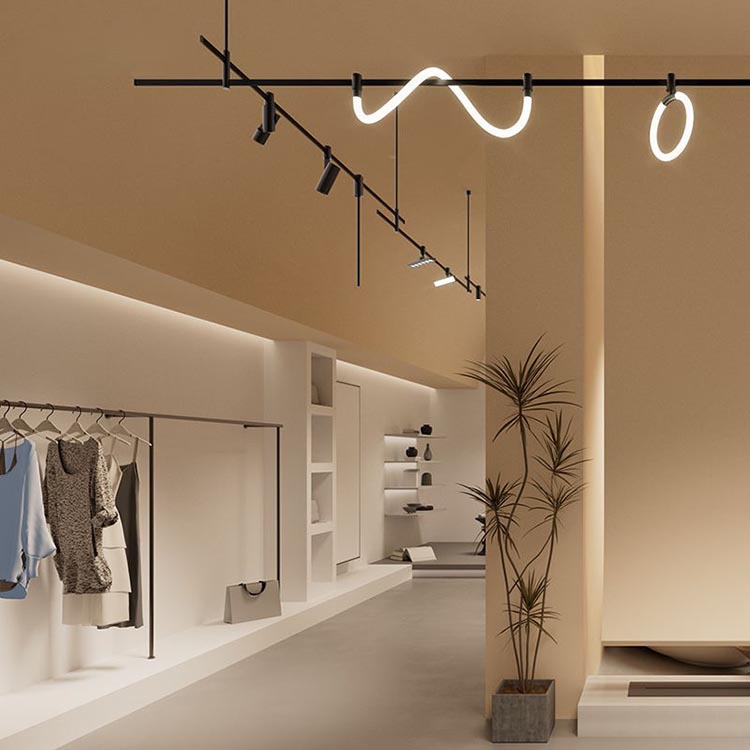
L'éclairage des magasins tente de créer de l'attention, du contraste et de la confiance dans les produits, tandis que l'éclairage des établissements hôteliers tente de façonner l'humeur, d'aplanir les surfaces, de calmer les visages et de survivre à des milliers de cycles de gradation, de nettoyage et de décisions d'entretien sans devenir gênant. C'est exactement la raison pour laquelle le chemin interne le plus intelligent sur le site de Meagree commence par sélection des luminaires pour le commerce de détail, les bureaux et l'hôtellerie, puis s'élargit à l'ensemble de l'Union européenne. Guide d'achat de l'éclairage LED commercial pour les projets de vente au détail, d'hôtellerie et de bureaux, et ce n'est qu'ensuite qu'elle tombe dans le Downlights à LED pour les intérieurs commerciaux et des pages de produits plus ciblées. Cette structure est saine car elle sépare la logique de l'application de la logique de la famille de produits au lieu de tout mettre dans un seul catalogue paresseux.
En quoi cela est-il important ?
Parce que trop d'acheteurs posent encore la mauvaise question en premier lieu. Ils demandent “Quelle puissance ?” alors qu'ils devraient se demander “Quelle est la fonction visuelle de ce luminaire lorsque le client se tient sous lui à 19h30 ?”.”
Le commerce de détail révèle ses faiblesses plus rapidement que n'importe quel autre secteur
La marchandise est impitoyable.
Dans l'étude de cas du PNNL sur la rénovation d'un magasin jcpenney à Colonial Heights, en Virginie, le détaillant a remplacé les éclairages incandescents de 50 W par des éclairages à LED de 16 W, a installé des éclairages à LED sur les comptoirs de produits cosmétiques et a indiqué que le changement avait amélioré l'expérience d'achat et la longévité des produits ; l'ensemble des améliorations de l'éclairage a été modélisé pour 421 994 kWh par an d'économies d'énergie avec un délai de récupération simple de 2,8 ans. Il ne s'agit pas d'une anecdote sur un tableau d'humeur. Il s'agit d'une décision commerciale prise par un détaillant, car la lumière influe sur le confort des clients, l'exposition à la chaleur et la présentation des produits dans les rayons. Voir l PNNL jcpenney retail renovation case study.
Ainsi, lorsque quelqu'un me dit que des downlights à indice de réfraction élevé sont “utiles” dans un environnement de vente au détail haut de gamme, j'entends une personne qui ne s'est pas trouvée devant des produits cosmétiques, des articles de maroquinerie, des présentations alimentaires ou des emballages de marque sous un éclairage médiocre et qui ne l'a pas comparé à la lumière du jour cinq minutes plus tard.
Et oui, les couches d'accentuation ont toujours de l'importance. C'est pourquoi une lecture interne connexe comme celle de Meagree guide de sélection des projecteurs pour le commerce de détail et l'hôtellerie appartient au même groupe que cet article : les downlights gèrent l'ambiance et la focalisation tranquille, mais les projecteurs gèrent la hiérarchie, et les magasins sérieux ont besoin des deux.
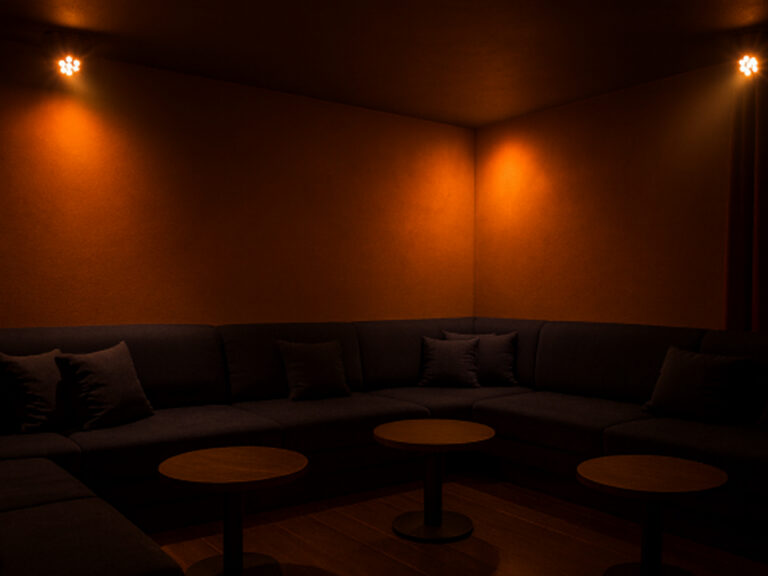
L'hospitalité punit l'éblouissement, les baisses d'intensité à bon marché et la fausse chaleur
Les invités remarquent tout.
Un hôtel peut survivre à beaucoup de choses. Il ne peut pas survivre à une chambre qui fait paraître la peau grise, le bois mort et le miroir de la salle de bain plus dur que la promesse de la marque. La démonstration des downlights du Hilton Columbus Downtown reste l'un des exemples les plus propres de l'orbite du DOE : l'établissement a ouvert ses portes en 2012, le DOE l'a évalué en 2014 et l'hôtel a utilisé plus de 3 700 downlights à LED dans 484 chambres et 48 suites, avec sept downlights à LED de 15 W par chambre standard. Cette échelle est révélatrice de la réalité. Les downlights ne sont pas des équipements d'arrière-plan dans les hôtels ; ils constituent un système opérationnel de base. Voir les Vitrine du Hilton Columbus Downtown et les archives Résumé DOE/OSTI.
Sur le site de Meagree, cette logique d'accueil est déjà visible dans les cibles de liens au niveau des produits, comme le lien Downlight pour hall d'entrée à indice de réflectance élevé et le Downlight encastré pour chambres d'hôtel. J'utiliserais les deux dans cet article parce qu'ils répondent à deux besoins très différents des clients : une chaleur décorative dans les zones publiques et un confort moins éblouissant dans les chambres où le plafond est toujours en vue périphérique.
Ce que personne n'aime admettre : un IRC élevé coûte plus cher, mais un IRC faible coûte plus longtemps.
La lumière bon marché persiste.
Le ministère de l'environnement reconnaît explicitement qu'une meilleure fidélité des couleurs s'accompagne souvent de compromis en termes d'efficacité et de coûts, mais l'industrie continue de prétendre que la seule décision coûteuse est de payer plus cher au départ. C'est absurde. La décision coûteuse, c'est d'ouvrir une boutique avec des produits délavés, de refaire l'éclairage d'un hôtel parce que les finitions ont l'air malades la nuit, ou de répondre aux plaintes des clients parce qu'une chambre soi-disant “chaude” semble encore froide sur la peau.
Et l'excuse de l'énergie s'amenuise d'année en année.
Guide ENERGY STAR pour l'éclairage commercial L'éclairage représente 17% de toute l'électricité consommée dans les bâtiments commerciaux américains, et c'est précisément la raison pour laquelle les projets sérieux devraient cesser de réduire la conversation à la seule efficacité. Il faut de l'efficacité, oui. Mais il faut aussi que la lumière permette d'effectuer le travail de vente, de zonage et de confort qui justifie l'espace en premier lieu.
Ensuite, il y a la conformité.
La ville de New York Loi locale 88 - Règles relatives à l'amélioration de l'éclairage exigent que les bâtiments concernés mettent leurs systèmes d'éclairage en conformité avec le code de conservation de l'énergie de la ville de New York et soumettent des rapports attestés par des professionnels, tandis que le portail de la ville sur le développement durable renvoie désormais les propriétaires à une liste de bâtiments concernés datant de 2026. Cela signifie que la qualité de l'éclairage ne flotte plus dans un vide décoratif ; elle est liée à la performance documentée du bâtiment, à l'exposition au code et à la responsabilité du propriétaire.
Ce que je spécifierais avant d'approuver un programme d'éclairage vers le bas pour le commerce de détail ou l'hôtellerie
Posez de meilleures questions.
Je commencerais par le Ra 90+, puis j'obligerais le fournisseur à montrer le R9, je demanderais ensuite s'il existe des données TM-30, j'examinerais l'ouverture, le blindage et la maquette sous la palette de finition réelle, et ce n'est qu'après cela que je me soucierais des affirmations héroïques de la brochure. Pourquoi ? Parce que “IRC élevé” est une étiquette, mais qu'une pièce crédible est un système.
Mon cadre de décision par défaut
L'espace
Ce que les gens jugent en premier
Ce que je pousserais le plus loin
Ce qui fait généralement l'objet d'une ingénierie de la valeur
A quoi ressemble l'échec
Commerce de détail de la mode
Tissu et peau
Ra 90+, véritable R9, discipline de faisceau plus serrée
Fidélité des couleurs et souplesse d'orientation
Les vêtements sont ternes, les visages sont fatigués
Cosmétiques / beauté
Rouges, roses, teint
R9, TM-30, contrôle de la zone du rétroviseur
Qualité spectrale
Inadéquation des produits et risque de retour
Hall d'entrée de l'hôtel
Richesse de l'humeur et de la finition
Sensation 2700K-3000K, contrôle de l'éblouissement, stabilité de la gradation
Qualité du conducteur
L'espace haut de gamme semble étrangement bon marché
Chambre d'hôtes
Confort de l'utilisation du lit et du miroir
Profondeur de la niche, protection, luminosité calme du plafond
Profondeur d'ouverture
Fatigue visuelle et scintillement du plafond
F&B / bar
Alimentation, bois, tonalité de bouteille
Spectre chaud avec un bon rendu du rouge
Durée de la maquette
Les aliments ont l'air plats, les bouteilles perdent leur aspect dramatique
La leçon la plus difficile à tirer des projets réels
Faites des simulations.
L'un des meilleurs exemples de mise en garde est l'affaire DOE / PNNL Rapport sur le downlight de l'hôpital St. AnthonyL'étude a montré que l'hôpital a remplacé 1 262 LFC par des lampes LED de 13 W conçues pour remplacer les LFC de 26 W ou 32 W, ce qui a permis de réduire la consommation d'énergie d'au moins 50%, avec un retour sur investissement de 26,3%, mais l'étude a également montré que les nouvelles lampes produisaient une distribution plus ciblée qui pouvait créer des zones plus sombres dans des conditions de plafonds plus bas ou d'espacement plus large. C'est la partie que je respecte. L'étude ne vend pas les LED comme de la magie. Elle a montré les avantages et les inconvénients.
C'est pourquoi je ne fais confiance à aucun programme d'éclairage vers le bas pour le commerce de détail ou l'hôtellerie qui n'a jamais vu une maquette physique de la pierre, du placage de bois, du textile, de l'emballage ou du miroir de courtoisie avec lesquels il va vivre.
FAQ
Qu'est-ce qu'un downlight à indice de réfraction élevé ?
Un downlight à IRC élevé est un luminaire encastré ou monté en surface, généralement spécifié à Ra 90 ou plus, conçu pour rendre les marchandises, les matériaux, les aliments et les teintes de peau plus fidèlement que l'éclairage intérieur de base, tout en respectant les exigences en matière d'optique, d'éblouissement et d'entretien dans les espaces commerciaux. L'IRC est le point de départ, mais pas la totalité de l'histoire. Je demanderais donc toujours R9 et, lorsque l'apparence est source de revenus, les données TM-30 également.
L'IRC de 90 est-il suffisant pour l'éclairage des magasins ?
L'IRC 90 est un bon point de départ pour l'éclairage du commerce de détail, mais ce n'est pas une réponse complète, car les vêtements, les cosmétiques, le vin, les aliments frais et les finitions haut de gamme peuvent encore avoir une mauvaise apparence si le R9 est faible, s'il manque des données TM-30 ou si l'optique crée un éblouissement qui raccourcit le temps de séjour. J'utilise l'IRC 90 comme filtre, puis j'examine le rendu du rouge, le contrôle du faisceau, la cohérence et la performance de la maquette sous la palette de la marchandise réelle.
Quelle est la meilleure température de couleur pour les downlights destinés à l'hôtellerie ?
La meilleure température de couleur d'un éclairage d'ambiance est celle qui correspond à l'ambiance, à la palette de matériaux et au mode de fonctionnement de l'espace. De nombreux hôtels commencent par une température de 2700K à 3000K pour les zones en contact avec les clients et ne passent à une température plus froide que lorsque la visibilité ou la clarté de la tâche l'exige vraiment. Je n'aime pas les spécifications hôtelières à numéro unique, car l'ambiance du hall, la sécurité des couloirs, l'utilisation des vanités et la fonction de nettoyage sont des problèmes visuels distincts.
Dois-je demander le TM-30 et le R9 en plus de l'IRC ?
Oui, vous devriez demander le TM-30 et le R9 en plus de l'IRC lorsque l'apparence des couleurs affecte les décisions d'achat, la présentation de la marque, la présentation de la nourriture ou le confort des invités, parce que l'IRC seul peut cacher un faible rendu des rouges, des couleurs sursaturées ou des compromis spectraux qui ne deviennent évidents qu'après l'installation. Si un fournisseur résiste à cette demande dans le cadre d'un projet haut de gamme, j'y vois un signe d'avertissement et non un avantage tarifaire.