Still Not Seeing the Right Commercial Lighting Solution? Talk to Our Project Team.
If you have reviewed the website or already discussed options with sales but still need a clearer direction, send your request here. Our team will review your application, target specifications, and project constraints, then reply with a practical next step: what fits, what needs confirmation, and the fastest route to a quote and spec-ready files for your project.
Direct review of your application, specs, and project constraints for a clearer quote path.
Product matching across beam angle, CCT / CRI, drivers, dimming, and controls options.
Project documentation support, including cut sheets, wiring notes, and IES / LDT files where available.
OEM / ODM guidance for labels, packaging, housing finish, and private-brand requirements.
Get a Fast Quote for Commercial LED Lighting
Built for designers, architects, contractors, wholesalers, and project buyers. Share your application, quantity, and target specifications to get factory-direct pricing, lead-time guidance, and spec-ready support for US and EU projects.
New Build vs Renovation: How Commercial Lighting Selection Changes
Renovation exposes lies.
I have seen perfectly respectable commercial lighting schedules collapse after one ceiling tile comes down, because the old conduit path was wrong, the plenum depth was miserable, the landlord wanted “no visible change,” and the contractor had already priced a fixture that only worked in a fantasy building.
So why do teams still treat renovation like new construction with dust?
That is the expensive mistake. New build lighting starts with intent. Renovation starts with evidence. In a new office, hotel, retail store, supermarket, lobby, clinic, or showroom, the designer can shape the ceiling plan, circuiting, control zones, fixture spacing, emergency lighting logic, and architectural rhythm before the building hardens. In renovation, commercial lighting selection is a negotiation with old wiring, old holes, old habits, tenant downtime, landlord rules, and whatever the previous contractor buried above the ceiling.
And yes, I am going to say the quiet part: many commercial lighting failures are not caused by bad LED fixtures. They are caused by lazy assumptions.
Table of Contents
The First Split: New Build Gives You Control, Renovation Gives You Evidence
In a new build, I want the commercial lighting design conversation early. Not after the ceiling grid is frozen. Not after the HVAC team has consumed every clean line. Early.
That means fixture families are chosen alongside ceiling type, mounting height, surface finish, workstation layout, merchandise zones, reception sightlines, and maintenance access. A project team can decide whether the space needs recessed downlights, suspended linear fixtures, track heads, magnetic track systems, wall washers, panel lights, or custom OEM/ODM luminaires before the ceiling becomes a battlefield.
For projects starting from a clean drawing, I would push buyers toward a broad commercial LED lighting range first, then narrow the schedule by application: office, retail, hospitality, supermarket, corridor, lobby, display, or façade. Meagree’s commercial category is built around project use cases such as office, retail, hospitality, supermarket, and OEM/ODM supply, not just random wattages.
Renovation is uglier. Better, sometimes, but uglier.
A commercial lighting renovation starts with a survey: fixture counts, cut-out sizes, mounting type, existing drivers, ballast condition, voltage, dimming protocol, emergency circuits, ceiling damage, glare complaints, color mismatch, maintenance logs, and hours of operation. I want photos. I want panel schedules. I want the old fixture body in someone’s hand.
Why? Because “replace the lights” is not a scope. It is a trap.
The Data Nobody Should Ignore Before Choosing Fixtures
The global energy story still matters, even when you are arguing about a 15W downlight in a hotel corridor. The International Energy Agency reported that in 2024, lighting in buildings and outdoor applications used about 8% of global electricity demand, roughly 2,200 TWh, while LEDs sold today average close to 100 lm/W and some professional LEDs exceed 200 lm/W. Read that through the IEA’s LED lighting analysis.
The U.S. Department of Energy also states that residential ENERGY STAR LEDs use at least 75% less energy and last up to 25 times longer than incandescent lighting; the same physics does not magically disappear in commercial buildings, although project-grade fixtures add optics, thermal design, drivers, dimming, and compliance documents to the equation. See the DOE’s LED lighting guidance.
But here is the professional reading: LED efficiency alone is old news. The real separation now is optical control, visual comfort, serviceability, CCT consistency, driver reliability, documentation, and controls integration.
A 30W fixture with bad glare is not “efficient.” It is just an efficient way to make people hate the room.
New Construction Lighting: Design the System Before You Fall in Love With the Fixture
New construction lighting lets you select the system, not just the product. That is the advantage.
For a new office, I would usually build the logic around task zones, ambient layers, vertical illumination, glare control, occupancy sensing, daylight response, and future reconfiguration. A 40W suspended linear fixture over open workstations can make sense where the ceiling plan supports it, especially when desk rows need organized light distribution and the architect wants cleaner overhead lines. Meagree’s LED linear lighting category fits that type of open office, corridor, and modern commercial ceiling use.
For retail, I care less about average lux and more about beam discipline. A showroom does not need a bath of flat brightness. It needs hierarchy: 15°, 24°, 36°, maybe 60° where vertical fill matters. CRI 90+ or CRI 95 may be justified for fashion, cosmetics, food, furniture, galleries, and hospitality finishes. SDCM <3 matters when ten stores open across three regions and the owner does not want one branch looking green.
For hospitality, the fixture selection changes again. Bedrooms, corridors, restaurants, reception desks, elevator lobbies, and conference areas have different tolerance for glare, flicker, CCT, and dimming behavior. I would rather approve a slightly more expensive anti-glare downlight than fight guest complaints after opening.
This is where commercial lighting design thinking matters. Not decoration. Discipline. The design category on Meagree’s site covers real buyer concerns such as beam control, anti-glare comfort, layout thinking, application fit, fixture mistakes, CRI, office ceiling lighting, and layered plans.
My New Build Fixture Checklist
For new construction lighting, I want these decisions locked before procurement:
Selection Point
New Build Decision
Why It Matters
Ceiling integration
Recessed, surface, suspended, track, magnetic track, trimless
Prevents conflict with HVAC, sprinklers, acoustic panels, and ceiling modules
Light quality
2700K, 3000K, 3500K, 4000K; CRI 80/90/95; SDCM <3 or <5
Controls brand appearance, comfort, and multi-site consistency
Stops glare before the client starts blaming “LEDs”
Controls
0-10V, DALI-2, TRIAC, occupancy sensors, daylight dimming, scene control
Makes the building flexible instead of merely bright
Compliance files
LM-79, LM-80, TM-21, IES/LDT, CE, RoHS, UL/ETL, DLC where required
Reduces approval friction with engineers, utilities, and contractors
Maintenance plan
Driver access, module replacement, repeatable SKU, lead time
Saves the owner from custom-fixture regret in year three
Renovation Lighting: The Building Already Voted
In renovation, the existing building gets a vote. Often a veto.
I have walked projects where the client wanted recessed linear lighting, but the ceiling depth could barely accept the old troffer. I have seen boutique retail teams ask for flexible track lighting while the landlord banned exposed conduit and refused new penetrations. I have seen hotel corridors where the “simple LED retrofit” turned into a cut-out repair job across 120 rooms because the old downlight diameter was not standard.
This is why commercial lighting renovation demands a different mindset. You are not choosing from the cleanest brochure. You are choosing the least risky path that still improves performance.
A smart commercial LED retrofit starts with compatibility. Can the new fixture fit the old opening? Can the driver be accessed later? Does the dimmer talk to the new driver? Is the emergency circuit separate? Is the ceiling fire-rated? Does the existing wiring support 0-10V dimming, or are you pretending because the spreadsheet looks nicer that way?
The DOE-backed GSA Green Proving Ground linear LED retrofit assessment is a useful reality check. It evaluated two linear LED retrofit technologies in existing GSA facilities, measured energy savings and performance, and produced guidance for future retrofit and new construction decisions. That is exactly how serious retrofit work should be treated: field evidence first, product enthusiasm second. See the PNNL/GSA Linear LED Retrofit Assessment.
And if the renovation includes parking garages, back-of-house corridors, exterior walkways, or storage zones, do not oversell sensors without commissioning them. A PNNL report on occupancy sensors in LED parking lot and garage applications found outcomes ranging from an additional 76% energy savings after LED conversion to virtually no additional savings, depending on product design, commissioning, and application conditions. That is the kind of uncomfortable data buyers need. Read the PNNL occupancy sensor field report.
New Build vs Renovation: The Selection Table I Actually Use
Decision Area
New Build Commercial Lighting
Commercial Lighting Renovation
Starting point
Architectural intent, code model, ceiling plan, owner brand standard
The new build team has fewer excuses here. Energy codes, lighting power density, controls, daylight zones, and documentation are not optional decorations.
The U.S. DOE’s analysis of ANSI/ASHRAE/IES Standard 90.1-2022 notes updates to lighting power density values, including reductions for many common space types such as office, dining, conference, and retail sales areas. Retail sales area is especially telling: the analysis identifies a 19% reduction under one lighting addendum. See the DOE’s Standard 90.1-2022 energy savings analysis.
That means commercial lighting selection is now tied to compliance math earlier than many buyers want to admit. If the project is targeting ASHRAE 90.1-2022, IECC-based code, Title 24-style control logic, LEED, WELL, BREEAM, utility rebates, or DLC-listed product requirements, then the fixture schedule must carry more than wattage and CCT.
I want to see LM-79 photometric data. I want LM-80 and TM-21 context for LED package life. I want IES or LDT files. I want driver brand, PF >0.9, THD preferably <15%, surge protection where needed, flicker performance, dimming curve behavior, CCT binning, CRI/R9 data for retail and hospitality, and a believable warranty.
For buyers who need the paperwork side organized before a project quote, the LED standards and compliance section is the right internal path because it addresses LM-79, LM-80, TM-21, CE, RoHS, DLC, and related project requirements.
Fixture Types Change Because Risk Changes
Downlights
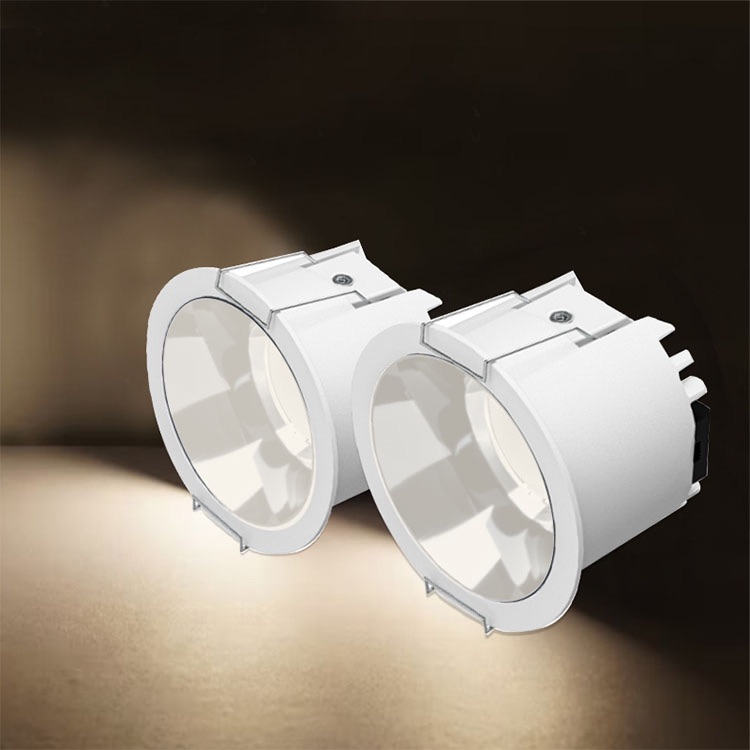
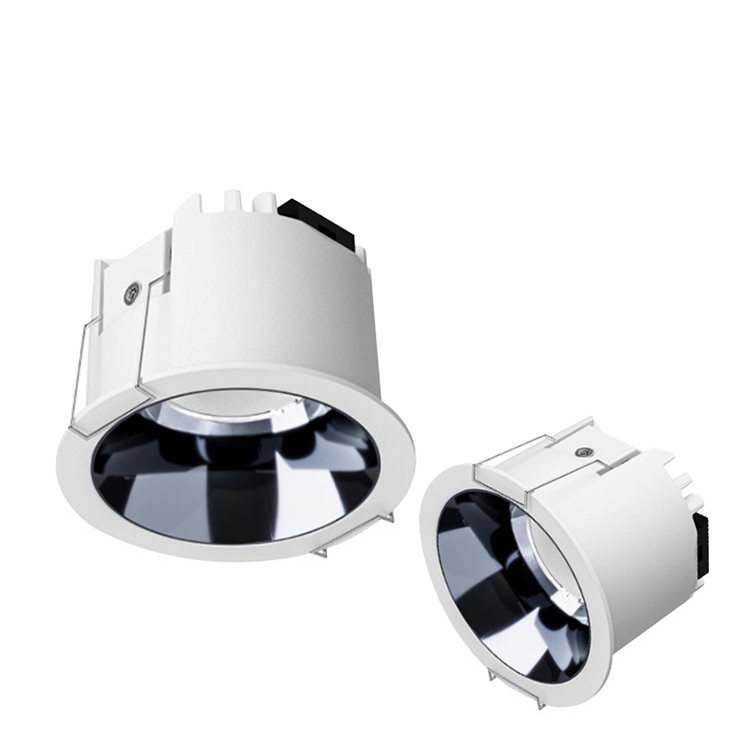
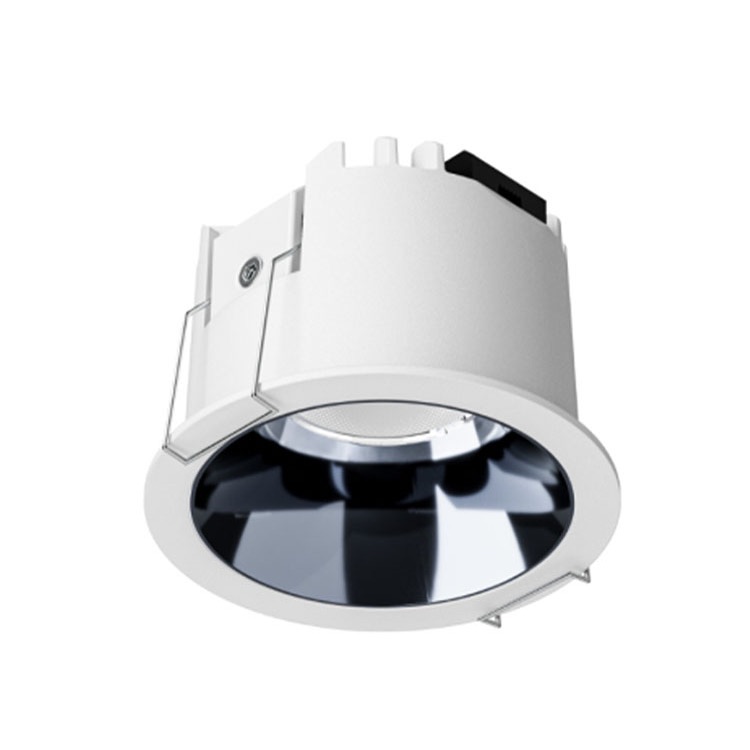
In a new build, recessed downlights can be selected around ceiling height, beam spread, trim style, glare control, cut-out coordination, and room function. In renovation, the first question is uglier: what hole already exists?
If the old cut-out is 75mm, 90mm, 120mm, or some strange legacy size, the perfect new downlight may not be perfect anymore. A conversion ring might save the job. Or ruin the ceiling. Measure twice, then make someone else measure again.
Linear Lighting
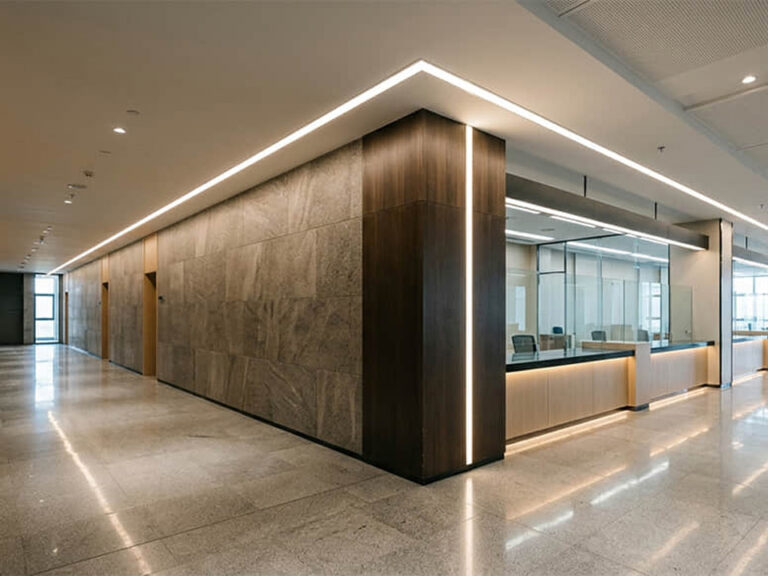
New construction loves linear lighting because it gives architects clean rhythm. Suspended 40W linear fixtures, recessed 20W linear channels, trimless profiles, grille lights, and modular systems can define circulation, desks, retail walkways, and hospitality zones.
In renovation, linear lighting is more demanding. Existing ceiling grids, sprinkler lines, beam depth, access panels, and old patchwork decide whether the design survives. I like linear systems in renovation only when the installation path has been physically verified.
Track and Magnetic Track
Track lighting is the honest worker of commercial lighting selection. Retail changes. Galleries change. Showrooms change. A 25W commercial LED track head with 24° or 36° optics can be re-aimed when merchandise moves, which is why LED track lighting still earns its place in retail, display, and hospitality projects.
Magnetic track systems are cleaner and more modular, especially in premium interiors, but they require better early planning. In a new build, fine. In renovation, check driver location, power feed, ceiling support, module availability, and whether the client will actually use the flexibility they are paying for.
Anti-Glare Fixtures
Glare is where amateurs expose themselves.
A project can meet target lux and still feel cheap. UGR <19 is common in office discussions, but it is not a universal magic number. Luminance, viewing angle, ceiling height, reflector depth, lens texture, room finish, and task position all matter. Anti-glare linear grille lights, deep recessed spotlights, baffles, honeycombs, and low-brightness optics are not “extras” when people spend eight hours under them.
How to Choose Commercial Lighting for a Commercial Building Without Getting Fooled
Start with the building type. Then the room task. Then the ceiling. Then the controls. Then the fixture.
That order sounds obvious, which is exactly why people skip it.
For office projects, I want low glare, good uniformity, sensible 3500K or 4000K, clean workstation coverage, and controls that employees do not fight. For hospitality, I want warmer CCT options like 2700K or 3000K, strong dimming, better color rendering, and fixture bodies that look calm rather than technical. For retail, I want accent ratio, CRI 90+, controlled beams, vertical punch, and flexible track or adjustable downlights. For supermarkets, I want aisle uniformity, food color strategy, driver reliability, and maintenance discipline.
For renovation, I add three more questions:
Can we install it without wrecking the ceiling?
Can we maintain it without closing the space?
Can we buy the same SKU again in 18 months?
If the answer is no, the “best commercial lighting for renovation” is probably not the prettiest fixture. It is the fixture that improves the building without creating new operational debt.
Procurement: Where the Spreadsheet Starts Lying
Commercial lighting selection usually gets corrupted during procurement. Not always. Often enough.
The first quote compares wattage, lumen output, CCT, beam angle, and price. That is not enough. A serious comparison should include housing material, optical accessories, driver brand, dimming protocol, surge protection, heat sink design, CCT tolerance, CRI/R9, photometric files, certification scope, packaging, lead time, warranty terms, replacement policy, and MOQ.
This is where I would use LED project sourcing playbooks before signing a large order. Project sourcing is not just asking, “How much for 500 units?” It is asking whether the supplier can maintain SKU consistency, provide cut sheets, support IES/LDT files, handle OEM labels, manage private-brand packaging, and repeat the same finish across phased rollouts.
Cheap lumens age badly.
I would rather buy a 15W downlight with verified optics, stable CCT binning, accessible driver replacement, and clean dimming than a 12W bargain fixture that flickers under the wrong control, ships with vague test data, and disappears when the second phase of the project begins.
FAQs
What is the main difference between new build and renovation commercial lighting selection?
New build commercial lighting selection starts with design freedom, while renovation lighting selection starts with existing conditions, including wiring, cut-outs, ceiling depth, control compatibility, and downtime limits. In new construction, you design the lighting system around the space; in renovation, you adapt the fixture strategy to the building’s physical and operational limits.
That is why new construction lighting can prioritize ideal fixture placement, full control zoning, and architectural integration. A commercial lighting renovation must first confirm what can be removed, reused, replaced, or upgraded without causing hidden labor, ceiling repair, code, or tenant-disruption costs.
How do I choose commercial lighting for a commercial building?
Choosing commercial lighting for a commercial building means matching fixture type, optics, CCT, CRI, mounting method, controls, compliance documents, and maintenance access to each space’s function. The right process starts with application requirements, not fixture appearance, because offices, hotels, retail stores, corridors, and supermarkets need different lighting behavior.
I would begin with mounting height, task type, visual comfort, beam angle, target lux, UGR tolerance, emergency lighting needs, and operating hours. Then compare downlights, linear lights, track lights, magnetic track systems, wall washers, and panel lights against real project constraints.
Is a commercial LED retrofit always better than replacing the full fixture?
A commercial LED retrofit is best when the existing housing, wiring, ceiling condition, dimming system, and maintenance access are still acceptable. Full fixture replacement is better when old housings are damaged, optics are poor, cut-outs are inconsistent, drivers are inaccessible, or the project needs a visible design upgrade.
The hard part is proving compatibility before ordering. Retrofit tubes, retrofit kits, and replacement modules can save labor, but they can also create glare, control problems, heat issues, certification concerns, or ugly ceiling patches when the site survey is weak.
What lighting fixtures are best for commercial renovation projects?
The best lighting fixtures for commercial renovation projects are usually compatible, serviceable, low-disruption products such as adjustable downlights, retrofit-friendly linear fixtures, track lighting, anti-glare replacements, and modular systems with reliable drivers. The “best” option depends less on catalog beauty and more on fit, wiring, controls, ceiling access, and replacement availability.
For retail renovation, track lighting often wins because layouts change. For office renovation, low-glare linear or downlight systems usually perform better. For hotel corridors, consistent CCT, shallow depth, and quiet anti-glare optics can matter more than raw lumen output.
Which specifications matter most in commercial lighting design?
The most important commercial lighting design specifications are lumen output, efficacy, beam angle, CCT, CRI, glare control, dimming method, driver quality, photometric files, certification scope, and maintenance access. Professional buyers should also check SDCM, R9, flicker, PF, THD, surge protection, thermal management, and documented lifetime assumptions.
Do not let wattage dominate the conversation. Wattage only tells you electrical input. It does not tell you whether the fixture renders color correctly, controls glare, dims smoothly, survives heat, fits the ceiling, or satisfies the engineer.
Final Thoughts: Do the Survey Before You Buy the Story
New build vs renovation commercial lighting selection is not a style debate. It is a risk debate.
In a new build, use the freedom properly: coordinate early, design control zones, protect visual comfort, demand photometric files, and choose fixture families that match the building’s long-term use. In renovation, stop pretending the old building is neutral. Survey the site, test samples, verify dimming, measure openings, inspect ceilings, and make the supplier prove compatibility before the order leaves the factory.
Need a practical next step? Send your project type, ceiling condition, target CCT/CRI, quantity range, control method, and fixture photos to the Meagree team through the commercial LED lighting quote page, then ask for a fixture recommendation with IES/LDT files, driver details, compliance documents, and retrofit-risk notes before approving the commercial lighting selection.