まだ適切な商業照明ソリューションが見つかりませんか?当社のプロジェクトチームにご相談ください。.
ウェブサイトをご覧になった方、または営業担当とすでにオプションについて話し合った方で、より明確な方向性が必要な方は、こちらからリクエストをお送りください。私たちのチームは、あなたのアプリケーション、ターゲット仕様、およびプロジェクトの制約を確認し、実用的な次のステップ、つまり、あなたのプロジェクトに適合するもの、確認が必要なもの、および見積もりと仕様準備完了ファイルへの最短ルートを返信します。.

Due to the fact that electricians are generally paid to complete safe, organized circuits and fixture vendors generate income by moving items, the lighting plan too often comes to be an in proportion ceiling grid that lights up the floor while disregarding faces, screens, checking out pages, art work, and the body’s altering requirements after sunset.
Why should a ceiling look orderly if the people beneath it scrunch up your eyes?
That is the very first difficult truth of home lighting style: illumination is not the like visual convenience. A space can measure brightly and still really feel strenuous. It can consist of expensive fittings and still create representations on a television, darkness throughout a kitchen counter, or a blazing LED aperture directly above the sofa.
I regard “more lumens” as one of the market’s laziest prescriptions. The better concern is where the light lands, from which instructions it arrives, how big and brilliant the resource shows up, and whether the individual can alter it individually.
Home lights layout is the intentional control of daylight, ambient lights, job illumination, and accent lights around actual activities. It needs to help the eye locate information without requiring continuous adaptation in between exceedingly brilliant and dark surface areas.
That distinction issues. A desk may require solid illumination across papers and a keyboard, yet the luminaire itself need to remain outside the user’s direct sightline. A living room requires sufficient upright light to acknowledge faces, yet it rarely benefits from every downlight operating at complete result.
Research study provides a warning against informal guesswork. An Arizona State University medical trial that went through 2023 researched 20 remote employees over 5 weeks and reported that improvisated office commonly provided only 50– 100 lux, compared with about 500 lux in typical offices. The biodynamic intervention varied strength and spectrum during the day, creating substantial organizations with cognitive performance.
The sample was small. Still, the searching for exposes a genuine layout failure: the domestic area exchanged an office frequently has attractive light, not functional task light.
Illumination is economical. Regulated brightness is the actual job.
Split lights splits lighting into different work. I suggest at the very least three individually managed layers in areas serving greater than one task.
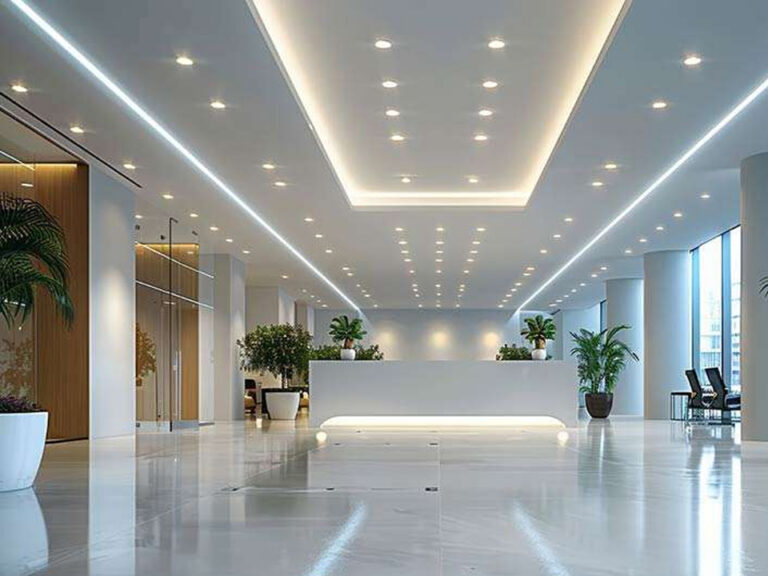
Ambient illumination provides the history degree required to relocate securely, acknowledge objects, and understand the room’s limits. It must feel wide and reasonably peaceful rather than creating separated cones of brightness.
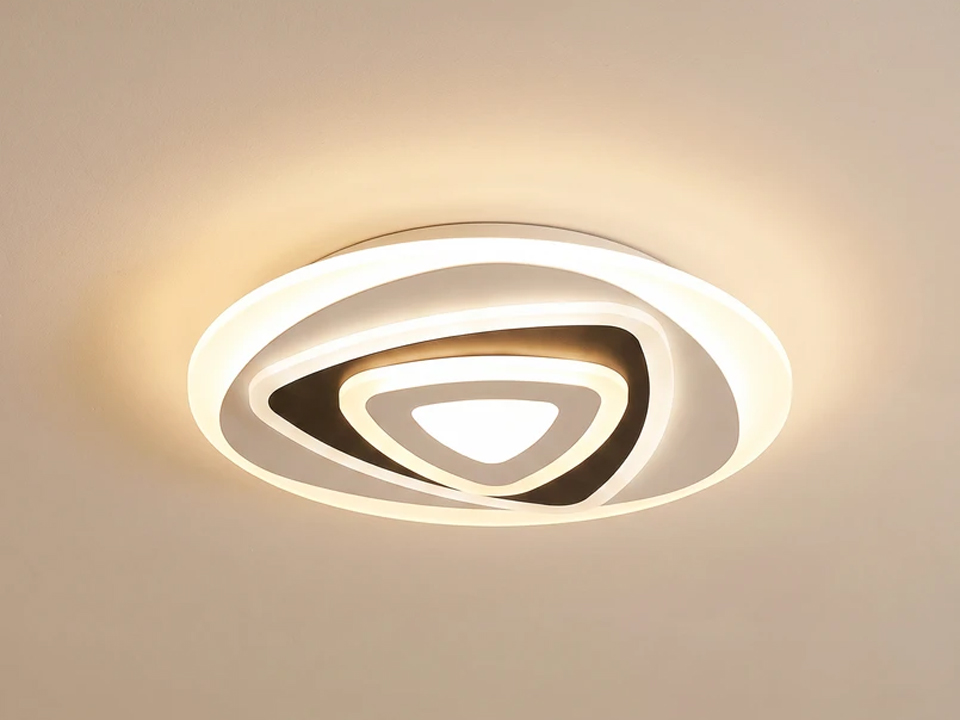
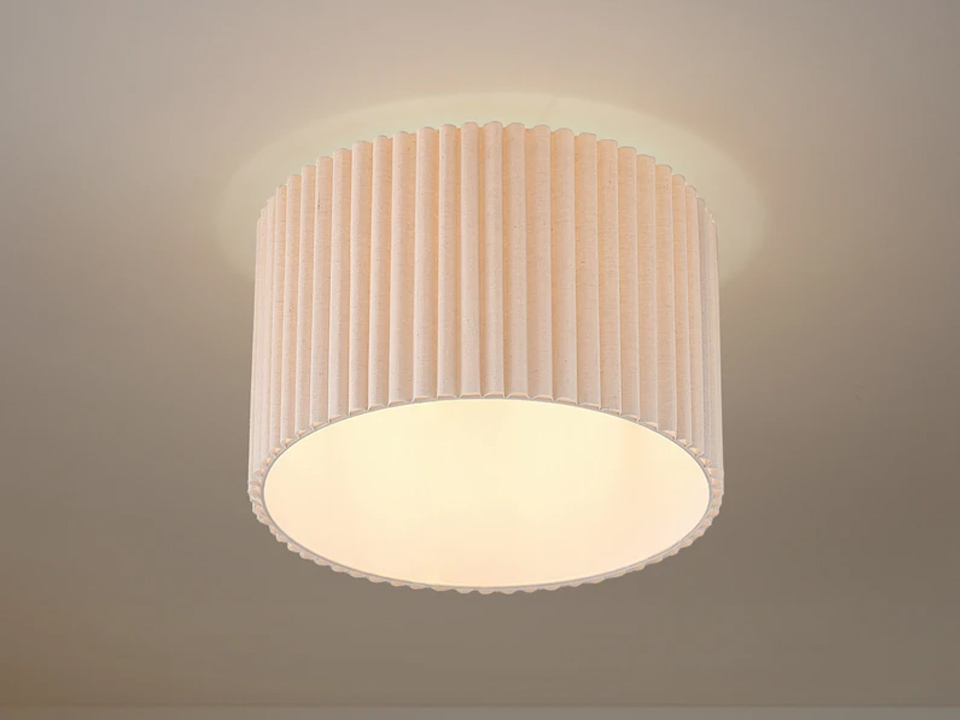
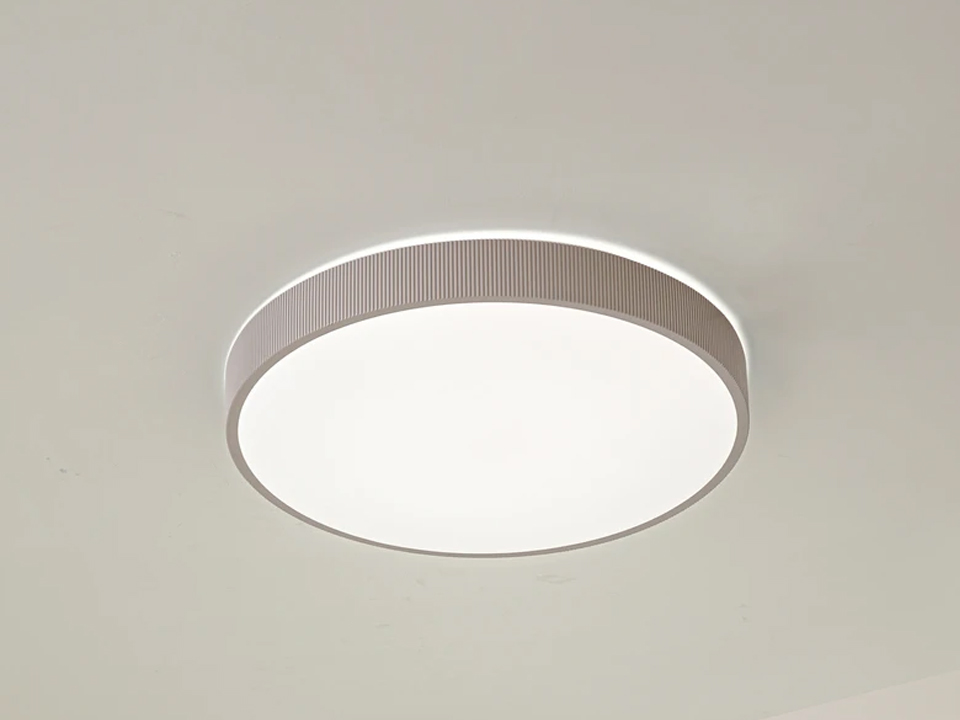
A clean 18W surface-mounted LED downlight for comfortable ambient lighting illustrates the surface-mounted technique when recessing is impossible. But 18W is an electrical input, not a style solution. Before specification, request for supplied lumens, light beam distribution, glare control, dimming compatibility, color making, and an LM-79 photometric report.
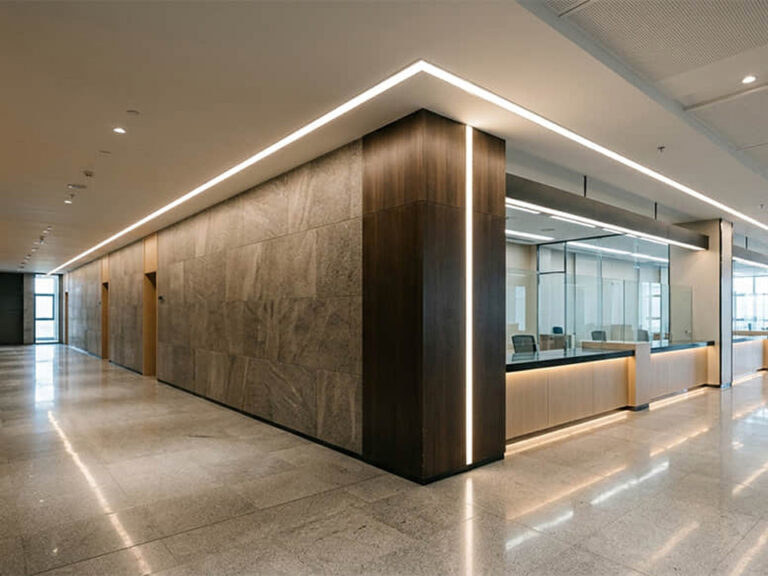
For a ceiling intended to aesthetically vanish, a 15W trimless LED ceiling light for minimal insides sustains a quieter building expression. Trimless outlining, nonetheless, requires very early control with the ceiling contractor; it is not a suitable I would casually include after plasterwork is full.
Job lighting is concentrated lighting positioned on an analysis web page, workdesk, kitchen area counter, vanity, workbench, or craft surface. It needs to improve detail recognition without increasing the brightness of the entire space.
Instructions matters more than attractive proportion. For a right-handed workdesk individual, a lamp arriving from the left can reduce hand darkness. At a cooking area counter, light should originate from under the upper cupboards or somewhat forward of the user– not solely from a ceiling fixture behind the customer’s head.
And displays make complex whatever. A component mirrored in a shiny display can be more exhausting than a nominally “dim” space, so I would check the display from the seated eye setting prior to repairing luminaire locations.
Accent lighting informs the eye where to look. It can highlight art work, stone texture, shelving, plants, or building details while enabling the surrounding ambient level to remain lower.
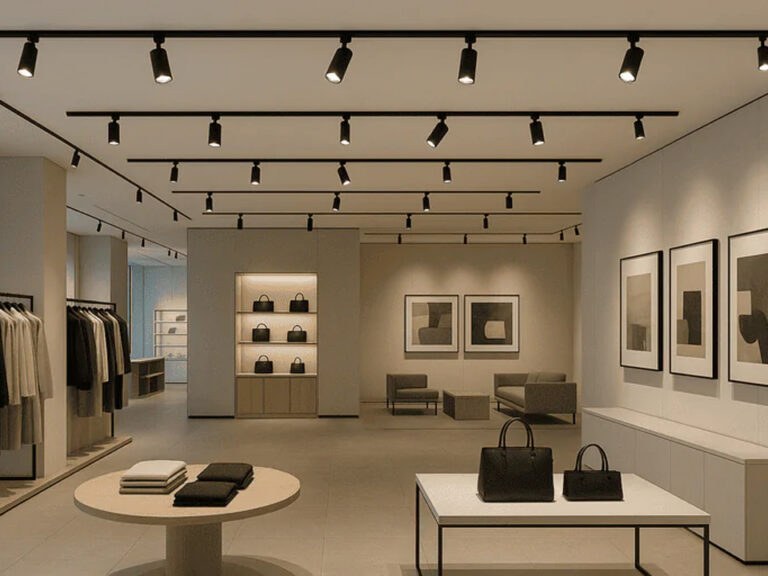
A 10W narrow-beam linear LED spotlight for precise accent lights is relevant where the design calls for a controlled highlight instead of a large swimming pool of basic light. For larger focal objects or taller areas, a 20W LED ceiling spotlight for focused hospitality-style illumination shows a more powerful directional approach.
Use restraint. If every wall, flower holder, and rack receives an accent light beam, nothing stays visually vital.
Aesthetic comfort is not created by picking one allegedly comfy color temperature. It originates from the interaction of resource brightness, beam instructions, bordering luminance, color quality, flicker, daytime, and customer control.
Comfort requires comparison.
When the area has mild differences in between bright task surfaces, softly illuminated walls, and quieter history locations, the eye receives aesthetic structure; when the ceiling is full of identical downlights, the very same room becomes level, fatiguing, and oddly institutional.
So why do several property requirements still begin with component spacing?
A practical interior illumination layout need to deal with four variables:
For a significant office, the 30W deep-recessed LED downlight developed for meeting-room comfort supplies a valuable referral for shielding and concentrated outcome. Yet 30W might be extreme in a regular residential ceiling. I would certainly not approve it without photometric computations, a dimming routine, ceiling-height data, and confirmation that the product pleases neighborhood electric needs.
The best home lighting concepts start with home windows, not luminaires. Daytime can sustain awareness and minimize electric-light use, but a home window behind a display or straight within the forward field of vision might develop disabling contrast.
A 2024 Penn State-indexed study evaluated 1,458 kinetic-louver arrangements with five runs per situation– 7,290 simulations in overall. Its modeled system reduced lighting energy from 14.22 to 0.20 kWh/m ²/ year on the south orientation and reported roughly 99% reduced electric-light intake than the referenced ASHRAE 90.1 account.
That 99% figure is not a savings assure for an average home. It is a border situation revealing what responsive daylight control can achieve under specified simulation conditions.
In your home, the transferable lessons are less complex:
Beginning with activities, not fixtures. Make a note of what occurs in each zone, where the person’s eyes will be, and which surfaces need to be seen.
Then build the plan in this order:
The United State Department of Power’s 2024 lighting-market characterization, based on 2020 stock data, estimated 6.5 billion household lighting installments– 80% of the combined property and industrial installed base– and 76 TWh of annual domestic lights electrical energy use. LEDs represented concerning 48% of installed units.
But the record likewise acknowledges an information weak point: its residential operating-hour assumptions came from a 2012 research and did not reflect pandemic-era work-from-home actions. That is specifically why national averages should educate a design, not determine it.
The list below numbers are working varieties rather than global code demands. Last worths must show age, task problem, surface reflectance, ceiling elevation, local standards, and individual sensitivity.
| Space or task | Practical illuminance starting point | CCT beginning point | Suggested layers | Main threat |
|---|---|---|---|---|
| Hallway and blood circulation | 50– 150 lux at floor level | 2700– 3000 K | Ambient, low-level evening lighting | Extreme illumination throughout nighttime activity |
| Living space | 100– 200 lux ambient | 2700– 3000 K | Ambient, job lights, accent | Downlight glare above seats and tv representations |
| Checking out setting | 300– 500 lux on the page | 2700– 3500 K | Job plus low ambient | Brilliant page bordered by a dark room |
| Cooking area counter | 300– 500 lux on the worktop | 3000– 4000 K | Ambient, under-cabinet task, accent | Body darkness and glossy-counter representations |
| Home-office workdesk | 300– 500 lux on the job surface area | 3500– 4000 K | Ambient, flexible task, soft history light | Monitor reflections and high contrast |
| Bedroom | 50– 150 lux ambient, lower before sleep | 2700 K or warmer | Dimmable ambient, bedside task, low-level guide light | Amazing, intense expenses light late during the night |
| Bathroom mirror | 300– 500 lux at the face | 2700– 3500 K | Upright vanity light plus ambient | Top-down face shadows |
| Artwork or texture | About 3:1 to 5:1 focal comparison | Suit surrounding sources | Slim or moderate accent light beam | Hot spots, fading danger, and aesthetic clutter |
Residential lighting layout falls short during procurement when a very carefully scheduled effect is minimized to wattage, coating, and device rate.
Watts are not lumens. Lumens are not lux. And none of those values independently discloses glow, beam of light top quality, flicker, shade change, vehicle driver sound, or dimming efficiency.
For each and every component, demand:
My blunt view: a provider that can not offer fundamental photometric and vehicle driver details is offering an object, not a lighting end result.
Mock-ups subject what spread sheets hide. Test a minimum of one fixture versus the real wall shade, floor covering, art work, and dimmer prior to buying a full job amount. A white wall with high reflectance can make a slim beam of light show up far more famous than the exact same light beam on dark wood or matte stone.
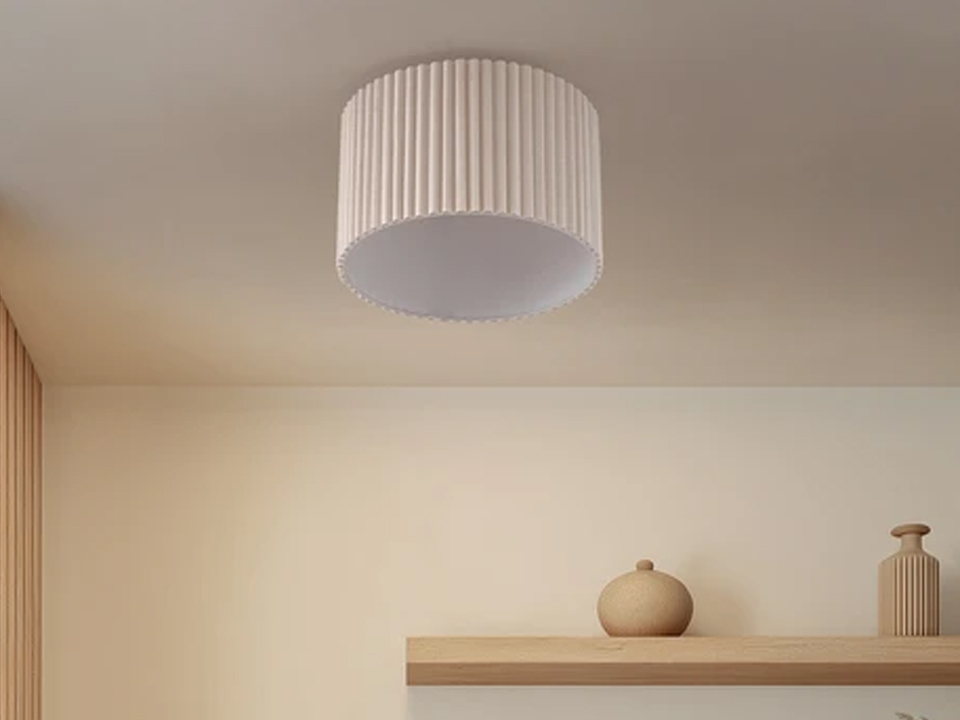
Downlights can sustain ambient or accent lights, but a ceiling loaded with them hardly ever illuminates faces well. Add wall surface, table, floor, necklace, or concealed sources to disperse light throughout various elevations.
A constant CCT can make adjacent rooms really feel meaningful, yet stringent uniformity is not constantly valuable. Concentrated work and late-night leisure impose different demands. Where temperatures differ, make the change calculated and avoid visibly mismatched fixtures within one ceiling plane.
2 15W luminaires can create different lumen outputs, beam of light forms, glow problems, and thermal performance. Electrical power indicates power intake– not whether the installation will light a desk, wall, or room appropriately.
A product described as dimmable might still drop suddenly, flicker at reduced output, buzz, or fall short to match adjacent fixtures. Ask what percentage the system reaches smoothly and examine the intended light, driver, and control with each other.
A reflected ceiling plan shows geometry. It does not automatically show a visitor’s line of sight, a kid’s lower eye degree, an older adult’s higher demand for task illumination, or the reflection seen in a black tv screen.
Individuals make use of areas. Layout around them.
Home illumination style is the intentional planning of daytime, ambient, task, and accent light so every room supports its activities, manages glare, provides shade accurately, and changes easily from daytime emphasis to evening rest without relying upon one exceedingly brilliant ceiling component.
It attaches fixture placement, optics, controls, color top quality, and human habits as opposed to treating luminaires as separated ornamental products.
The very best color temperature level for home lighting is usually 2700– 3000 K in bed rooms and living areas, around 3000– 3500 K in cooking areas, and 3500– 4000 K for detail-heavy home-office tasks, given numerous fixtures match very closely and dim without noticeable flicker at the very same control setup.
Deal with those arrays as beginning points. Daylight, surfaces, age, regional preference, and evening behaviors can transform what feels comfortable.
Ambient lighting offers basic visibility, task illumination focuses illuminance where work happens, and accent illumination develops pecking order by emphasizing things or surfaces; an effective domestic lighting style makes use of all 3 layers separately so brightness can alter without squashing the space.
The layers ought to have separate controls whenever useful.
The number of lumens a room requires is the target illuminance in lux increased by floor or work-surface area in square metres, then changed for fixture effectiveness, surface reflectance, installing elevation, and maintenance; watts alone can not answer the concern since LED efficiency varies.
As an example, a 4 m two work surface targeted at 500 lux theoretically needs 2,000 lumens getting to that airplane– not simply 2,000 lumens emitted someplace in the room.
Recessed illumination can contribute to eye strain when high-luminance apertures sit inside normal sightlines, narrow light beams create harsh comparison on work surface areas, or inappropriate dimming produces visible flicker; the fixture type itself is not automatically uneasy, due to the fact that protecting, spacing, light beam control, and task-light positioning establish the outcome.
Deep recessing assists, yet a protected component intended severely can still create representations and too much contrast.
Do not begin with a fixture count. Begin with a significant floor plan showing furnishings, daytime, seeing instructions, task surface areas, preferred lux varieties, beam of light intent, CCT, color-rendering targets, circuit groups, and dimming requirements.
Then demand proof from the item– not simply adjectives from the vendor.
For a project-ready home illumination style, assemble area measurements, ceiling elevations, finish colors, furniture placements, art work places, and control choices before asking for photometric guidance or prices. That info turns a collection of eye-catching LEDs right into an illumination system built for comfort, focus, and life after dark.