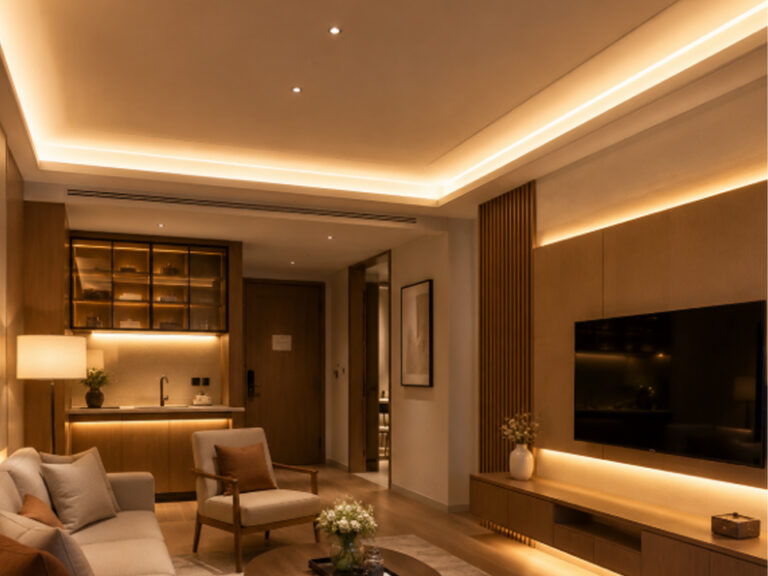
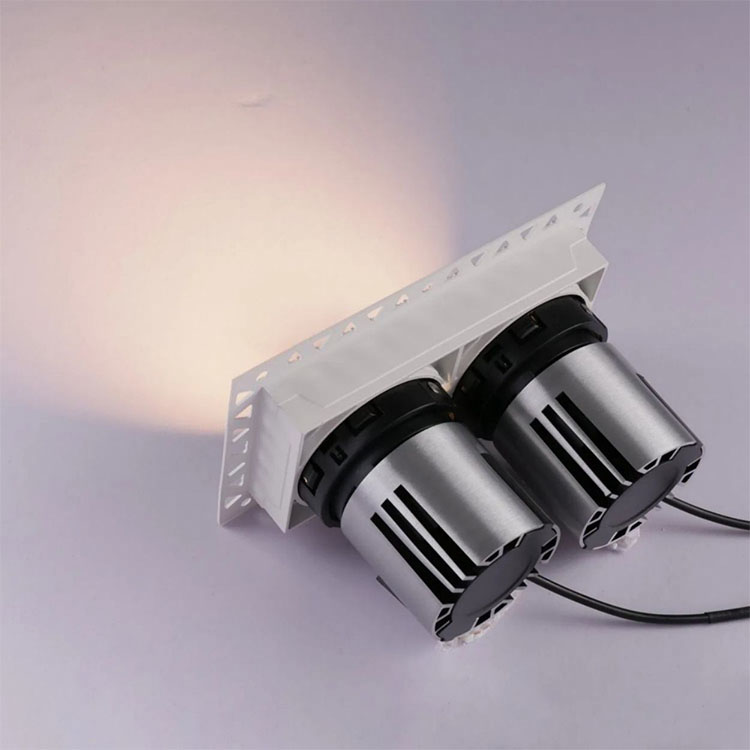
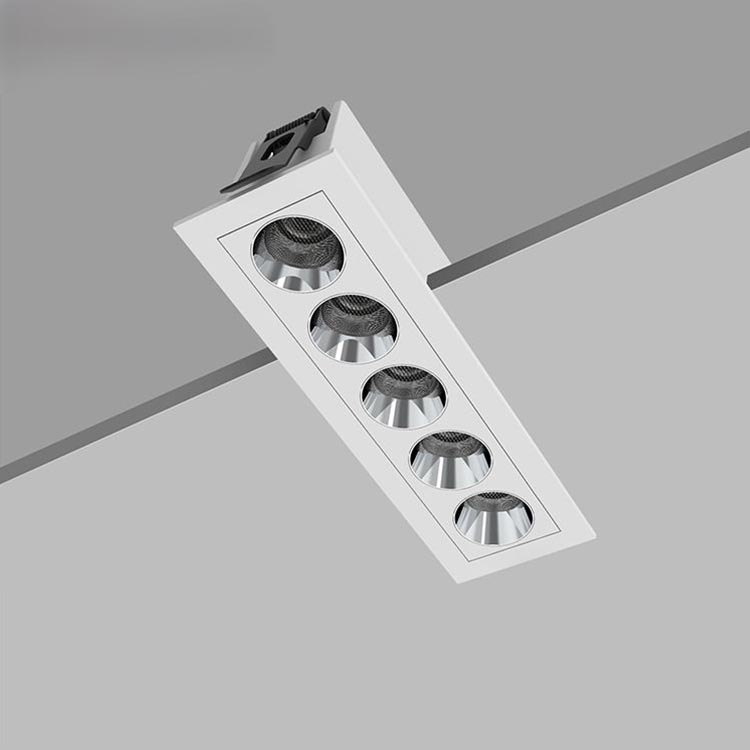
まだ適切な商業照明ソリューションが見つかりませんか?当社のプロジェクトチームにご相談ください。.
ウェブサイトをご覧になった方、または営業担当とすでにオプションについて話し合った方で、より明確な方向性が必要な方は、こちらからリクエストをお送りください。私たちのチームは、あなたのアプリケーション、ターゲット仕様、およびプロジェクトの制約を確認し、実用的な次のステップ、つまり、あなたのプロジェクトに適合するもの、確認が必要なもの、および見積もりと仕様準備完了ファイルへの最短ルートを返信します。.

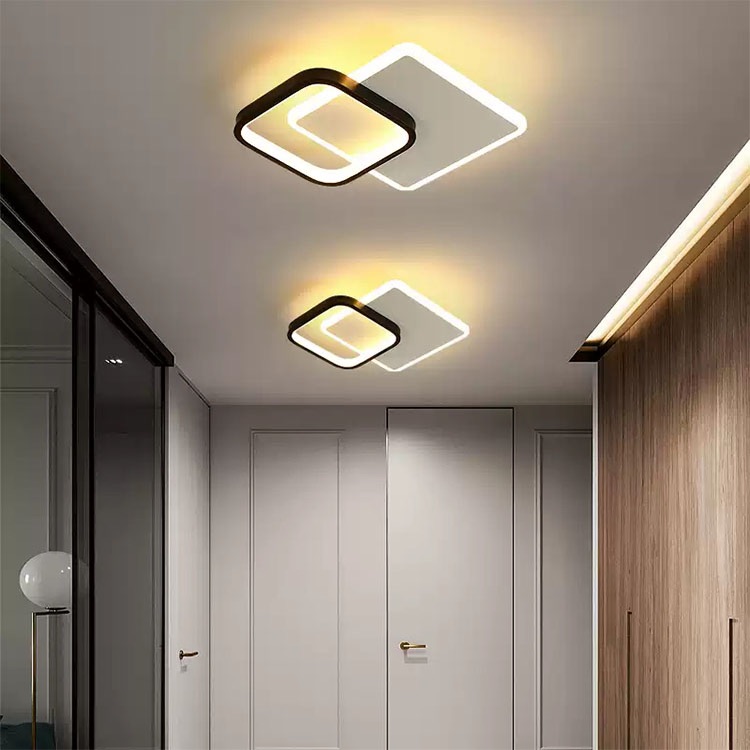
Drivers expose shortcuts.
I have sat in too many project reviews where the fixture looked fine on the sample table, the catalog promised 120 lm/W, the housing finish passed the client’s “touch test,” and then the whole deal became ugly because the driver hummed, dimmed badly, ran hot, or refused to cooperate with the control system already installed in the ceiling.
So why do buyers still treat the driver like a hidden accessory?
Here is the hard truth: the LED driver is not a background component. It is the power-management brain of commercial LED ceiling lights. It decides whether the fixture receives stable current or voltage, whether dimming behaves cleanly, whether flicker becomes visible under cameras, whether the luminaire survives heat, and whether the project team gets blamed six months after handover.
The money backs this up. According to the U.S. Energy Information Administration, lighting accounted for about 17% of electricity consumption in U.S. commercial buildings in 2018, equal to 208 billion kWh, in its 照明 電気 よくある質問. That is not a decorative footnote. That is operating cost sitting above people’s heads.
And the pressure is not easing. Reuters reported that EIA projected U.S. power demand to rise from 4,195 billion kWh in 2025 to 4,268 billion kWh in 2026 and 4,372 billion kWh in 2027 in its coverage of record U.S. power demand forecasts. In that environment, lazy driver selection is not just technical laziness. It is financial laziness.
For the product side, I would start by reviewing Meagree’s 業務用LED天井照明ソリューション before comparing drivers, because ceiling format, wattage, beam angle, cutout, heat path, and dimming strategy all affect the driver choice.
A driver is not a commodity unless your project is a commodity.
In commercial ceiling light driver comparison, I care less about the prettiest catalog table and more about the boring electrical match: output current, output voltage window, wattage headroom, load range, dimming protocol, power factor, total harmonic distortion, thermal rating, protection circuits, and certification package.
But the industry loves shortcuts.
“Same wattage” does not mean same driver. A 20W commercial ceiling downlight using a 500mA constant-current driver is not automatically interchangeable with another 20W fixture running a different LED array, voltage window, dimming method, or thermal design. When suppliers pretend otherwise, I assume they are hiding risk.
Most commercial LED ceiling lights use constant current drivers because the LED array needs controlled current to protect output, temperature, and lifespan. Constant voltage drivers are more common in strip lighting, signage, cabinet lighting, and some linear systems where LED modules regulate current downstream.
Simple rule? Use constant current when the LED engine requires a fixed drive current. Use constant voltage when the product architecture is built around a fixed voltage supply and internal current regulation.
The mistake I see is buyers asking only, “Is it 24W?” That is not enough. Ask this instead:
If the project includes recessed fixtures, heat matters even more. A deep ceiling void, insulation, poor ventilation, or a sealed gypsum ceiling can turn a “normal” driver into a service problem. This is where Meagree’s guide on how to choose wattage for commercial ceiling lights connects directly to driver selection: wattage is not brightness, and it is not driver quality either.
| Driver Option | Best Fit | What to Check | Main Risk | 現場からの意見 |
|---|---|---|---|---|
| Constant Current Driver | Downlights, ceiling spotlights, recessed commercial LED ceiling lights | Output current, voltage window, load range, thermal rating | Wrong current can overdrive LEDs or reduce output | Usually the safest choice for engineered ceiling luminaires |
| Constant Voltage Driver | LED strips, some linear systems, signage, modular lighting | 12V/24V/48V output, downstream current control, voltage drop | Poor matching creates uneven output or early failure | Fine when the product architecture is built for it |
| Fixed Output Driver | Basic switching applications, corridors, utility zones | PF, THD, surge protection, temperature rating | No dimming flexibility later | Cheap, stable, but not future-friendly |
| 0-10V Dimmable Driver | Offices, retail, public areas, many commercial retrofits | Dimming range, curve behavior, off-state leakage, wiring | Inconsistent low-end dimming and control mismatch | Useful, but never trust the label alone |
| DALI / DALI-2 / D4i Driver | Larger buildings, smart controls, addressable systems | Protocol version, commissioning needs, system compatibility | Higher planning burden and commissioning errors | Better for serious control projects |
| TRIAC / Phase-Cut Driver | Small retrofits, decorative zones, limited control upgrades | Dimmer compatibility list, minimum load, flicker | Buzzing, shimmer, dropout, poor low-end behavior | I avoid it in professional commercial projects unless forced |
| Emergency-Compatible Driver Setup | Corridors, exits, public zones, code-sensitive areas | Emergency pack compatibility, duration, test function | Noncompliance or failed emergency operation | Must be planned early, not patched later |
0-10V is the industry’s comfort blanket.
Everyone recognizes it. Many installers know it. Plenty of commercial dimmable LED drivers support it. But if you think every 0-10V driver dims the same way, you have not watched a commissioning team fight uneven fixtures in a finished office.
Pacific Northwest National Laboratory published a 2024 report on LED街路灯の0-10V制御, and the uncomfortable lesson applies beyond streetlights: 0-10V performance can be inconsistent because the relationship between control voltage, light output, and input power has not always been predictable across products. In the DOE-hosted report PDF, PNNL showed that two luminaires using the same driver model behaved differently under load, including one example where a 5V control signal produced 76% relative input power in one luminaire and 64% in another.
That should scare serious buyers.
Not panic. Scare.
Because a commercial office, hotel corridor, supermarket aisle, or lobby does not need “dimming” as a marketing word. It needs stable, repeatable, visually acceptable dimming. That means the driver must be tested with the actual luminaire, actual load, and intended controls.
When I review 0-10V dimming LED drivers, I ask for:
If the supplier cannot answer, I downgrade the quote. Immediately.
Flicker is ugly.
It is also politically dangerous inside a project because different people notice it differently, cameras reveal it brutally, and once occupants complain, the owner rarely wants a physics lecture about modulation depth, frequency, ripple current, or driver topology.
A good LED driver options for ceiling lights review should include flicker percentage or flicker index, especially in offices, schools, hospitals, showrooms, gyms, studios, and retail spaces with video recording. I have seen “premium” ceiling lights produce nasty camera banding because nobody tested low-end dimming before approval.
Power factor also matters. In commercial projects, I generally want PF > 0.90 for most serious ceiling lighting packages, especially at scale. THD should be controlled as well; high harmonic distortion becomes more than a lab concern when hundreds or thousands of drivers sit on the same electrical system.
Heat is the quiet killer. A driver rated for 50,000 hours on paper can become a maintenance nuisance if mounted in a hot ceiling pocket with poor airflow. Ask for Tc temperature limits, ta ambient rating, and actual installation assumptions.
For optical issues tied to fixture choice, not only the driver, Meagree’s piece on how beam angle affects commercial ceiling lighting performance is a useful companion because beam angle, spacing, wattage, and driver current all interact in the final result.
Here is my unpopular opinion: the lowest driver price is often a confession.
It may confess weaker capacitors. It may confess vague certification. It may confess poor dimming. It may confess no real surge protection. It may confess the supplier is betting you will never open the fixture or test a random production sample.
The U.S. General Services Administration said lighting can consume 10% to 25% of a building’s electricity depending on building age and system type, while LED conversions typically save 50% over fluorescent baselines and controls can save an additional 80% of lighting energy, in its 2024 federal building lighting guidance announcement. That is exactly why driver quality matters. Controls only save energy when drivers respond properly.
I do not care if a driver is “famous brand” or “factory brand” until I see the data. I want the datasheet, certification, wiring diagram, dimming test, load match, thermal assumptions, and failure policy.
For custom projects, private-label lines, or repeat rollouts, driver choice should be locked inside the bill of materials. Do not approve a sample with one driver and accept mass production with “equivalent driver” wording unless the equivalency rules are written down. Meagree’s OEM/ODM 商業用LED照明 are relevant here because OEM/ODM work only stays sane when the driver, LED chip, lens, housing, finish, packaging, and documentation are controlled together.
Before approving drivers for commercial LED ceiling lights, I would ask the supplier for a proper submittal package, not a screenshot from a sales chat.
Minimum driver data:
This is where I would use Meagree’s own sourcing guidance on 業務用照明の見積もりを依頼する前に必要な書類. The article specifically pushes buyers to state control protocols like 0-10V, DALI-2, TRIAC, DMX, Bluetooth mesh, occupancy sensors, daylight harvesting, and scene control before the factory guesses. Good. Guessing is how projects bleed money.
For offices, I want dimmable LED drivers for commercial lights with stable low-end behavior, low flicker, strong PF, clean wiring, and compatibility with occupancy sensors or daylight harvesting. A 3500K or 4000K office ceiling system can look sharp on paper and still feel cheap if dimming steps, shimmer, or glare annoy people at desks.
Hotel corridors punish bad drivers because the lights run long hours and guests view them from shallow angles. I prefer stable constant-current drivers, warm CCT options, low flicker, and sensor-ready dimming when the project needs energy control. For fixture type, Meagree’s guide on ホテル廊下用LEDシーリングライト fits naturally with this driver discussion.
Retail needs driver discipline because color, contrast, and scene control affect sales presentation. High CRI fixtures, track lighting, downlights, and linear systems may require different driver strategies. If the design includes accent lighting or display lighting, I would compare Meagree’s LEDダウンライト そして LEDリニア照明システム before pretending one driver logic fits every ceiling zone.
Public areas need boring reliability. That means surge protection, emergency compatibility, clear documentation, accessible maintenance, and no mystery substitutions. I would rather over-spec the driver slightly than explain random failures in a lobby, school hallway, clinic, or transport waiting area.
Use direct wording. Do not be polite with ambiguity.
“Driver must be matched to the LED module and luminaire load, with exact model number declared before sample approval. Any driver substitution in production requires written approval and equivalent documentation for output current, voltage window, load range, PF, THD, efficiency, dimming behavior, flicker performance, thermal rating, protections, and certifications.”
That sentence saves arguments.
Add this if dimming matters:
“Dimmable driver must be tested with the proposed luminaire and intended control protocol. Supplier must provide dimming range, dimming curve, minimum output behavior, off-state behavior, flicker data at dimmed levels, wiring diagram, and compatible control list.”
And add this if you are buying for a rollout:
“Mass production must use the approved driver model unless written approval is given. Random production samples may be tested against the approved sample for dimming, flicker, wattage, PF, THD, and output consistency.”
Too strict? Not for serious buyers.
The best driver for commercial LED ceiling lights is the driver that matches the luminaire’s LED load, required current or voltage, dimming protocol, thermal condition, certification market, and control system while maintaining stable output, low flicker, safe operating temperature, and documented protection against electrical faults.
In most engineered ceiling downlights and ceiling spotlights, that usually means a constant-current driver. But the “best” choice still depends on LED array design, wattage, ceiling heat, dimming requirements, emergency function, and whether the project needs 0-10V, DALI-2, D4i, TRIAC, or fixed output.
LED driver options for ceiling lights should be compared by electrical fit, output current or voltage range, rated load, efficiency, power factor, THD, dimming protocol, flicker performance, thermal rating, protection functions, certifications, wiring requirements, emergency compatibility, and whether the exact driver model is locked for production.
Do not compare only wattage. A 20W driver can behave differently from another 20W driver under dimming, heat, load variation, and control wiring. Ask for the datasheet, test result, wiring diagram, and substitution policy before sample approval.
0-10V dimming LED drivers can be reliable for commercial lighting when the driver, luminaire load, control device, wiring method, dimming range, and commissioning process are tested together, but 0-10V should not be assumed to deliver identical low-end dimming or power behavior across different driver and fixture combinations.
I still use 0-10V when the project calls for it. But I do not trust the label alone. I want dimming curves, flicker data, compatibility notes, and a real test with the proposed fixture because low-end dimming is where bad drivers embarrass everybody.
A constant-current LED driver supplies a controlled current to an LED array, making it common for downlights, ceiling spotlights, and many commercial LED ceiling lights, while a constant-voltage driver supplies a fixed voltage, such as 12V, 24V, or 48V, for systems with downstream current regulation.
Use constant current when the LED engine requires a specific drive current like 350mA, 500mA, or 700mA. Use constant voltage when the product is built around fixed-voltage modules, strips, or linear systems. Mixing them blindly can damage LEDs or produce poor output.
DALI is usually better for addressable, data-rich, multi-zone, or professionally commissioned lighting systems, while 0-10V is often simpler and widely understood for basic analog dimming, so the right choice depends on building scale, control goals, installer skill, commissioning budget, and long-term maintenance expectations.
My bias is simple: use DALI-2 or D4i when the owner wants serious control, feedback, addressing, and future flexibility. Use 0-10V when the project needs a familiar, cost-controlled dimming method and the team has tested the driver-control pairing.
Before buying commercial LED ceiling lights, ask suppliers for the exact driver model, output current or voltage, wattage, load range, efficiency, PF, THD, dimming protocol, dimming range, flicker data, thermal rating, protection functions, certification files, wiring diagram, emergency compatibility, and written approval rules for substitutions.
If the supplier answers with only “high quality driver,” walk carefully. Professional projects need numbers, documents, and repeatable production. The driver is too important to leave hidden behind a vague catalog promise.
Here is my blunt closing advice: do not approve commercial LED ceiling lights until the driver is named, documented, tested, and protected from quiet substitution.
Ask for the driver datasheet. Ask for dimming proof. Ask for flicker data. Ask for the wiring diagram. Ask what happens if the approved driver becomes unavailable. Then put the answer into the RFQ, purchase order, and sample approval record.
If you are sourcing ceiling lights, downlights, linear lighting, or OEM/ODM commercial lighting for offices, hotels, retail stores, supermarkets, corridors, or public interiors, start with Meagree’s 業務用LED照明 and send a driver-specific inquiry that includes wattage, control protocol, voltage market, dimming target, certification requirement, and project quantity. The fixture is what people see. The driver is what they live with.