ポップアップ・フォーム

Still Not Seeing the Right Commercial Lighting Solution? Talk to Our Project Team.

If you have reviewed the website or already discussed options with sales but still need a clearer direction, send your request here. Our team will review your application, target specifications, and project constraints, then reply with a practical next step: what fits, what needs confirmation, and the fastest route to a quote and spec-ready files for your project.

  • Direct review of your application, specs, and project constraints for a clearer quote path.
  • Product matching across beam angle, CCT / CRI, drivers, dimming, and controls options.
  • Project documentation support, including cut sheets, wiring notes, and IES / LDT files where available.
  • OEM / ODM guidance for labels, packaging, housing finish, and private-brand requirements.
ポップアップ・フォーム

Get a Fast Quote for Commercial LED Lighting

Built for designers, architects, contractors, wholesalers, and project buyers. Share your application, quantity, and target specifications to get factory-direct pricing, lead-time guidance, and spec-ready support for US and EU projects.

  • Quote-ready options: beam / optics, CCT / CRI / SDCM targets, drivers, dimming, and controls integration
  • Project documentation: cut sheets, drawings, and IES / LDT files where available
  • OEM / ODM support: private-label SKUs, packaging, labels, manuals, and barcode-ready labeling
  • Stable quality for rollouts: repeatable SKUs, QC checkpoints, and scalable supply for tenders and reorders
  • NDA available on request for detailed drawings and project files

LED Spotlight Selection Guide for Retail, Showrooms, and Hospitality

Bad specs spread.

I have read enough lighting schedules to know the pattern: someone picks a commercial LED spotlight by wattage, someone else waves around a rendering, procurement pushes for a cheaper driver, and then the finished space opens with flat merchandise, nervous glare, and a dimming system that behaves like it was assembled during an argument. Why do we keep pretending that “bright enough” is a strategy?

Here is the first hard truth. A commercial LED spotlight is not a decorative afterthought in retail, showrooms, or hospitality; it is a sales tool, a mood-control device, and, when the spec is sloppy, a liability that keeps showing up in complaints, callbacks, and weak sell-through.

The industry still gets this wrong

Money leaks fast.

According to ENERGY STAR’s commercial building guidance, lighting still accounts for 17% of all electricity consumed in U.S. commercial buildings, which is why bad spotlight selection is not just an aesthetic problem but an operating-cost problem. And the regulatory side is getting less forgiving, not more: New York City’s Local Law 88 requires covered buildings to upgrade lighting power allowances and controls, with the city publishing a 2026 covered-building filing list this year. (ENERGY STAR)

So no, this is not a “designer preference” debate.

If your spotlight schedule ignores beam control, driver behavior, color quality, and controls compatibility, you are not optimizing a project; you are delaying the failure until handover.

LED Spotlight Selection Guide for Retail, Showrooms, and Hospitality

Retail, showrooms, and hospitality are three different fights

One fixture family.

But three very different jobs sit underneath that family, which is why I would never let a buyer read this page in isolation; on Meagree’s site, the smartest internal path is to move from retail vs office vs hospitality fixture selection into the broader commercial LED lighting solutions hub, then into the more specific LED spotlight solutions for retail and hospitality そして LED track lighting for retail display zoning pages, because that matches how the site itself separates application logic from product-family logic. (カスタム紙管ボックス)

Why does that matter?

Because retail lighting sells product, showroom lighting sells confidence, and hospitality lighting sells mood without making maintenance miserable.

What changes by application

Space TypeWhat the light must doWhat I prioritize firstWhat usually gets botched
Retail storesCreate contrast, direct attention, make merchandise look expensiveBeam control, aiming flexibility, Ra 90+ color quality, track adaptabilityFlat ambient wash that kills hierarchy
ShowroomsReveal finish, texture, and form without visual chaosLayered spotlighting, narrower beams on hero zones, cleaner ceiling compositionToo many fixture types competing for attention
HospitalityShape atmosphere and flatter materials, skin tones, and surfacesLower-glare apertures, warmer CCT strategy, dimming stability, maintenance accessCheap drivers, bad dimming curves, hot spots in guest-facing zones

That table is my bias, and I stand by it.

Retail needs drama, but not random drama. Showrooms need precision, but not museum stiffness. Hospitality needs softness, but not sleepy, underlit corners that make a premium interior feel tired.

LED Spotlight Selection Guide for Retail, Showrooms, and Hospitality

The specs that actually matter

Three things first.

I always start with optics, color, and controls, because those three will decide whether the fixture works in the room or just looks respectable on paper. Why do so many teams still start with wattage and price?

Beam angle is where the real decision starts

Aim beats output.

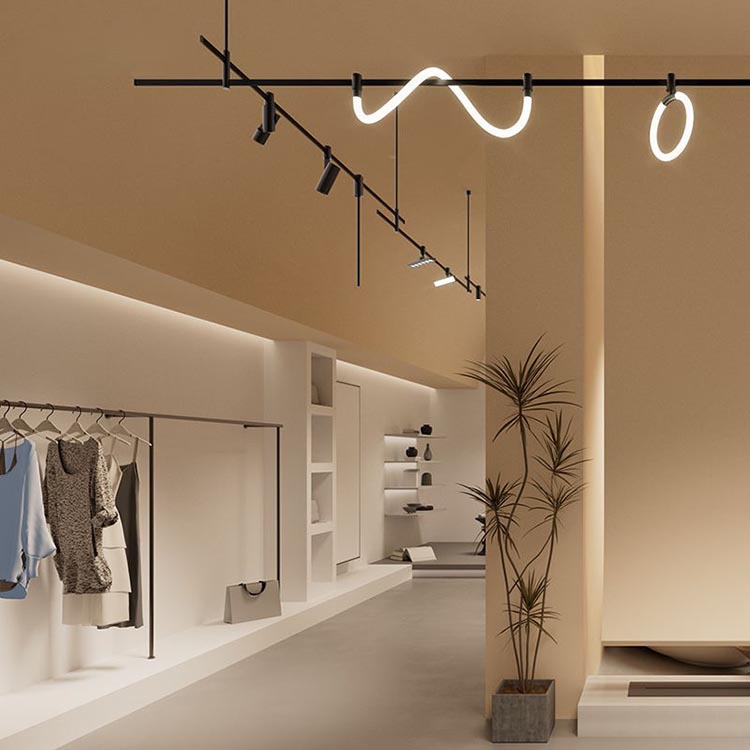
For retail and showroom work, I care far more about disciplined beam control than big lumen claims, because a sloppy wide beam can make a shelf brighter while making the product less legible. That is exactly why a spotlight category page and a track-lighting category page should both be in the reading path: one supports fixed or recessed accent logic, while the other supports layout changes, merchandising resets, and aiming adjustments over time. (カスタム紙管ボックス)

My blunt rule is simple: the more valuable the display object, the less patient I am with vague optics.

CRI and CCT are not “nice extras”

Color sells margin.

I do not trust any commercial LED spotlight spec for fashion, cosmetics, jewelry, premium F&B, or hotel public areas if the conversation around color rendering starts and ends with “high CRI.” That phrase gets abused constantly. I want the team discussing Ra, consistency, target CCT, and whether the room is meant to feel active, neutral, or intimate.

について DOE TeamDKB office case study is a useful reminder that color temperature is a design tool, not a line-item accessory: most visual task areas in that project used 3500 K LED luminaires, while conference, reception, and break areas used 3000 K OLED luminaires, all within a total connected lighting load of 0.60 W/ft². That is disciplined zoning, not guesswork. (The Department of Energy’s Energy.gov)

And yes, I know that is an office case. The lesson still holds: different zones deserve different visual intent.

Dimming and driver compatibility are where cheap specs get exposed

This part hurts.

The U.S. Department of Energy has been unusually direct here. In its CALiPER Retail Lamps Study 3.1, DOE stated that there is no standard definition for “dimmable,” and warned that dimming performance can depend on the control device and even other light sources on the same circuit. More recently, DOE’s January 2024 article on 0-10V control for LED streetlights highlighted measurable variation in market-available LED drivers and linked that issue to ANSI C137.1-2022. (The Department of Energy’s Energy.gov)

So when someone tells me, “Don’t worry, it’s dimmable,” I hear, “We have not finished the engineering conversation.”

If the project lives or dies by scenes, guest mood, merchandise focus, or adaptive display layouts, I want the dimming protocol, control interface, driver pairing, and test evidence discussed before PO, not after installation.

The case studies I actually trust

Proof matters.

I am skeptical by default, and I think you should be too, because the lighting business is full of confident brochures and very thin evidence. So what survives scrutiny?

First, the GSA evaluation of LED fixtures with integrated advanced lighting controls reported that projects at the Ralph H. Metcalfe Federal Building in Chicago and Peachtree Summit in Atlanta maintained lighting quality, delivered lighting-energy savings of 69% over the GSA average, and yielded a 40% return on investment. That is the kind of number serious buyers read twice. (U.S. General Services Administration)

Second, Reuters’ May 2024 report on Keppel Bay Tower described a renovation that cut overall energy use by 30%, with a smart lighting system and occupancy/daylight sensors reducing lighting bills by 70%, while the building’s energy intensity fell from 165 kWh/m² to 115 kWh/m². That is not vendor poetry. That is performance. (ロイター)

Third, the policy warning light is already flashing. In GSA’s September 2024 LED Lighting and Controls Guidance, the agency noted that its 2024 P100 no longer allows Type B TLED because of potential product incompatibility and safety hazards. Translation: system behavior now matters more than the bargain sticker. (U.S. General Services Administration)

What do all three examples tell me?

The winners are not just buying efficient fixtures. They are buying controllability, compatibility, and commissioning discipline.

Where buyers still get burned

Supplier theater wins.

And it wins because too many buyers still accept generic “high quality” language without asking for the boring documents that decide whether a spotlight rollout survives month 6. Isn’t that the oldest trap in industrial sourcing?

On Meagree’s site, the risk-control pages are actually worth using as internal support, because LED lighting quality control for project orders spells out IQC, IPQC, batch traceability, ISO-managed workflows, and a 96-hour aging test on all LEDs, while the OEM/ODM capabilities page claims support for optical design, driver integration, testing, and certification pathways. Those are not decorative details; those are the pages procurement teams should land on right after the selection guide, especially if they need cut sheets, IES/LDT files, CCT/CRI/SDCM targets, or private-label support. (カスタム紙管ボックス)

My rule is harsh.

If a supplier cannot talk clearly about beam options, CCT bins, CRI consistency, dimming interface, thermal behavior, aging verification, and traceability, I do not care how attractive the sample price looks.

How I would choose commercial LED spotlights, in order

Start here first.

I would define the display task before I touched the fixture list, then I would set the visual hierarchy, then I would choose optics, then color, then driver and controls, then maintenance, and only after that would I let price into the room. Why? Because a cheap spotlight that misses the selling task is not cheap. It is just expensive later.

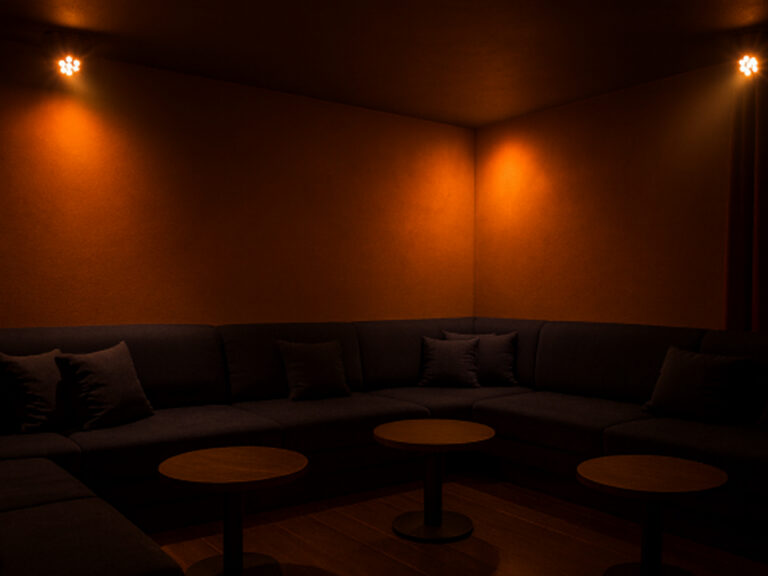
For retail stores, I want adjustable commercial LED spotlight options or track heads that create obvious hierarchy on hero merchandise, not a blanket of democratic brightness. For showrooms, I want fewer fixture families, more precise aiming, and a quieter ceiling, because the product should own the room. For hospitality, I want warm, stable, low-glare light with smooth dimming and serviceable components, because mood is worthless if the driver buzzes and the beam edge looks dirty.

And I will say the unpopular part out loud.

The best LED lighting for retail stores is not the brightest package on the quote sheet. It is the one that makes the right SKU, finish, texture, and color read as more valuable than it did five seconds earlier.

LED Spotlight Selection Guide for Retail, Showrooms, and Hospitality

よくあるご質問

What is a commercial LED spotlight?

A commercial LED spotlight is a directional luminaire designed to put controlled light on merchandise, architectural features, artworks, counters, tables, or focal surfaces in business environments, using specific beam angles, color quality targets, and control compatibility to produce emphasis rather than broad, uniform illumination. It is not general lighting pretending to be accent lighting. In real projects, its job is attention control.

How do I choose the right beam angle for retail and showroom use?

The right beam angle for retail and showroom use is the distribution that creates clear visual hierarchy on the product or focal surface without flooding adjacent shelves, walls, or circulation zones, which usually means matching the beam to mounting height, target size, viewing distance, and display turnover frequency. I test beam logic against the display, not the catalog description. That is how you avoid wasted lumens and dead-looking product.

What color temperature works best for hospitality LED lighting?

The best color temperature for hospitality LED lighting is the one that supports the intended mood, material palette, guest expectations, and dimming scenes of the space, which often pushes public and guest-facing areas toward warmer visual character while keeping enough contrast and rendering quality for wayfinding, food, finishes, and faces. I would never treat lobby light and task-oriented service light as the same emotional job. Warmth needs discipline.

Are LED track lights better than recessed spotlights for retail?

LED track lights are better than recessed spotlights when the retail environment changes often, merchandising resets are frequent, and aiming flexibility matters more than ceiling minimalism, while recessed spotlights are better when the design wants a quieter ceiling and the focal points are stable enough to justify fixed positions. Neither one is “better” in the abstract. The room decides.

Your next move

Do the ugly work.

Before you approve any commercial LED spotlight schedule, ask for beam-angle options, dimming protocol details, color data, thermal evidence, maintenance access logic, and proof that the control strategy was tested as a system rather than assembled as a hope. Then send readers deeper through the right internal pages in the right order: application logic first, category logic second, proof pages third.

If this article is meant to convert serious B2B readers instead of casual browsers, I would point them next to the commercial LED lighting case studies page once they understand selection logic, because buyers want proof after theory, not before it. Meagree’s case-study page clusters hospitality and retail references around projects tied to Shangri-La Hotel Chengdu, Baiman Hotel Shanghai, Kawaii brand chain stores in Jiangsu, and Parkson Group, which is exactly the kind of context a skeptical procurement team wants before it asks for a quote. (カスタム紙管ボックス)

That is the sequence I trust.

Selection first. Evidence second. Supplier validation third. Then, and only then, price.

コメント
愛を分かち合う