¿Aún no encuentra la solución de iluminación comercial adecuada? Hable con nuestro equipo de proyectos.
Si ha consultado el sitio web o ya ha hablado de las opciones con el departamento de ventas pero sigue necesitando una orientación más clara, envíe su solicitud aquí. Nuestro equipo revisará su aplicación, las especificaciones de destino y las limitaciones del proyecto, y le responderá con un paso práctico: lo que encaja, lo que necesita confirmación y la ruta más rápida para obtener un presupuesto y archivos listos para las especificaciones de su proyecto.
Revisión directa de su solicitud, especificaciones y limitaciones del proyecto para obtener un presupuesto más claro.
Correspondencia de productos en cuanto a ángulo de haz, CCT / CRI, controladores, regulación y opciones de control.
Apoyo a la documentación del proyecto, incluidas hojas de corte, notas de cableado y archivos IES / LDT cuando estén disponibles.
Orientación OEM / ODM para etiquetas, embalaje, acabado de carcasas y requisitos de marca privada.
Obtenga un presupuesto rápido para Iluminación LED comercial
Diseñado para diseñadores, arquitectos, contratistas, mayoristas y compradores de proyectos. Comparta su aplicación, cantidad y especificaciones de destino para obtener precios directos de fábrica, orientación sobre plazos de entrega y soporte listo para especificaciones para proyectos en EE. UU. y la UE.
Opciones listas para presupuesto: haz / óptica, objetivos CCT / CRI / SDCM, controladores, regulación e integración de controles
Documentación del proyecto: hojas de corte, planos y archivos IES / LDT cuando estén disponibles.
Asistencia OEM / ODM: SKU de marca propia, envases, etiquetas, manuales y etiquetado listo para código de barras
Calidad estable para las implantaciones: SKU repetibles, puntos de control de calidad y suministro escalable para licitaciones y nuevos pedidos.
NDA disponible previa solicitud para planos detallados y archivos del proyecto
SDCM, MacAdam Ellipses, and Color Consistency in LED Projects
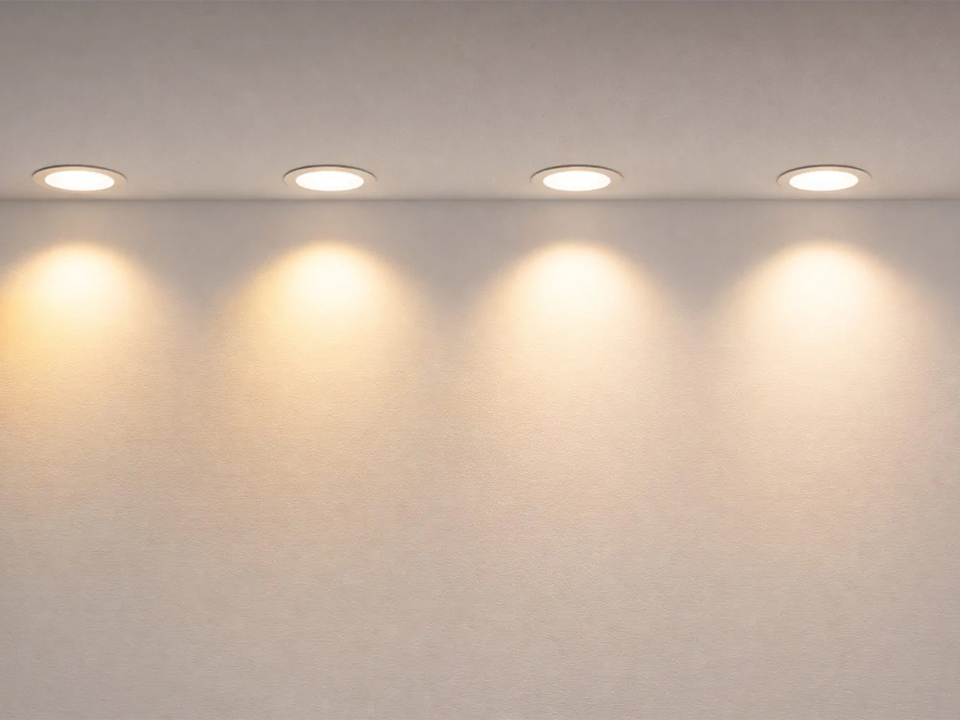
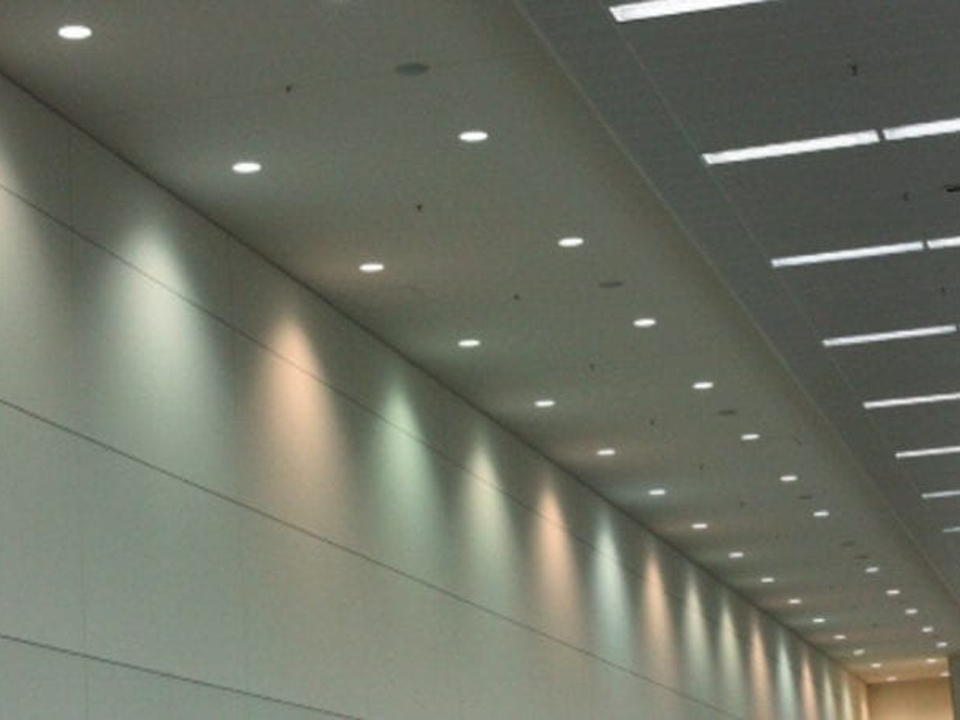
A lights timetable can look technically total– 3000 K, CRI 90, similar wattage, matching housings– while leaving adequate chromaticity freedom for one luminaire to appear green, another pink, and a third visibly cooler once the ceiling is energized.
That pays to repair that?
Usually not the spread sheet. The contractor, representative, developer, or structure owner absorbs the hold-up, labor, mock-up disagreements, and awkward meeting where everyone firmly insists that the mismatched installations came from “the same spec.”
SDCM, or Criterion Discrepancy Color Matching, is meant to regulate that problem. MacAdam ellipses provide the visual and mathematical basis. However the sector has reduced both ideas to shorthand: “3-step good, 5-step acceptable.” That is practical, incomplete, and sometimes expensive.
What SDCM Really Actions in LED Lights
SDCM explains exactly how far an LED’s chromaticity might deviate from a target color factor. The lower the number, the tighter the allowed variation.
A nominal 3000 K item noted “3 SDCM” is not promising one specific color. It is promising that its determined chromaticity falls within a three-step tolerance area around the producer’s target point.
That distinction issues since associated color temperature level, or CCT, compresses a two-dimensional color area into a single Kelvin value. Two luminaires can both be classified 3000 K while sitting on contrary sides of the Planckian locus– one above it with a green tint, the other below it with a pinkish color.
CCT is not enough.
The 2nd coordinate is frequently shared as Duv, the distance and direction from the Planckian locus. A trustworthy submittal consequently requires more than “3000 K.” I wish to see the nominal chromaticity target, SDCM limit, Duv tolerance, measurement requirement, and whether the case relates to the LED package, light engine, or complete luminaire.
That last information captures individuals. A tightly binned LED bundle can still create poor luminaire-level consistency since optics, remote phosphor, thermal conditions, drive existing, setting up tolerances, or mixed production great deals modify the final result.
What MacAdam Ellipses Program– and What They Do Not
David L. MacAdam’s 1942 experiments mapped areas in which ordinary viewers had a hard time to distinguish tiny chromaticity differences. The resulting forms were ellipses, not equivalent circles, due to the fact that human level of sensitivity to shade modification varies across the CIE 1931 x, y layout.
The ellipse modifications dimension and alignment relying on the shade factor. As a result, one repaired x, y tolerance does not represent equivalent visual difference almost everywhere.
MacAdam actions scale those ellipses:
Score
Practical analysis
Likely aesthetic lead to a surrounding installation
Normal job setting
1 SDCM
Exceptionally limited preliminary matching
Distinctions are normally very difficult to find
Galleries, shade examination, costs mock-ups
2 SDCM
Limited building resistance
Typically equivalent in regular watching
Galleries, high-end retail, premium friendliness
3 SDCM
Solid business requirements
Little differences may appear under close comparison
Workplaces, restaurants, high quality retail
4 SDCM
Moderate tolerance
Variation can come to be recognizable in consistent varieties
Budget-sensitive commercial job
5 SDCM
Broad industrial tolerance
Adjacent components may look different
General blood circulation or separated luminaires
7 SDCM
Loosened matching
Color variant is commonly evident
Utility areas where appearance is second
A warning belongs beside this table: SDCM is statistical language, not an universal visibility button.
Under an idealized two-dimensional normal distribution, one initial MacAdam ellipse consists of about 39% of observations, two steps about 86%, and three actions regarding 99%. Those portions are commonly duplicated without the presumptions attached. They do not mean that every viewer, surface area, optic, setup angle, or production batch will certainly act identically.
So when a person says “three-step is unnoticeable,” I push back. Unnoticeable to whom, under which adjustment state, versus what surface area, and with the luminaires spaced just how far apart?
LED Shade Consistency Is More Than an Initial Bin
Right here is the difficult truth: a desirable SDCM number at shipment states little regarding where the product will land after 5,000, 10,000, or 25,000 operating hours.
Preliminary LED color tolerance and lasting chromaticity maintenance are various performance questions.
Usual white LEDs make use of a blue semiconductor emitter with a wavelength-converting phosphor. One acquainted phosphor family members is cerium-doped yttrium aluminum garnet, frequently created Y two Al ₅ O ₁₂: Ce TWO ⁺ or YAG: Ce. Heat, wetness, optical flux, encapsulant destruction, phosphor modifications, reflector discoloration, and lens aging can change the spectral equilibrium.
The luminaire might stay brilliant and still become aesthetically inappropriate.
The U.S. Department of Power has actually clearly warned that color shift can be much more destructive than lumen depreciation in appearance-sensitive applications. ANSI/IES LM-80-21 measures light-output and shade maintenance at the LED plan, range, or module degree; ANSI/IES LM-84-20 addresses lamps, light engines, and luminaires; TM-35 is made use of to project chromaticity-coordinate change.
And in 2023, ANSI/IES LM-86-20(R2023) declared a separate technique for remote-phosphor elements. In 2024, ISO/CIE 11664-5:2024 updated the formal basis for the CIE 1976 Luv * shade area and u ′, v ′ uniform chromaticity representation. These are not attractive phrases. They tell buyers what was measured, at which system degree, and in which coordinate system.
3 Situations That Reveal the Real Cost of Shade Failing
Lincoln’s 1,500 purple streetlights
In January 2023, Lincoln, Nebraska, reported that around 1,500 of greater than 26,000 LED streetlights installed during a conversion job had shifted from white to purple due to a manufacturing flaw. Teams replaced 624 devices in 90 days, and the maker covered replacement costs.
The conversion still saved the city an estimated $340,000 in yearly energy cost and greater than 9,000 tons of carbon exhausts each year. Yet those savings did not make the shade failure disappear. They merely sat close to it on the very same balance sheet.
A 28-sample examination found product failure
A 2024 LED Equipments Integrity Consortium investigation evaluated 28 affected streetlight components supplied by the North Carolina Division of Transport. Researchers traced the blue-purple change to loss of attachment, cracking, and delamination in the silicone-phosphor layer over chip-scale-package LEDs.
That is the factor specifiers should keep in mind: color uniformity can stop working since a material interface ages, also when preliminary binning was perfectly respectable.
Guarantee prices reached $52.4 million
Acuity Brands divulged $52.4 million in service warranty and recall expenses for monetary 2023, complying with $47.0 million in 2022 and $32.3 million in 2021. Its declaring also went over quality-cost recuperation connected to specific exterior illumination items produced and offered between 2017 and 2019.
I would not deal with every buck as a pure “SDCM price”– that would certainly overemphasize the evidence. But the numbers show how element high quality, field performance, distributor recovery, and warranty direct exposure can become a product financial issue rather than a visual issue.
How Many MacAdam Tips Should a Project Specify?
My default placement is simple: define the tolerance around the application, not around whatever shows up in the cheapest brochure.
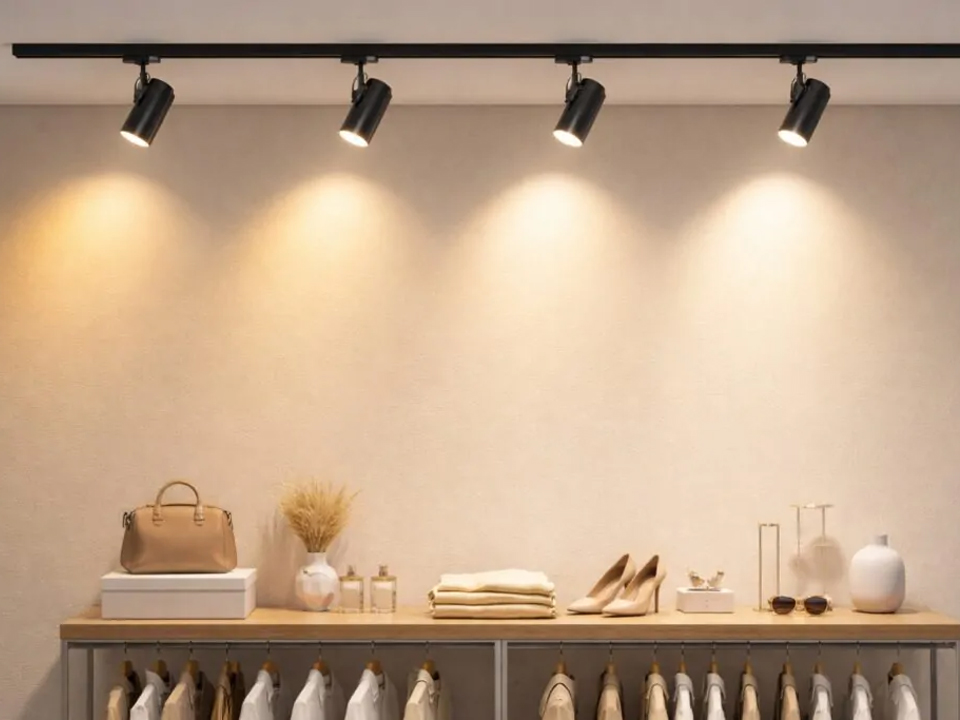
For a gallery, boutique, dining establishment, or function ceiling where multiple beam of lights strike the same surface area, I would usually begin at 2 or 3 SDCM. The 12W LED track go to boutique and gallery display screens is the kind of item where adjacent-beam comparison makes chromaticity control highly noticeable.
The same applies to goods. High CRI can not save bad source-to-source matching, so a high-CRI 10W LED limelight for goods screen must be examined for both spooky rendering and SDCM.
For conference room, 3 SDCM is a defensible starting point, especially where white walls, camera, and duplicated ceiling designs reveal variation. A spec constructed around a 30W deep-recessed commercial LED downlight must additionally define the replacement-lot policy; otherwise, an unsuccessful suitable installed 2 years later on may become the odd-colored circle in every video clip telephone call.
Hospitality is less forgiving than numerous buyers assume. Warm coatings, table surfaces, food, complexion, and low dimming levels intensify little tint differences. A 10W magnetic necklace for restaurant and hospitality interiors consequently needs color information at the designated dimming state, not just at 100% outcome.
Straight systems are one more risk area since luminaires touch aesthetically. Even moderate variation ends up being a stripe. For a 24W modular linear LED fixture made use of throughout retail ceilings, I would request project-lot screening and a sample run assembled in the real series.
SDCM, CRI, TM-30, CCT, and Duv Are Not Interchangeable
Purchase groups routinely mix 5 different questions:
Métrica
What it addresses
What it does not respond to
CCT
Does the source show up broadly cozy, neutral, or cool down?
Whether two resources have the exact same green-pink tint
Duv
Is the chromaticity above or listed below the Planckian locus, and by how much?
Complete source-to-source distribution
SDCM
Just how tightly are sources organized around a target chromaticity?
Just how objects make under the light
CRI Ra
Just how accurately are 8 conventional test-color samples made usually?
Saturated red efficiency or resource matching
R9
Exactly how well is a saturated red sample made?
Total range or chromaticity tolerance
TM-30 Rf/Rg
Exactly how loyal and saturated colors appear across 99 examination examples
Whether luminaires from various batches match
A luminaire can be CRI 95 and 5 SDCM. It can additionally be CRI 80 and 2 SDCM.
The very first may provide items magnificently while developing noticeable fixture-to-fixture tint variant. The secondly may match its neighbors closely while rendering product inadequately. Good job illumination calls for both consistency and suitable spectral quality.
The Procurement Specification I Would Really Make use of
A major request for quote should state measurable acceptance conditions:
Small CCT: 3000 K, 3500 K, or 4000 K.
Preliminary chromaticity resistance: maximum 3 SDCM at luminaire level.
Duv target and allowable range.
Color-rendering requirement: CRI Ra, R9, and ideally TM-30 Rf and Rg.
Test method: complete-luminaire photometry under steady thermal conditions.
Manufacturing control: one specified LED container or an accepted mix of bins.
Project-lot policy: all luminaires provided from suitable production whole lots.
Replacement rule: matching item or preserved modules for the service warranty period.
Color-maintenance evidence: LM-80, LM-84, or suitable part information.
Temperature level document: ambient temperature level and LED case temperature during screening.
Dimming problem: chromaticity information at 100%, 50%, 10%, and minimum stable outcome when dimming is specified.
Acceptance tasting: a specified example size, examination instrument, stablizing time, and reject limit.
Do decline a bare “≤ 3 SDCM” symbol as total proof. Ask whether the number defines the LED package before assembly, the completed light engine, or the luminaire leaving production.
And request for the distribution, not just the maximum. Ten gauged x, y or u ′, v ′ points reveal even more than one sleek catalogue insurance claim.
How to Evaluate LED Chromaticity Before Installment
Beginning with a mock-up utilizing fixtures from the real production great deal. Run them enough time to reach thermal stability; measurements taken promptly after switch-on can misstate steady-state chromaticity.
Then inspect at full output and dimmed degrees. Action the light with an adjusted spectroradiometer or ideal colorimeter, recording:
CIE x, y coordinates
CIE 1976 u ′, v ′ coordinates
CCT
Duv
CRI Ra and R9
TM-30 Rf and Rg, where offered
Input power and drive existing
Ambient and luminaire temperature
Identification number or production-lot code
Action what individuals see. For narrow-beam spotlights, examine the beam of light facility and side because angular color-over-angle variation can generate a white center with a yellow, environment-friendly, or pink edge. For long rows, review adjacent installations on a neutral matte surface as opposed to staring straight into the emitters.
My undesirable viewpoint? If the producer will certainly not recognize the test level, examination conditions, and substitute approach, its SDCM insurance claim should lug really little weight.
Preguntas frecuentes
What is SDCM in LED lighting?
SDCM in LED lighting is an analytical procedure of just how much a source’s chromaticity may differ from a specified target shade point, with reduced numbers suggesting tighter matching and a reduced likelihood that adjacent luminaires will certainly appear different under the same watching and operating problems.
It explains chromaticity consistency, not shade making, lumen upkeep, glow, flicker, efficacy, or service life.
Just how do MacAdam ellipses determine color consistency?
MacAdam ellipses are chromaticity regions originated from aesthetic experiments that stand for color distinctions an ordinary observer may struggle to identify, while numbered MacAdam actions increase the size of those regions to reveal gradually more comprehensive tolerances around a target factor on a specified chromaticity layout.
They are ellipses because human color discrimination is direction-dependent and modifications throughout color area.
What is the very best SDCM for LED jobs?
The very best SDCM for LED tasks is usually 2 or 3 for galleries, retail screens, friendliness spaces, wall surface cleaning, and continual direct systems; 3 or 4 might suit offices and basic industrial insides, while 5 or even more ought to be booked for aesthetically divided or appearance-insensitive applications.
The tighter limitation must still be economically sensible and validated at complete-luminaire level.
Is 3 SDCM noticeably different from 5 SDCM?
Three SDCM is a tighter chromaticity resistance that normally produces much better visual matching than 5 SDCM, specifically where luminaires are nearby or light up the exact same neutral surface, although actual visibility still depends on shade factor, seeing distance, adaptation, optics, surface areas, dimming level, and viewer sensitivity.
Five-step variation can be appropriate in apart basic lighting but dangerous in repeated architectural patterns.
Does high CRI assurance LED color uniformity?
High CRI does not ensure LED color uniformity since CRI evaluates how a resource provides picked test shades relative to a recommendation illuminant, whereas SDCM measures just how closely private sources cluster around a target chromaticity; an item can as a result have outstanding CRI and still show noticeable green-pink variation.
Define CRI or TM-30 and SDCM separately. They resolve various troubles.
Can LEDs remain brilliant while transforming color?
LEDs can remain functional and keep substantial light result while their chromaticity changes due to the fact that phosphors, silicone encapsulants, reflectors, lenses, adhesives, and various other optical materials might age in different ways from the semiconductor emitter, transforming spectral equilibrium before lumen devaluation or devastating electrical failing comes to be apparent.
That is why lumen-maintenance data alone can not verify long-term shade security.
Define the Color Before Buying the Light
Send out the job CCT, maximum SDCM, Duv range, CRI or TM-30 targets, lowering method, running temperature level, amount, and anticipated replacement duration prior to accepting a manufacturing lot.
We can then assess the fixture family, sample requirements, photometric data, and color-control documents against the actual application– not a common brochure badge. In LED purchase, “exact same version” is not the same as “same color.”