Sehen Sie immer noch nicht die richtige Beleuchtungslösung für Ihr Unternehmen? Sprechen Sie mit unserem Projektteam.
Wenn Sie sich die Website angesehen oder bereits Optionen mit dem Vertrieb besprochen haben, aber noch eine klarere Richtung benötigen, senden Sie Ihre Anfrage hier. Unser Team wird Ihre Anwendung, Zielspezifikationen und Projektbeschränkungen prüfen und Ihnen dann einen praktischen Vorschlag für den nächsten Schritt unterbreiten: was passt, was muss bestätigt werden, und wie kommen Sie am schnellsten zu einem Angebot und zu spezifizierbaren Dateien für Ihr Projekt.
Direkte Prüfung Ihres Antrags, Ihrer Spezifikationen und Projektbeschränkungen für einen klareren Angebotsweg.
Produktabstimmung in Bezug auf Abstrahlwinkel, CCT/CRI, Treiber, Dimm- und Steuerungsoptionen.
Unterstützung bei der Projektdokumentation, einschließlich Schnittzeichnungen, Verdrahtungsnotizen und IES/LDT-Dateien, sofern verfügbar.
OEM / ODM Beratung für Etiketten, Verpackungen, Gehäuseoberflächen und Eigenmarkenanforderungen.
Erhalten Sie ein schnelles Angebot für kommerzielle LED-Beleuchtung
Entwickelt für Designer, Architekten, Bauunternehmer, Großhändler und Projekteinkäufer. Teilen Sie uns Ihre Anwendungs-, Mengen- und Zielspezifikationen mit, um Direktpreise, Vorlaufzeiten und Unterstützung bei Projekten in den USA und der EU zu erhalten.
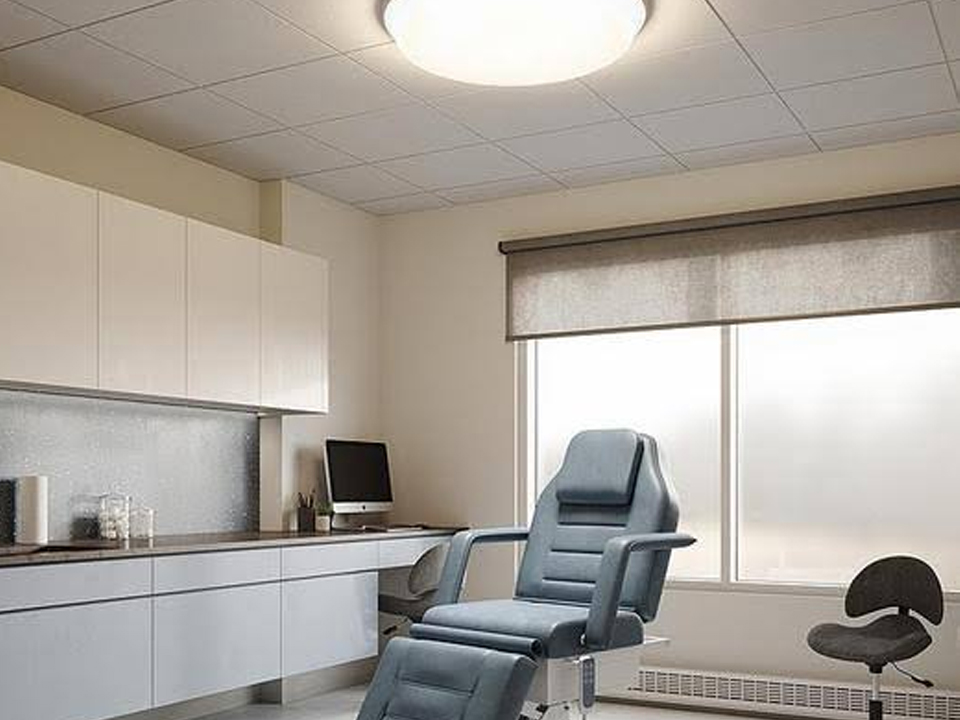
Medical Office Exam Lighting with Better Task and Ambient Balance
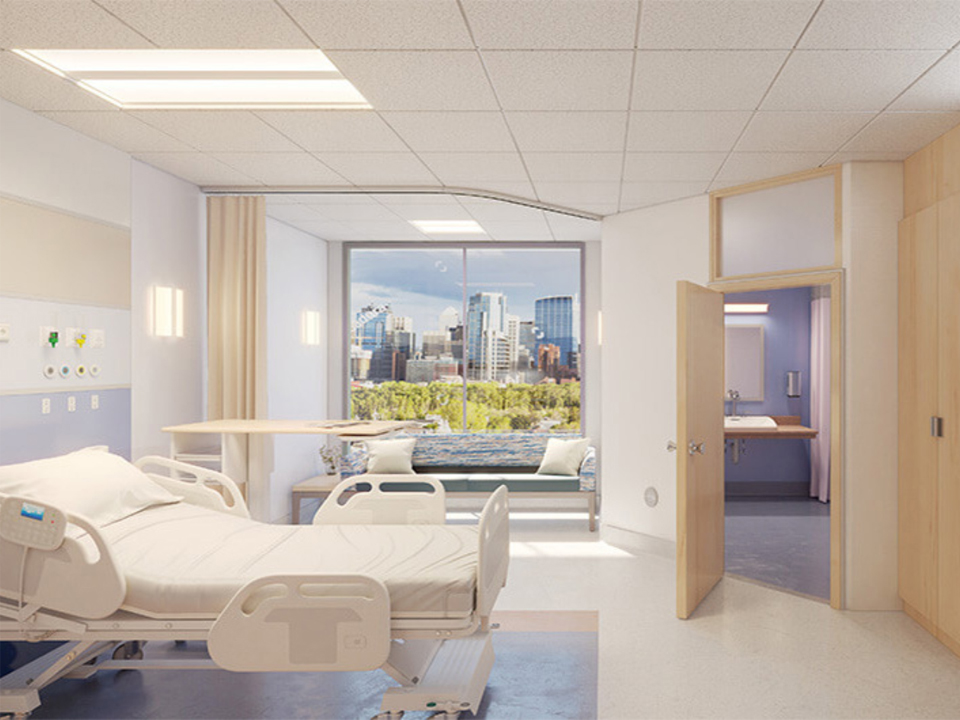
When a ceiling grid is asked to relax a distressed client, reveal skin tone accurately, brighten documentation, stay clear of reflections on an EHR display, and support a close physical exam, the result is normally overlit, under-controlled, or both.
Why are we still specifying medical workplace illumination as if every visual job were identical?
The tough reality is that power level is not a lights layout. Neither is a cool reflected-ceiling strategy. A 15W downlight, a 40W direct component, and an articulated assessment light can each work, however only after light beam circulation, delivered illuminance, glare, color high quality, installing geometry, dimming habits, and cleanability have been matched to the area.
The scale is not trivial. The U.S. Centers for Illness Control and Prevention records approximately 1.0 billion physician-office brows through, or 320.7 brows through per 100 people, in its nationwide FastStats information. Every badly intended swimming pool of light gets repeated throughout a substantial quantity of patient and clinician interactions.
My placement is candid: the best lighting for medical exam spaces is layered, individually managed, measured at the real job aircraft, and appointed after furniture and tools are set up. Anything less is an ornamental assumption.
Stop Treating Ambient Light as Examination Light
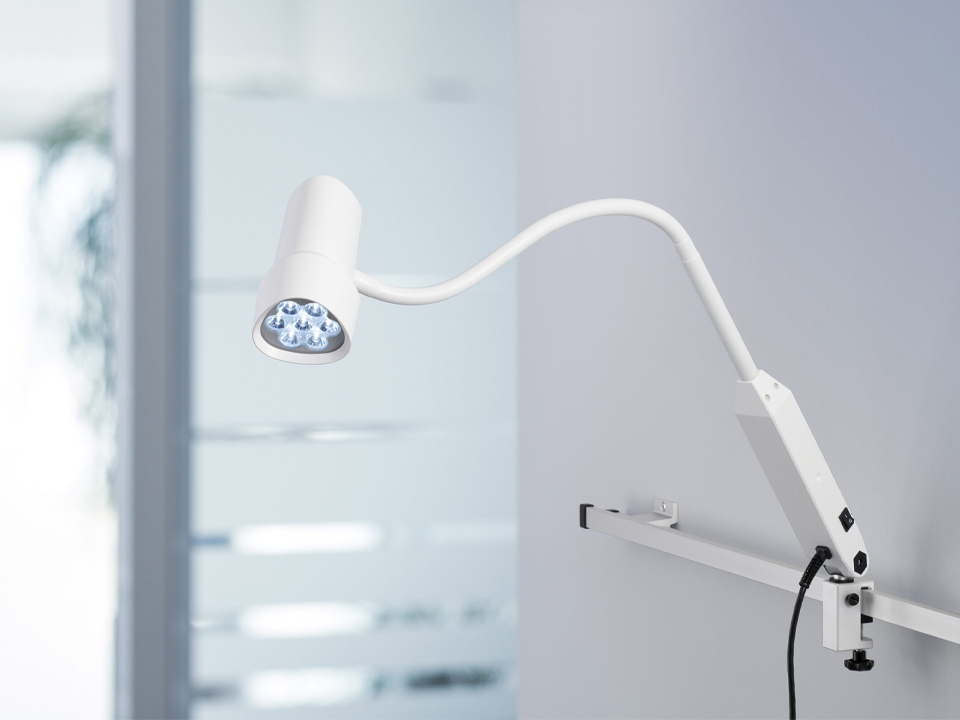
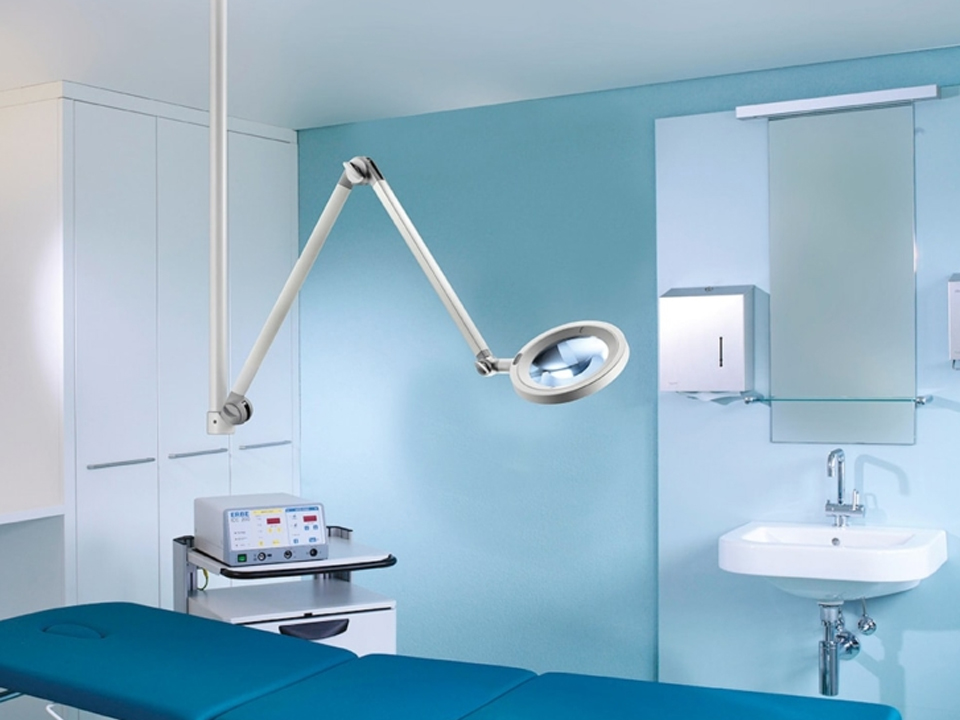
Ambient lighting allows individuals enter, chat, walk, read faces, and comprehend the area without pressure. Medical task lights concentrates valuable light where a clinician inspects, cleans up, injects, sutures, records, or deals with instruments. A medical exam light is a third layer: local, directional, and often repositionable.
Those layers must cooperate. They should not impersonate one another.
The United State Department of Veterans Matters Illumination Design Manual makes the split unusually clear for an examination and therapy space: 500 lx, approximately 50 foot-candles, for ambient light at 2 feet 6 inches over finished floor; 1,000 lx, around 100 foot-candles, on the exam-table surface area; and 500 lx at the charting workdesk. It also asks for a 3:1 ambient harmony proportion, 3,500 K LED color temperature, minimum CRI 80, lowering, glare shielding, and sychronisation between area luminaires and supplementary medical lights.
That minimal CRI 80 deserves apprehension. I would treat it as a compliance flooring, not a premium scientific target. For dermatology, injury review, phlebotomy, and any type of job including refined color judgments, the specifier needs to evaluate Ra, saturated red rendering such as R9, and ideally TM-30 data rather than approving “high CRI” as an in need of support sales expression.
And there is a boundary. An anti-glare 15W LED ceiling downlight for waiting and function zones may aid create restrained general illumination, yet its product name does not verify a Unified Glare Ranking, a kept lux value, or suitability over a lying client. Request the photometric file.
Use the Numbers as a Style Short, Not a Shopping List
Illuminance targets are measured end results. Power level is simply input power. A low-output 18W fixture with poor optics can miss the task, while a better-engineered lower-wattage component may deliver better light; ceiling height, area reflectance, spacing, beam of light angle, and lumen depreciation determine the outcome.
The table below is a sensible starting brief, not a replacement for the suitable IES, FGI, state, electrical, energy, availability, and infection-control needs in the job territory.
Area condition or job
Kept target or layout basis
Recommended layer
Control logic
Failure to capture throughout commissioning
Patient entrance and discussion
Lower scene within the designed ambient range
Shielded ambient
Wall surface dimmer or preset
Client sees brilliant apertures while reclined
General exam-room ambient
500 lx/ concerning 50 fc at 30 in. AFF, per VA basis
Scattered or lensed ambient
Different dimmable zone
Hot spots on the table and dark vertical faces
Medical assessment
1,000 lx/ regarding 100 fc on exam-table surface area, per VA basis
Committed test light plus room payment
Neighborhood switch or accessible predetermined
Clinician’s head or hand produces the major darkness
Charting and EHR job
500 lx/ concerning 50 fc on desk surface area, per VA basis
Neighborhood task or regulated linear light
Independent task control
Veiling reflection on screen or shiny paper
Ultrasound photo evaluation
Procedure-specific; a 2024 research tested 3, 15, and 25 lx
Reduced ambient with protected regional assistance
Devoted imaging scene
Using a general exam-room scene to analysis watching
Cleansing and area turn over
High, also vertical and horizontal lighting
Ambient plus service scene
Staff-only pre-programmed
Dirt or liquid is concealed along edges and casework
Notification the trap: the same room may need both 1,000 lx at the client and a considerably darker screen-viewing problem. Turning off half the ceiling luminaires is an unrefined service because it can leave glow, shadows, and unsafe flow. Scene control works better.
Current Proof States Customers Do Not Want the Exact Same Light
A January 13, 2023 Pacific Northwest National Laboratory study summary explained 34 individuals completing patient-like tasks under 12 lights problems in a major substitute health center space. Cooler, brighter conditions were judged much less pleasing and less all-natural by simulated patients, even though individuals executing simulated nursing work had actually rated those problems more favorably.
That finding should finish the old argument about a single “best” shade temperature level. There may be a sensible task default, however patient convenience and medical professional presence are various operating states. The solution is not a staged rainbow ceiling; it is a minimal, testable collection of scenes with clear controls.
An additional PNNL summary, likewise released January 13, 2023, reported a four-hospital qualitative research study in which nurses repeatedly raised control over overhead and job lighting, additional dimming, additional resources, daytime, and invasive spill light. Also innovative installments can fall short when hallway light crosses the doorway or when the individual in the space can not control the source that bothers them.
After that comes the evidence designers usually disregard. A peer-reviewed Monash University research released in July 2024 hired eight ultrasound drivers with 5– 14 years of experience to analyze 51 randomized cine-clips under 3, 15, and 25 lx. The highest possible analysis precision occurred at 25 lx; sensitivity varied from 79% to 100%, specificity from 94% to 100%, and favorable and adverse anticipating worths reached 100% at that problem.
That does not imply 25 lx belongs in every examination room. It suggests procedure-specific evidence beats covering illumination. Would anyone seriously utilize an ultrasound result to warrant a dermatology collection, or a general test standard to create a sonography space?
Balance Task and Ambient Illumination in 4 Relocations
1. Map Charges Before Positioning Components
Freeze the examination table, medical professional stool, sink, supply cabinet, wall surface diagnostic set, monitor, keyboard, door swing, privacy drape, and person sightline. If the table relocates later on, the beam of light geometry moves with it. Control is not documents; it is the design.
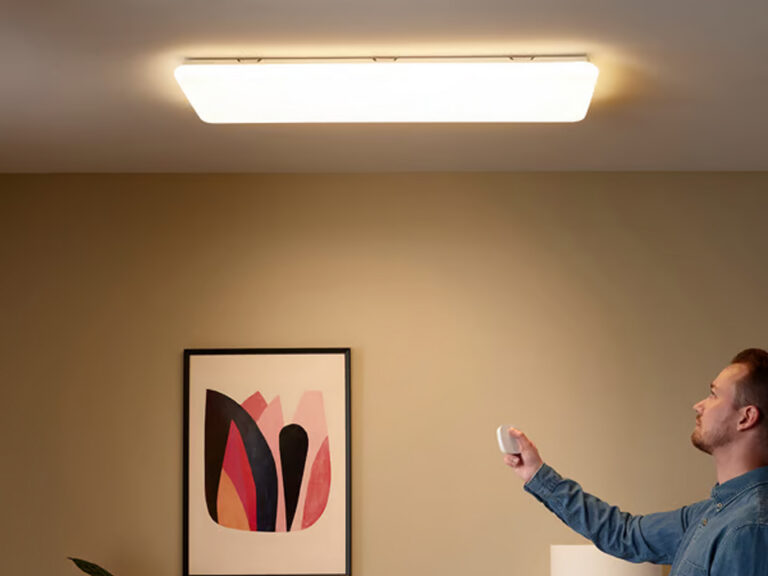
For a charting or speak with desk, a 40W put on hold linear LED light for concentrated workstation illumination can create a distinct task area without forcing the entire room to operate at charting strength. But I would not authorize it on “40W” alone. The submittal still needs delivered lumens, direct/indirect circulation, glow data, CCT, CRI, motorist information, lowering procedure, and an IES or LDT documents.
2. Construct Ambient Light Around Faces and Sightlines
Straight lux on a layout can look ideal while a client’s face stays shadowed. Consist of vertical illuminance in the estimation, check the medical professional’s functioning placement, and sit on the exam table throughout the mock-up. Yes, rest there. A luminaire that shows up silent from the doorway might be an aggressive bright aperture from a reclined setting.
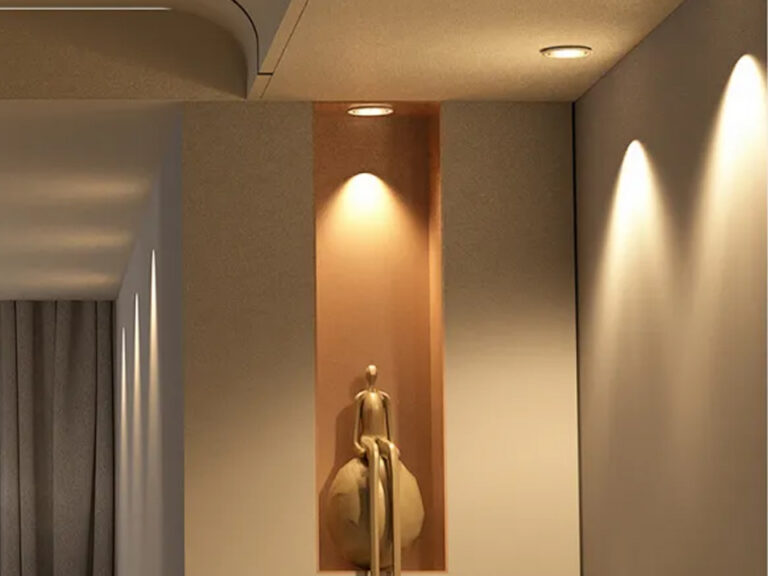
A trimless 15W recessed LED downlight for very discreet ambient areas might fit flow, speak with, or shift locations where the ceiling need to recede aesthetically. It should not be promoted to medical assessment responsibility without photometry and a glare evaluation.
3. Include a Committed Test Layer
Setting the evaluation light so the medical professional can approach from expected sides without casting the leading darkness. Inspect reach, drift, arm accident, cleaning up access, electrical directing, and whether the light beam covers the real examination location. Coordinate its CCT and color high quality with the ceiling system; mixed ranges can make skin and cells appear irregular as the beam actions.
Do not puzzle “LED medical examination light” with “commercial LED downlight.” Medical use can present product-safety, cleansing, ingress, electric, placing, and risk-management requirements that ordinary commercial luminaires were never ever assessed to satisfy.
For isolation or infection-control areas, the VA guidebook requires confined, sealed luminaires provided for wet locations and able to endure destructive cleaners. If a center makes use of hydrogen peroxide, H TWO O ₂, or an additional hostile chemistry, compatibility has to be documented rather than thought.
4. Provide Each Layer Its Own Control
At minimum, supply independent ambient and task/exam control. Better plans add called presets: Welcome, Seek Advice From, Exam, Screen, and Clean. Maintain the interface obvious enough for a revolving medical professional to run without a training video.
Tiny tags. Huge distinction.
Controls should fall short safely, resume to a predetermined state after power disruption, and avoid forcing team via an application or cloud login. In a medical room, rate and repeatability matter greater than uniqueness.
Define Color, Glow, Flicker, and Cleaning in Composing
The phrase “3,500 K, high CRI, dimmable” is not a finished spec. It leaves way too much untried.
Start with a job CCT, usually 3,500 K where the VA basis matters, then define an appropriate tolerance and confirm that ambient and evaluation sources remain aesthetically suitable. Set Ra and R9 needs according to the clinical work. Testimonial TM-30 Rf and Rg where shade fidelity issues. Demand LM-79 test information and photometric apply for computations.
Glare needs 2 evaluations: a metric-based office view and a patient-eye sight. UGR can be valuable in normal area geometry, yet it does not replace a point-by-point luminance check from the examination table, nor does an “anti-glare” version name develop efficiency.
Flicker likewise is entitled to a line product. Request for vehicle driver efficiency at full outcome and with the whole dimming variety, especially where video cameras, barcode visitors, video clip brows through, or sensitive owners exist. Confirm minimum dim degree, dim-to-off actions, dead travel, pop-on, dropout, and compatibility between driver and control.
Lastly, write the cleansing demand. Smooth surfaces, sealed apertures where required, gasket and lens compatibility, accessibility above the ceiling, and resistance to the center’s actual disinfectant timetable all influence product choice. A lovely trimless detail that can not be serviced without damaging the ceiling is not minimal. It is a maintenance expense.
Keep Function Lights Out of the Exam-Room Requirements
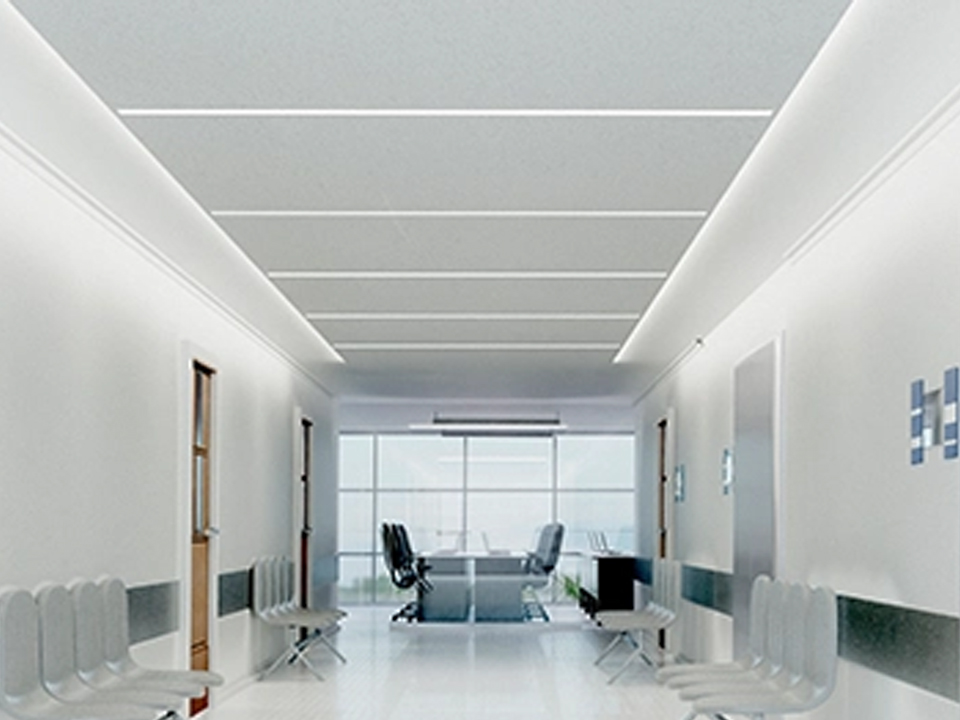
Reception and waiting locations have different tasks: alignment, identification, documents, face acknowledgment, and a calmer first impression. Directional light can emphasize the check-in desk or signage, and a controlled downlight can decrease the institutional feel.
I see worth engineering eliminate that limit at all times theoretically: one family, one power level, one shade temperature, every space. It streamlines buying while transferring the efficiency danger to medical professionals and clients. Incorrect economy wins the spreadsheet and loses the building.
The U.S. Division of Energy’s June 2023 government buying support reveals what a severe efficiency contrast appears like. For 2-by-4-foot business LED luminaires, it lists 140 lm/W as the needed efficiency and 167 lm/W as finest readily available in its example, versus 71 lm/W for a less-efficient product; modeled lifetime energy-cost financial savings get to $135 and $161 per luminaire, respectively.
However effectiveness is only one column. In 2024, the DOE Integrated Lighting Project highlighted a controlled office setup at Remy Cointreau United States Headquarters that made use of regarding one-quarter of the energy of a fluorescent system with LED lighting, low-voltage circuitry, sensors, daylighting, high-end trim, and scheduling. The lesson for clinical offices is not to duplicate that workplace; it is to acquire the controlled system, after that commission it around professional jobs.
Compensation the Space With a Meter and Actual Individuals
Appointing starts after the area stops being abstract. Procedure preserved illuminance at the workdesk and examination surface area. Inspect vertical light on faces. Record the output of every scene. Examination at night, when daytime can not hide a weak format, and during the day, when glare and photosensor habits become visible.
After that invite the people that will utilize it. A medical professional should carry out representative motions. A team member must chart at the screen. A person needs to occupy the patient position upright and reclined. Environmental services ought to run the Tidy scene and examine sides, splash zones, and casework.
Do decline “looks intense sufficient.” Tape-record lux, control settings, lowering portion, meter area, date, and any kind of modification made. Reconsider after aiming changes. If a mock-up is possible, make use of the real ceiling height, wall shades, floor reflectance, curtain, and examination table; a white vacant room flatters practically every component.
Häufig gestellte Fragen
What Is the most effective Lights for a Medical Exam Room?
The best medical examination space lights is an independently controlled, split system that incorporates comfortable ambient lighting, focused clinical task illumination, and a devoted evaluation light, with determined output at the person and charting surfaces, regulated glare from reclined sightlines, suitable color rendering, low-flicker dimming, and cleanable construction matched to the area’s infection-control protocol.
As a sensible basis, validate 500 lx ambient, 1,000 lx at the test table, and 500 lx for charting where the VA criteria fit the project. Local codes and specialty treatments might require various worths.
The Number Of Lux Should Medical Examination Space Illumination Offer?
Medical examination space illuminance is the conserved amount of light supplied to each specified job airplane: a commonly utilized VA layout basis calls for 500 lx of ambient light at 30 inches over the floor, 1,000 lx on the exam-table surface, and 500 lx on the charting desk, with a 3:1 ambient uniformity proportion.
Do not transform those results right into component electrical powers without a photometric estimation. Placing elevation, optics, reflectance, spacing, dirt devaluation, and the supplementary test light all change provided lux.
Exactly how Do You Stabilize Job and Ambient Lights in a Test Space?
Stabilizing job and ambient lights means establishing a comfy, protected general-light level for activity and conversation, then including independently controlled light at the exam table and charting station so medical job reaches its required illuminance without transforming the entire room into a high-brightness field or showing ceiling sources right into the individual’s eyes and show screens.
Start with job mapping, calculate each layer, and compensation called scenes such as Welcome, Consult, Examination, Display, and Tidy with customers in the finished space.
Are LED Medical Examination Lighting Different From General Ceiling Lights?
LED medical exam lights are committed professional luminaires created to place a controlled beam of light on the assessment area, while basic ceiling lights disperse ambient illumination via the area; the two might likewise differ in mounting, activity, electrical classification, cleaning resistance, access defense, documented photobiological efficiency, shade top quality, and the product standards or run the risk of review called for by the medical care facility.
Never ever think a business downlight comes to be a medical checkup light due to the fact that it is brilliant, adjustable, or marketed for a clinic. Ask for the intended-use documentation and have the design group evaluation it.
What Should a Medical Office Lighting Submittal Include?
A medical workplace lighting submittal is the proof bundle made use of to validate that each proposed fixture and control can meet the job’s scientific, aesthetic, electrical, power, cleansing, and upkeep requirements; it should recognize delivered lumens, power level, effectiveness, beam of light distribution, CCT, CRI and R9, lowering information, photometric documents, driver details, listings, coatings, gaskets, and warranty.
I would certainly likewise call for a room-by-room regulates story, component schedule, reflected-ceiling plan, calculation factors, cleaning-chemical compatibility, and an appointing list. A catalog image is not a submittal.
Transform the Illumination Strategy Into a Defensible Specification
Send out the distributor the room dimensions, ceiling elevation, finish reflectances, exam-table and monitor places, target lux by job, CCT and color-rendering requirements, lowering protocol, cleaning up chemistry, suitable listings, quantity, voltage, and called for photometric data layout. Request for a matched ambient, job, and exam package– not an electrical power hunch.
Evaluation the 4 component functions over, shortlist just the items whose recorded performance fits the designated area, and request rates and specification information via the appropriate item inquiry type. Better medical workplace lighting begins when every layer has one clear task and every claim can endure dimension.