ما زلت لا ترى حل الإضاءة التجارية المناسب؟ تحدث إلى فريق المشروع لدينا.
إذا كنت قد راجعت الموقع الإلكتروني أو ناقشت الخيارات بالفعل مع المبيعات ولكنك لا تزال بحاجة إلى توجيه أوضح، أرسل طلبك هنا. سيقوم فريقنا بمراجعة طلبك والمواصفات المستهدفة وقيود المشروع، ثم الرد بالخطوة العملية التالية: ما الذي يناسبك، وما الذي يحتاج إلى تأكيد، وأسرع طريق للحصول على عرض أسعار وملفات جاهزة للمواصفات لمشروعك.
مراجعة مباشرةً لطلبك ومواصفاتك وقيود المشروع للحصول على مسار عرض أسعار أوضح.
مطابقة المنتج عبر خيارات زاوية الشعاع، و CCT / CRI، وبرامج التشغيل، والتعتيم، وعناصر التحكم.
دعم وثائق المشروع، بما في ذلك أوراق القطع، وملاحظات الأسلاك، وملفات IES / LDT حيثما توفرت.
إرشادات OEM / ODM للملصقات والتعبئة والتغليف والتشطيبات الخارجية للمساكن ومتطلبات العلامة التجارية الخاصة.
احصل على عرض أسعار سريع لإضاءة LED التجارية
مصممة للمصممين والمهندسين المعماريين والمقاولين وتجار الجملة ومشتري المشاريع. شارك طلبك والكمية والمواصفات المستهدفة للحصول على أسعار مباشرة من المصنع وإرشادات المهلة الزمنية والدعم الجاهز للمواصفات للمشاريع في الولايات المتحدة والاتحاد الأوروبي.
الخيارات الجاهزة للاقتباس: الشعاع/البصريات، وأهداف CCT / CRI / SDCM، وبرامج التشغيل، والتعتيم، وتكامل عناصر التحكم
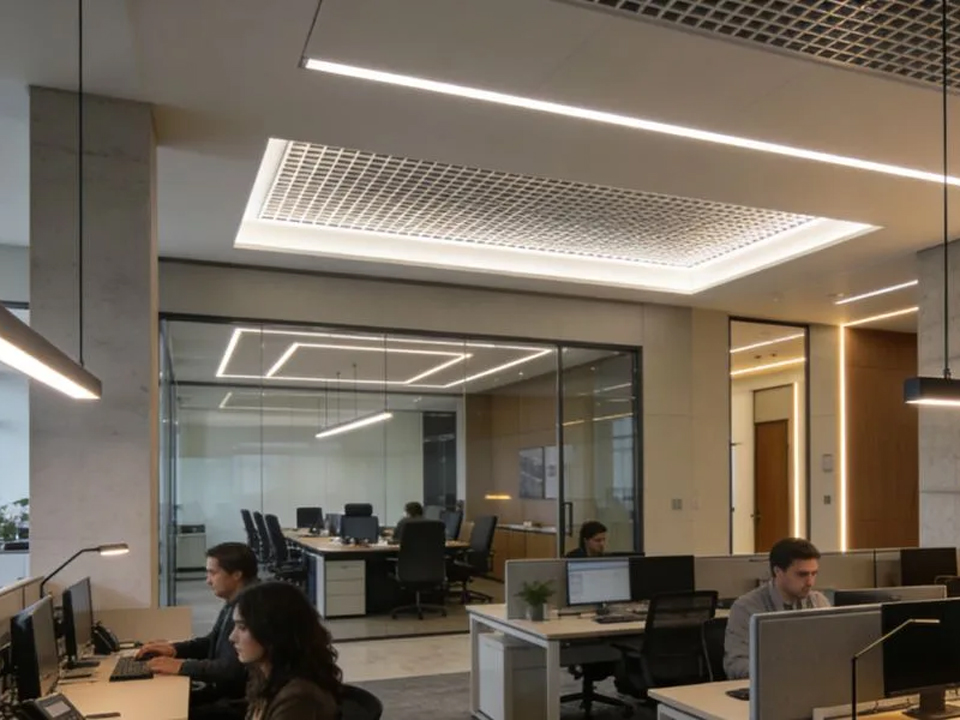
Multi Tenant Office Lighting with Flexible Field Selectable Options
Since workplace presence, occupant density, dividers layouts, lease terms, and aesthetic jobs currently alter quicker than traditional lighting substitute cycles, a fixed-output fixture chosen for one fit-out can end up being the wrong product long prior to its LED boards really stop working.
So why are property owners still acquiring illumination as if every floor will stay frozen for 15 years?
In my view, the standard “select one power level, pick one CCT, order thousands” version is increasingly indefensible in multi-tenant structures. It produces excess stock, complicates occupant turn over, and forces professionals to fix style errors with dimmers, fixture swaps, or improvised spacing.
Field-selectable LED illumination supplies a much better solution– yet only when choice varies, photometry, controls, and commissioning obligations are defined appropriately.
Why Multi Lessee Office Illumination Is a Different Engineering Trouble
A single-owner head office can standardize lighting around one work environment plan. A multi-tenant building can not.
One suite might become a law workplace with confined spaces. The adjacent collection may house a software business making use of open workstations, video calls, and cooperation zones. Six months later on, a lessee might subdivide its flooring or surrender half the space.
That volatility transforms what “good” office lights means. Owners need a repeatable base-building system, while tenants expect selections including brightness, shade appearance, controls, and visual character.
The operational numbers sustain that concern. The United State Energy Information Administration reported in its July 2024 office-building study that staff member counts declined in lots of surveyed offices after the pandemic, particularly in big residential properties and buildings occupied by multiple organizations. That suggests yesterday’s linked illumination tons may now light up partially busy area– a bad use of both power and maintenance budgets. U.S. EIA commercial-building research
The difficult fact? A wonderfully reliable component can still throw away energy if it is set up in the incorrect quantity, designated to a large control area, or left operating for people that are not there.
What “Field Selectable” Actually Suggests
Field-selectable fixtures consist of physical or digital settings that enable an installer or commissioner to pick amongst predefined operating worths after the item reaches the job website.
Two features dominate business workplace illumination:
Selectable electrical power modifications input power and, consequently, lumen outcome.
Selectable CCT modifications associated shade temperature, typically amongst 3000K, 3500K, and 4000K settings.
These are not automatically the same as continuous dimming or tunable-white illumination. A three-position CCT switch is normally an appointing tool. It needs to not be marketed as a daily occupant-control system unless the item was especially designed and ranked for duplicated modification.
That distinction issues. A fixture changed to 3500K above a ceiling is versatile stock; a DALI-2 or 0– 10V system that occupants can adjust from a wall surface terminal is manageable lights. Those are different capacities, different spending plans, and different appointing problems.
Selectable Power Level Fixes an Inventory Trouble– Not a Photometric One
Selectable wattage components can lower the number of SKUs a proprietor must purchase and keep. A single luminaire offering 18W, 24W, and 30W setups might cover blood circulation area, open workplace areas, and larger meeting rooms.
Straightforward sufficient.
Yet every electrical power placement creates a various photometric problem, and the developer still has to verify conserved illuminance, uniformity, lighting power density, chauffeur loading, emergency situation procedure, glare, and spacing at the chosen outcome. Dealing with the highest lumen value as a global safety and security margin normally produces overlit ceilings and miserable passengers.
For border spaces, function areas, or smaller sized lessee spaces, a surface-mounted industrial LED ceiling light for indoor tasks can sustain designs where recessed installation is not available. In spaces requiring even more regulated ambient or accent circulation, an flexible 25W LED downlight offers the designer one more intending variable– but aiming adaptability can not compensate for poor spacing estimations.
Wattage is an input. Lux is a result.
Selectable CCT Can Stop Costly Renter Conflicts
Color temperature level debates frequently get here late, after ceilings are shut and furnishings is set up.
The property owner might choose 4000K for a crisp, constant base construct. A hospitality-oriented renter may desire 3000K in reception. One more may consider 3500K the only bearable compromise. None of these preferences is naturally correct.
Selectable CCT lights relocates that choice more detailed to final tenancy, when materials, daytime, displays, wall surface colors, and tenant assumptions can be analyzed with each other. It additionally allows facilities groups keep one replacement family members rather than equipping aesthetically mismatched variations.
Still, CCT is not color high quality. Specifications ought to separately deal with:
Shade making index, including minimum CRI and appropriate R worths
Chromaticity uniformity, generally expressed via SDCM or MacAdam actions
The Power Case Is Strong, yet Marketing Numbers Need Investigation
In Might 2024, the United State Division of Power reported that LEDs represented about 48% of installed domestic and business lights devices in 2020, up from 8% in 2015. DOE additionally approximated that business buildings made up about 69% of the 244 TWh consumed by building lighting in 2020. DOE Lights Market Characterization
Those figures subject the staying opportunity. They do not prove that every LED retrofit is well made.
A 2023 The golden state Energy Payment task performed with Lawrence Berkeley National Laboratory checked tenancy and daylight-responsive controls in office cubicles. The speculative system generated around 73% lighting-energy savings versus set up LED lights throughout a one-week test, but the scientists additionally revealed that desk-mounted tenancy sensors sometimes missed out on occupants, inflating financial savings while leaving lights off when they ought to have been running. California Power Compensation study report
That caution is the story.
I suspect case-study percents offered without the standard, examination duration, tenancy pattern, sensing unit placement, and comfort failures. Energy-efficient workplace lights is not the fixture with the largest asserted percentage; it is the system that supplies sufficient light, responds correctly, and proceeds doing so after the commissioning group leaves.
A Practical Fixture Technique for Repeatable Renter Fit-Outs
The most effective office illumination fixtures are not necessarily the ones with the most switches. They are the ones whose selectable options represent documented structure circumstances.
Office area
Recommended beginning CCT
Output technique
Preferred control
Specification warning
Open workspace
3500K– 4000K
Select electrical power from confirmed photometry
Tenancy plus daylight dimming
Check screen reflections and glare
Enclosed office
3000K– 4000K
Lower or center result setup
Job or tenancy control
Small spaces are conveniently overlit
Meeting area
3000K– 3500K
Middle result with dimming
Scene control plus manual override
Video calls need upright facial light
Reception
3000K– 3500K
Layered ambient and accent light
Set up dimming
High CCT can squash warm coatings
Shared passage
3000K– 4000K
Low-output continuous row or spaced components
Time schedule plus occupancy reduction
Prevent sudden dark-to-bright changes
Function wall surface
Match material and brand scheme
Narrow or flexible light beam
Separate dimming channel
Validate beam, spill light, and intending gain access to
These are style beginning points, not universal prescriptions. Last worths need to originate from photometric estimations, mirrored surface area assumptions, local power codes, access needs, emergency-lighting obligations, and the lessee’s real work.
For high-end reception areas where source illumination should be hidden, a deep anti-glare 25W LED ceiling downlight may be more suitable to a conventional open-aperture product. However “anti-glare” published on a data sheet is not evidence; request photometric files, cutoff details, luminosity data, and installed mock-ups.
Controls Issue More Than Another Increment of Effectiveness
The market suches as to contrast lumens per watt due to the fact that the number is easy to publish. Controls are harder.
The United State General Providers Administration mentions that lighting eats near to 35% of electricity in business buildings and checklists evaluated techniques consisting of LED fixtures, wireless controls, daylighting, and occupant-responsive systems. Its published resources likewise include 2023 guidance for LED lighting and controls in government buildings. GSA lighting technology assessments
A selectable-wattage component limits linked tons. Tenancy picking up reduces running time. Daytime collecting trims output near home windows. Organizing protects against over night waste. Job tuning allows the general system run below its optimum.
Why select only one?
In multi-tenant office lighting, controls ought to adhere to lease limits and likely community lines. If two renters share one control zone, a future leasing choice can require rewiring, portal changes, or an argument over who pays the electric bill.
Define zoning prior to fixtures. Record it. Tag it.
How to Select Workplace Illumination Without Locking In Tomorrow’s Blunder
I make use of a simple sequence:
Define base-building and lessee duties.
Map probable neighborhood and control-zone boundaries.
Establish target illuminance and uniformity by job.
Select optical distributions prior to selecting power level.
Run computations at every recommended area setup.
Testimonial 3000K, 3500K, and 4000K samples against actual finishes.
Confirm 0– 10V, DALI-2, wireless, emergency situation, and sensor compatibility.
Construct a depictive mock-up.
Record last button settings on drawings and property registers.
Recommission after occupant changes.
The nine step is consistently neglected. Then a substitute contractor opens the ceiling five years later and finds that identical-looking fixtures have three outcome setups and two color settings– yet no record of which mix belongs where.
Adaptability without documentation becomes ambiguity.
Procurement Questions Manufacturers Must Have to Address
Prior to authorizing selectable power level components, demand:
Input watts, provided lumens, and effectiveness at every switch position
Photometric files for each result or confirmation that distribution remains proportional
CCT resistance and shade uniformity throughout all selectable settings
Motorist maker, ranked life, surge security, and replaceability
Dimming variety and checked control compatibility
Flicker metrics at full and dimmed result
Emergency-driver compatibility
Warranty treatment when area setups are changed
Switch over access after setup
Product markings showing the commissioned setup
And ask the uneasy question: does the component retain its listing, service warranty, and expected thermal performance at every promoted setup?
A crowded label is not design evidence.
الأسئلة الشائعة
What is field-selectable workplace illumination?
Field-selectable office lights is a business LED component system that allows an authorized installer pick from predefined wattage, lumen-output, or correlated-color-temperature setups at the jobsite, allowing one item family members to offer a number of workplace areas while reducing purchasing threat, spare-stock complexity, and replacement mismatches throughout changing tenant designs.
In technique, the choices are generally made through switches on the chauffeur or fixture housing. Settings need to be picked throughout appointing, documented, and transformed just after confirming that the modified result still fulfills photometric, thermal, code, and control needs.
What shade temperature level is best for multi occupant workplace illumination?
The most effective color temperature level for multi tenant workplace illumination is the worth that supports the tenant’s jobs, surfaces, daylight problems, and visual preferences while maintaining constant appearance across linked rooms; 3500K is typically a sensible neutral standard, while 3000K feels warmer and 4000K generates a cooler, much more professional appearance.
I would certainly not require one setting throughout a whole residential property. Reception, flow, open workplace, and hospitality-style conference room may justify different values, supplied changes are willful and substitute documents remain accurate.
Do selectable wattage fixtures minimize energy usage?
Selectable electrical power components minimize energy consumption when commissioning groups choose the most affordable setup that still attains needed kept illuminance, harmony, and aesthetic convenience; the selector restricts connected lights power, however actual annual financial savings also rely on running hours, occupancy controls, daytime dimming, zoning, occupant habits, and the efficiency of the chosen chauffeur setting.
The switch does not think for you. If every component is left at its maximum outcome and later on lowered only somewhat, a lot of the intended benefit might vanish.
Are field-selectable LEDs the same as tunable-white lights?
Field-selectable LEDs are not always tunable-white systems: field-selectable CCT typically gives two or 3 taken care of color-temperature selections planned for setup or appointing, whereas tunable-white lighting dynamically blends LED channels so users or automated controls can vary shade temperature consistently with a specified range throughout typical building operation.
That distinction affects controls, circuitry, drivers, commissioning, rate, and upkeep. Customers ought to challenge obscure expressions such as “shade flexible” and request an electrical wiring diagram plus a simple summary of that can change the color, exactly how often, and from what user interface.
Just how should selectable illumination settings be documented?
Selectable lights settings must be documented by tape-recording each component’s last electrical power, lumen-output, and CCT setting on appointing schedules, reflected ceiling strategies, control-zone illustrations, and the owner’s electronic asset register, with physical tags included where functional so future specialists can replicate the authorized problem after maintenance, relocation, or tenant turn over.
Do not rely upon memory or order. One version number may represent numerous installed conditions, so the setup– not just the item identification– becomes part of the structure record.
Build Adaptability Into the Requirements, Not the Sales Pitch
Multi-tenant offices need lighting that can make it through lease adjustments without transforming every fit-out right into a partial redesign. Field-selectable power level and CCT can give that resilience, lower spare-stock fragmentation, and allow decisions mirror actual interiors as opposed to very early assumptions.
Yet adaptability must be crafted.
Request full information at every setup, straighten controls with occupant limits, examination occupied conditions, and tape-record the commissioned result. If your following workplace task needs versatile ambient, accent, hallway, or anti-glare lighting, review the component choices above and request project-specific photometric support before issuing the purchase order.