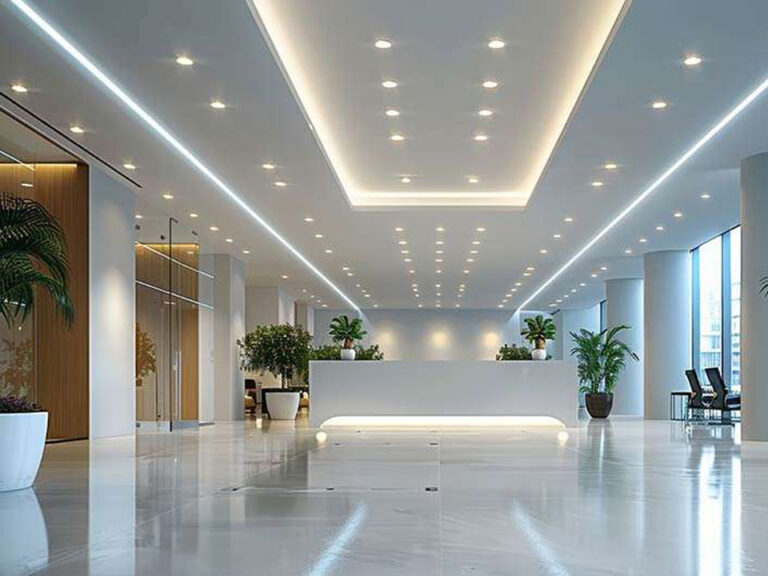
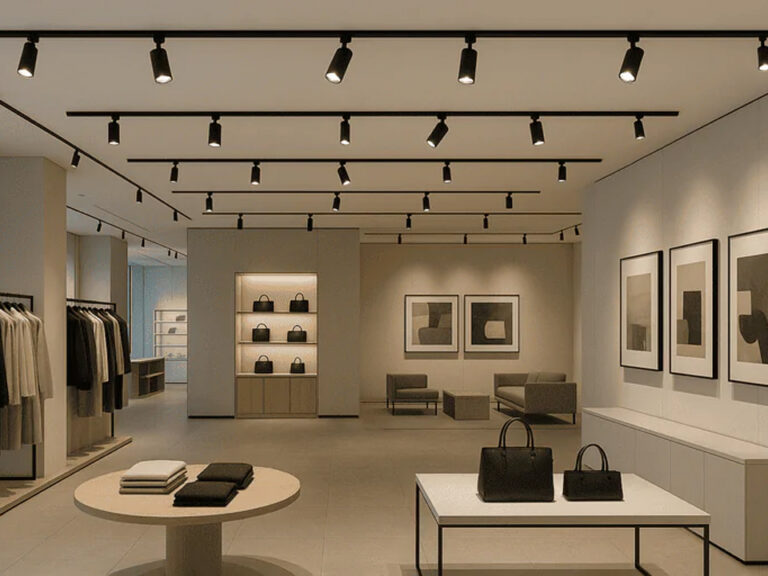
Still Not Seeing the Right Commercial Lighting Solution? Talk to Our Project Team.
If you have reviewed the website or already discussed options with sales but still need a clearer direction, send your request here. Our team will review your application, target specifications, and project constraints, then reply with a practical next step: what fits, what needs confirmation, and the fastest route to a quote and spec-ready files for your project.
Direct review of your application, specs, and project constraints for a clearer quote path.
Product matching across beam angle, CCT / CRI, drivers, dimming, and controls options.
Project documentation support, including cut sheets, wiring notes, and IES / LDT files where available.
OEM / ODM guidance for labels, packaging, housing finish, and private-brand requirements.
Get a Fast Quote for Commercial LED Lighting
Built for designers, architects, contractors, wholesalers, and project buyers. Share your application, quantity, and target specifications to get factory-direct pricing, lead-time guidance, and spec-ready support for US and EU projects.
Commercial Lighting Retrofit Checklist Before You Start
Table of Contents
The Ugly Truth About Commercial Lighting Retrofits
Count the fixtures.
Before anyone prices a commercial lighting retrofit, we need the boring facts on the table: fixture count, mounting type, ceiling condition, circuiting, dimming protocol, operating hours, emergency lighting, light levels, glare complaints, utility rebates, disposal duties, and whether the proposed LED fixture can survive the real building rather than the sales deck.
Why would anyone quote a job before knowing the building?
I don’t trust “simple LED swap” language. I’ve seen that phrase used to hide weak surveys, lazy wattage matching, mismatched CCT, buzzing drivers, poor beam control, and retrofit kits that look fine in a warehouse but make a boutique, office, hotel corridor, or supermarket aisle feel cheap. The hard truth is this: a commercial LED lighting retrofit checklist is not paperwork. It is damage control before money leaves the buyer’s account.
The U.S. Department of Energy’s LED Adoption Report estimated that LED adoption saved 1.3 quadrillion Btu in 2018, equal to $14.7 billion in consumer cost savings, while connected lighting controls still sat at only 0.2% installed penetration. That last number should bother every facility owner. LEDs are common. Smart retrofits are not.
If you are sourcing fixtures for retail, hospitality, office, supermarket, or mixed-use projects, start by reviewing the actual product family, not just a quoted wattage. Meagree’s commercial LED lighting range is a practical place to map fixture types against applications before deciding whether the project needs downlights, linear fixtures, spotlights, track heads, or a custom OEM/ODM build.
Start With the Building, Not the LED Fixture
A retrofit fails when the installer treats the fixture as the project. The building is the project. The fixture is only one variable.
Audit the existing lighting system
Your lighting retrofit assessment checklist should begin with a brutally plain site survey:
Retrofit checkpoint
What to record before quoting
Why it matters
Existing fixture type
Troffer, downlight, track head, strip, high bay, linear pendant, panel, recessed can
Determines whether an LED retrofit kit, full fixture replacement, or layout redesign makes sense
The DOE-backed U.S. Toy Company troffer retrofit case study is worth reading because it is not glamorous. The project upgraded 470 troffers across 48,000 ft², cut lighting energy by 53%, saved $4,300 annually, and reported a 2.9-year payback. That is the kind of raw project math buyers should demand before approving a commercial lighting upgrade checklist.
Do not worship wattage
A 20W fixture can be brilliant or awful. Wattage tells you input power, not visual outcome. For downlight-heavy projects, fixture optics, trim design, beam angle, driver quality, and thermal control matter more than chasing the lowest watt number. If the building uses recessed ceiling fixtures, compare the project need against LED downlights with the correct beam spread, cut-out size, anti-glare structure, and CCT target.
A retrofit quote that says “replace 30W with 18W” is not enough. Where is the photometric file? Where is the IES or LDT data? What happens to vertical illumination on product shelves? What is the SDCM tolerance? Will the 4000K batch you receive in September match the 4000K batch you reorder in March?
That is where bad purchasing becomes visible.
The Commercial LED Lighting Retrofit Checklist I Would Actually Use
1. Confirm the goal before selecting hardware
A retrofit can chase energy savings, better retail presentation, lower maintenance, ESG reporting, code compliance, utility rebates, visual comfort, or all of them. But each goal changes the product choice.
An office open-plan area may need low-glare linear lighting with UGR control. A hotel corridor may need warm CCT, deep anti-glare trim, and smooth dimming. A supermarket fresh food zone may need high CRI and careful spectrum selection. A gallery may need adjustable accent lighting with beam discipline. For long ceiling runs, review LED linear lighting early because length, wattage, diffuser style, suspension method, and emergency options affect both design and installation.
2. Decide: retrofit kit or full fixture replacement?
A LED retrofit kit for commercial lighting can save labor and reduce ceiling disruption when the existing housing is sound. But I would not use kits blindly. Old housings may be warped, dirty, poorly grounded, thermally weak, or ugly enough to ruin the final result.
Use retrofit kits when the existing fixture body is structurally sound, the ceiling grid is stable, the project needs speed, and visual expectations are moderate. Replace the full fixture when optical performance, finish quality, glare, thermal behavior, or brand presentation matters.
The DOE case study above also noted that retrofit kits can reuse existing troffers and reduce purchase cost, labor cost, and installation time. That is a real advantage. But it is not a free pass.
3. Include controls before the ceiling closes
Lighting controls are where many retrofits leave money on the floor. The DOE and LBNL research on system retrofit trends in commercial buildings reported that systems-based retrofit strategies can provide 49% to 82% additional energy savings compared with component-only upgrades, and that high-savings projects were more likely to include system retrofits.
Translation: replacing lamps is the shallow end.
A lighting controls retrofit may include occupancy sensors, daylight harvesting, scheduling, dimming zones, wireless nodes, DALI-2, 0-10V, or luminaire-level lighting controls. If your project has long operating hours, intermittent occupancy, windowed zones, meeting rooms, corridors, restrooms, storage rooms, or parking areas, controls should be priced before installation begins.
4. Verify supplier discipline before the order
The fixture is only as reliable as the production process behind it. Ask for batch traceability, incoming material control, in-process QC, pre-shipment inspection, driver brand options, LED chip data, aging-test procedure, and packaging standards. Meagree’s LED lighting quality control process references IQC, IPQC, pre-shipment inspection, batch traceability, ISO 9001, ISO 14001, and a 96-hour aging test. That kind of documentation matters when one failed batch can delay a hotel opening or retail rollout.
And yes, I’m opinionated here: a supplier who cannot explain driver testing, thermal checks, color consistency, and export packaging should not be trusted with a multi-site retrofit.
The Risk Nobody Wants to Discuss: Waste, Mercury, and Old Lamps
Old fluorescent and HID projects have a disposal problem. Not a theory. A problem.
The EPA’s universal waste guidance identifies lamps as one of the federal universal waste categories under 40 CFR Part 273, alongside batteries, pesticides, mercury-containing equipment, and aerosol cans. That means commercial retrofit planning should include lamp storage, labeling, transporter handling, recycler documentation, and state-specific rules before demolition starts.
Do not let a contractor “handle it later.”
If the old site uses T8, T5, CFL, or HID lamps, build disposal into the commercial lighting upgrade checklist. Ask who owns the waste stream. Ask where lamps are stored. Ask whether broken lamps are managed differently. Ask whether state rules are stricter than federal rules. In many projects, disposal is treated as a back-office detail until someone realizes the quote never included it.
That is amateur hour.
Real Numbers: What Good Retrofit Planning Can Actually Change
Harvard’s Healthy Buildings program published a CoBE lighting retrofit case study involving a supermarket scenario where replacing about 90% of lights with LEDs and new fixtures reduced modeled 2024 energy use by 794 MMBtu. The same case estimated a 102-metric-ton reduction in greenhouse gas emissions and a $5,707 reduction in climate impact.
Is every project going to look like that? No. But the logic holds: lighting interacts with refrigeration, HVAC load, operating hours, maintenance, and occupant experience. A supermarket is not an office. A hotel is not a warehouse. A boutique is not a classroom.
Here is the cleaner way to judge retrofit scope:
Project type
Common mistake
Smarter retrofit move
Office
Replacing panels without checking glare and task lighting
Use low-glare linear or panel fixtures, 3500K–4000K, occupancy/daylight controls
Retail
Choosing high lumen output without vertical display planning
Use track lighting, accent beams, CRI 90+, controlled contrast
Hotel corridor
Installing cold CCT fixtures because they are cheaper
Use warm CCT, anti-glare downlights, smooth dimming, emergency integration
Supermarket
Ignoring refrigeration interaction and aisle visibility
Use adjustable high-CRI track fixtures with narrow/medium beam options
Open office ceiling
Treating all linear fixtures as equal
Verify diffuser, UGR, suspension method, length, wattage, and driver compatibility
For adjustable display zones, study LED track lighting before freezing the layout. Track heads give retail and gallery teams flexibility after merchandising changes, but only if beam angle, CRI, glare control, and track compatibility are specified early.
Procurement Red Flags Before You Sign the PO
I get suspicious when a commercial lighting retrofit quote hides behind vague words: “equivalent,” “standard driver,” “normal color,” “good quality,” “fast delivery.” Those words are not specifications. They are escape routes.
Watch for these supplier warning signs
No LM-79 test report or photometric file for the proposed model
No driver compatibility statement for 0-10V, TRIAC, DALI-2, or sensor integration
No CCT binning statement, SDCM target, or CRI data
No thermal data or TM-21/L70 life projection discussion
No packing plan for fragile trims, lenses, or finished housings
No batch traceability for repeat orders
No sample approval process before mass production
No installation guidance for emergency circuits or controls
For private-label programs, rollout projects, or custom housings, check OEM/ODM commercial LED lighting capabilities before you ask for pricing. Custom trim, housing finish, labels, packaging, barcodes, driver selection, and project documentation should be discussed before samples, not after a failed pilot.
How to Plan a Commercial Lighting Retrofit Without Burning Money
Start ugly. Start with the ceiling, the panel schedule, the operating hours, the maintenance complaints, the failed lamps, the color mismatch, the manager who hates the current glare, and the utility rebate deadline that nobody put on the calendar.
Then build the plan:
Step 1: Survey the site
Record every fixture by type, wattage, mounting, room, ceiling height, operating hours, and control zone. Photograph problem areas. Mark emergency fixtures. Identify dimmed zones. Note occupant complaints.
Step 2: Define performance targets
Set target lux or foot-candle levels. Pick CCT by use case: 2700K–3000K for hospitality warmth, 3500K–4000K for office neutrality, 4000K–5000K for task-heavy or back-of-house areas. Define CRI: 80 for basic utility, 90+ for retail, hospitality, galleries, and premium interiors.
Step 3: Request proof, not adjectives
Ask for datasheets, IES/LDT files, LM-79 where available, driver specifications, warranty terms, control compatibility, installation diagrams, and packaging details. Use Meagree’s LED standards and compliance resources as a reference point for documentation language such as LM-79, LM-80, TM-21, CE, RoHS, and DLC.
Step 4: Run a pilot zone
Install a sample zone before mass purchasing. Test glare, flicker, dimming behavior, CCT consistency, beam angle, ceiling fit, and maintenance access. Bring the building owner, facility manager, designer, and installer into the same space. Make them look at the light, not the catalog.
Step 5: Lock the bill of materials
Freeze model numbers, wattage, beam angle, CCT, CRI, finish, driver, dimming protocol, emergency option, mounting accessories, packaging, spare ratio, and batch labeling. A retrofit fails fast when substitutes enter quietly.
FAQs
What is a commercial lighting retrofit?
A commercial lighting retrofit is the planned replacement or upgrade of existing lighting fixtures, lamps, drivers, controls, and sometimes wiring in a business space to reduce energy use, improve visual performance, meet code requirements, and extend maintenance intervals without fully rebuilding the ceiling or electrical system.
In plain terms, it is not just “put LEDs in.” A good retrofit compares the old system against the desired lighting outcome, then selects fixtures, optics, controls, and installation methods that match the real building.
What should be included in a commercial LED lighting retrofit checklist?
A commercial LED lighting retrofit checklist should include fixture counts, existing wattage, mounting conditions, light level targets, CCT, CRI, beam angle, glare control, dimming protocol, emergency lighting, code requirements, utility rebate deadlines, disposal duties, supplier documents, sample testing, and final bill-of-material approval before procurement.
The checklist should also name who is responsible for each item. Facility manager, contractor, designer, supplier, and procurement team cannot all assume someone else checked the emergency circuits.
How do you plan a commercial lighting retrofit?
You plan a commercial lighting retrofit by auditing the existing lighting system, defining measurable performance targets, checking electrical and control compatibility, reviewing compliance documents, testing a sample zone, confirming waste-handling rules, and approving a fixed fixture schedule before placing the full order.
Do not start with price. Start with survey data. Price without survey data is just a guess wearing a spreadsheet costume.
Is an LED retrofit kit better than full fixture replacement?
An LED retrofit kit is better when existing fixture housings are structurally sound, ceiling disruption must be minimized, labor time is limited, and the project goal is mainly energy reduction rather than a major visual redesign or premium architectural finish upgrade.
Full fixture replacement is better when glare, optics, thermal behavior, trim appearance, emergency integration, controls, or brand presentation matter. In retail and hospitality, I usually lean toward better fixtures unless the existing ceiling system is too expensive to disturb.
Do lighting controls matter in a commercial lighting retrofit?
Lighting controls matter because they reduce wasted operating hours, improve zone-level flexibility, support daylight harvesting, help occupancy-based switching, and can turn a basic lamp replacement into a deeper energy-saving retrofit with better comfort and stronger long-term payback.
Controls are especially relevant in offices, restrooms, corridors, warehouses, classrooms, meeting rooms, supermarkets, and any space with uneven occupancy. Ignoring controls is one of the most common ways to leave savings behind.
Your Next Steps Before You Start the Retrofit
Do not ask for “best commercial LED retrofit options” until you have the fixture schedule, site photos, ceiling details, control requirements, emergency lighting notes, and target performance numbers.
Send the project drawings, current fixture list, application photos, quantity range, CCT/CRI targets, control requirements, and installation deadline to Meagree for a project review. Start with the commercial LED lighting range, shortlist the fixture families that match the building, and request datasheets, IES/LDT files, sample options, and a quote-ready specification before you approve the retrofit budget.