Ainda não está a ver a solução de iluminação comercial certa? Fale com a nossa equipa de projeto.
Se já consultou o sítio Web ou já discutiu opções com o departamento de vendas, mas ainda precisa de uma orientação mais clara, envie o seu pedido aqui. A nossa equipa analisará a sua aplicação, as especificações pretendidas e as restrições do projeto e, em seguida, responderá com um próximo passo prático: o que se adequa, o que necessita de confirmação e o caminho mais rápido para um orçamento e ficheiros prontos para especificações para o seu projeto.
Revisão direta da sua aplicação, especificações e restrições do projeto para um caminho de cotação mais claro.
Correspondência de produtos em termos de ângulo de feixe, CCT / CRI, controladores, regulação da intensidade luminosa e opções de controlo.
Apoio à documentação do projeto, incluindo folhas de corte, notas de cablagem e ficheiros IES/LDT, quando disponíveis.
Orientação OEM / ODM para etiquetas, embalagens, acabamento de caixas e requisitos de marcas privadas.
Obter um orçamento rápido para iluminação LED comercial
Concebido para designers, arquitectos, empreiteiros, grossistas e compradores de projectos. Partilhe a sua aplicação, quantidade e especificações pretendidas para obter preços diretos da fábrica, orientação sobre prazos de entrega e apoio pronto para especificações para projectos nos EUA e na UE.
Opções prontas para orçamento: feixe / ótica, alvos CCT / CRI / SDCM, controladores, regulação de fluxo luminoso e integração de controlos
Documentação do projeto: folhas de corte, desenhos e ficheiros IES / LDT, quando disponíveis
Suporte OEM / ODM: SKUs de marca própria, embalagens, etiquetas, manuais e etiquetas prontas para código de barras
Qualidade estável para implementações: SKUs repetíveis, pontos de controlo de CQ e fornecimento escalável para concursos e encomendas
NDA disponível a pedido para desenhos detalhados e ficheiros de projeto
What LM-80 Really Means for LED Lumen Maintenance Claims
Yet the familiar “50,000-hour LED” statement typically presses package testing, mathematical projection, luminaire thermal habits, motorist integrity, ecological exposure, manufacturing control, and warranty language right into one suspiciously clean figure.
What, specifically, has been proved?
Typically, less than the brochure implies.
LM-80 issues. It gives designers a regular technique for analyzing light-output maintenance over time. However dealing with an LM-80 report as a lifetime certification for a full lighting fixture is practically careless– and, in my sight, one of the lights industry’s most persistent kinds of requirements movie theater.
LM-80 Is a Measurement Technique, Not a Life time Certification
ANSI/IES LM-80-21 is the approved technique for determining upkeep of light-output qualities in solid-state light sources. The Illuminating Design Culture independently provides ANSI/IES TM-21-21 as the technique for forecasting lasting lumen, photon, and radiant-flux maintenance. That splitting up is deliberate: LM-80 steps; TM-21 jobs.
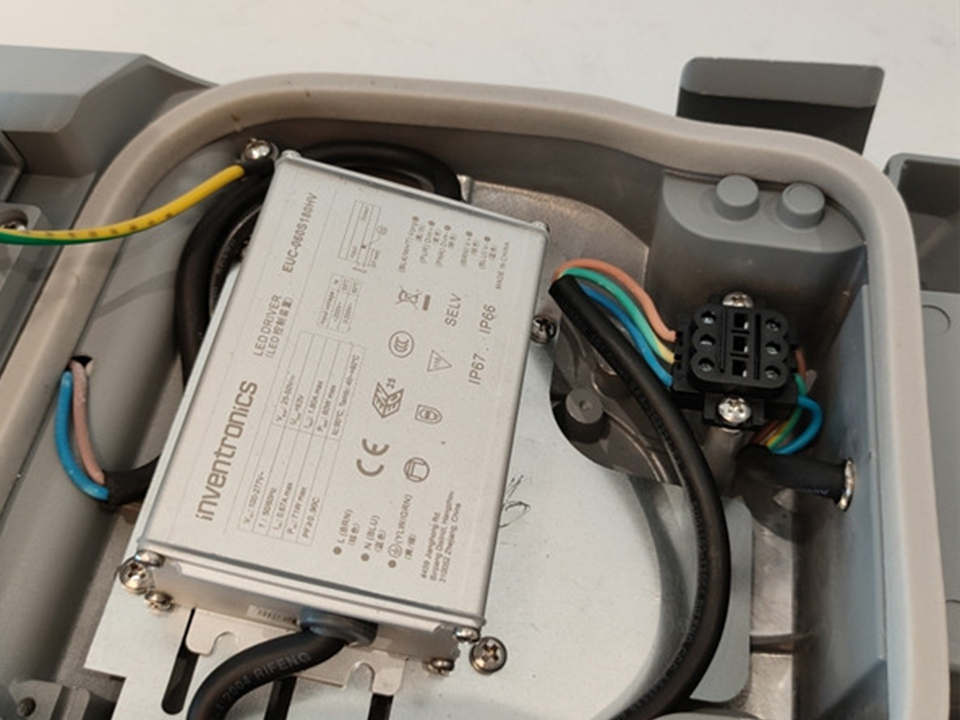
LM-80 typically relates to LED bundles, varieties, and modules. It does not instantly evaluate the total luminaire consisting of the vehicle driver, housing, lenses, seals, wiring, ports, thermal interfaces, controls, paint, gaskets, or placing hardware.
That difference is whatever.
Take into consideration an LED plan with exceptional measured maintenance information. Put it right into an improperly aerated housing, run it above the report’s drive-current conditions, set it with a marginal chauffeur, and subject it to repeated thermal biking. The bundle report stays genuine. The resulting product claim may still be nonsense.
My setting is candid: when a provider writes “LM-80 accredited, 50,000-hour life” without identifying the LED, test problems, TM-21 projection, and real luminaire temperature, I do not see a complete engineering claim. I see missing out on proof covered in technical vocabulary.
What LM-80 Screening Actually Steps
LM-80 testing tracks exactly how solid-state lights alter while operating under controlled electric and thermal conditions. The resulting report can consist of luminous-flux upkeep, chromaticity habits, test temperatures, drive current, example identification, expired operating time, and dimension outcomes.
The approach addresses a concentrated question:
Just how did these checked LED sources behave under these recorded conditions?
It does not address:
For how long will every component utilizing a related LED survive in the field?
That second inquiry includes variables the plan test can not clear up.
A significant LM-80 report must allow the customer determine the checked subcomponent, its version or collection, the temperature-measurement factor, operating conditions, and the data relevant to the claimed item. POWER celebrity’s requirements were written particularly to promote consistent treatment of LM-80 data and to stop loose application of one subcomponent record to products that are not truly comparable.
The record is data. Nothing extra magical.
And data can be pertinent, unimportant, current, out-of-date, representative, selectively provided, or attached to the incorrect item setup.
Just How LM-80 Screening Works in Practice
The lab runs samples for countless hours and records their result at set up measurement factors. Engineers after that try to find changes in normalized luminescent change and shade features while accounting for aspects such as case temperature level and forward existing.
A number of fields should have prompt interest:
LED identification: The specific bundle, range, or component must represent the component utilized in manufacturing. A comparable household name is not nearly enough when pass away arrangement, phosphor system, substrate, or plan building and construction has actually changed.
Drive current: LEDs driven harder typically experience various electric and thermal tension. A record produced at a gentler operating current should not be delicately utilized to defend a more aggressive product setup.
Situation temperature level: The reported temperature level, typically stood for as Ts, should be compared to the temperature reached by the LED inside the real luminaire.
Examination period: Longer gauged durations reduce the distance over which the later forecast need to get to. A graph based primarily on projection is entitled to a lot more suspicion than one sustained by a much longer determined document.
Chromaticity: A fixture can preserve much of its lumen result while shifting sufficient in shade to become inappropriate in retail, hospitality, gallery, exterior, or costs property applications.
LM-80 has no magic “pass” button. A report can record bad maintenance just as faithfully as good upkeep. The existence of a report confirms that information were videotaped under the approach; it does not show that the outcome is readily acceptable.
TM-21 Projection Produces the Long-Hour Insurance Claim
Below is where numerous pamphlets come to be evasive.
LM-80 generates determined data. TM-21 uses a specified computation treatment to that information and price quotes when output may decline to a picked upkeep limit, based on projection restrictions and the temperature conditions connected with the application.
So a declaration such as “L70 at 50,000 hours” is typically not a document of an LED competing 50,000 hours. It is generally a forecast constructed from a shorter gauged duration.
That is not immediately misleading. Engineering projections are typical.
Yet the label matters.
A predicted value must be presented as a forecast, not silently converted into “tested life.” And the estimate has to stay within the limits sustained by the information set. In its May 2024 technological tables, the DesignLights Consortium required sufficient LM-80 information under TM-21 forecast regulations before an item might support the defined 50,000-hour L70 threshold; shorter unsupported estimate periods were declined as substitutes.
I would ask 4 inquiries promptly:
What was the determined LM-80 examination period?
What TM-21 outcome was computed?
Is the promoted number the calculated result or the allowed reported outcome?
Which luminaire temperature level was utilized to connect the plan data to the finished product?
Miss any type of one of those, and the insurance claim loses context.
In-Situ Temperature Level Is the Bridge In Between the LED and the Component
The exact same LED can act differently in 2 luminaires because the housing, warmth sink, chauffeur positioning, ambient temperature, placing alignment, air movement, power density, and thermal-interface materials are different.
That is why in-situ temperature level evidence issues.
The LED temperature level should be gauged inside the operating item at the appropriate temperature-measurement factor. That value is after that compared to the temperature problems represented by the LM-80 information.
A report for a high-quality LED does not rescue inadequate thermal style.
And the concealed number is commonly the one that decides whether the lumen-maintenance estimate is defensible.
L70, L80, and L90 Are Thresholds, Not Failure Dates
The notation is basic once the marketing haze is gotten rid of:
L70 is the time at which result gets to 70% of its first value.
L80 is the time at which outcome reaches 80%.
L90 is the time at which result gets to 90%.
Intend a resource at first produces 1,000 lumens. At 900 lumens, it is operating at 90% maintenance. At 800 lumens, it is at 80%. At 700 lumens, it has actually gotten to L70.
The fixture may still illuminate.
That does not imply it still satisfies the project’s style target.
A 30% reduction can be inappropriate in a medical facility hallway, high-end showroom, hotel, gallery, precision-task location, or firmly computed façade installation. For these applications, L90 might bring a lot more sensible value than a remote L70 number.
The DesignLights Consortium’s 2024 tables illustrate the difference. DLC Standard required L70 of at the very least 50,000 hours, while DLC Premium called for L90 of a minimum of 36,000 hours. The Premium threshold protects extra outcome, although its stated hour number is reduced.
That contrast subjects a typical purchasing mistake: picking the biggest hour number without examining the upkeep portion attached to it.
“60,000 hours” suggests little up until someone informs us whether the case is L70, L80, L90, forecasted, reported, checked at element level, or determined at complete-luminaire level.
LED Lumen Maintenance Is Not Complete Luminaire Integrity
I’ll claim it clearly: the LED plan is just one possible failure factor.
The U.S. Division of Power’s luminaire-lifetime advice described total integrity as the combined dependability of LEDs, optics, published circuit card, surfaces, mechanical parts, thermal systems, housings, gaskets, sealers, electric links, drivers, and manufacturing procedures. One weak subsystem can limit the life span of the whole product.
Possible end results consist of:
The motorist falls short while the LEDs stay healthy and balanced.
An optical material tarnishes while bundle output stays secure.
A thermal-interface product weakens, increasing LED temperature level.
A seal stops working and wetness reaches the electronic devices.
A connector or solder joint establishes a periodic fault.
The component stays on however changes noticeably in color.
Controls fail although the light engine still runs.
Dust buildup decreases provided light individually of LED devaluation.
LM-80 can not accredit those parts.
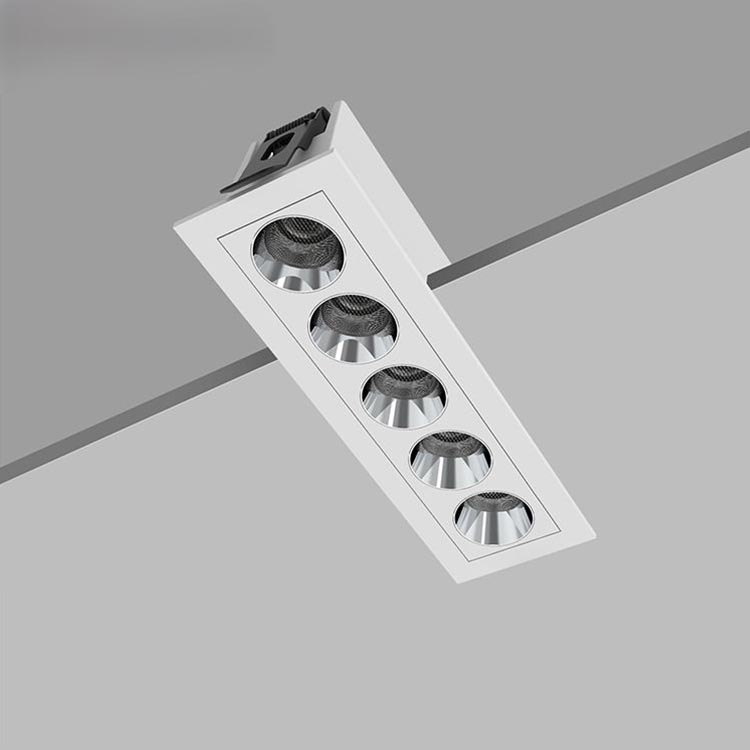
This is specifically pertinent for recessed products such as a deep anti-glare 25W LED ceiling downlight, where ceiling problems, insulation closeness, driver placement, and restricted air movement may impact area temperature levels.
A component projection and a product service warranty are likewise different files. The service warranty defines what the provider will remedy, for how much time, under which operating limits, and with what exemptions. An L70 forecast does none of that.
What the 2024 Data and Enforcement Record Inform Buyers
Three items of proof punctured the sales language.
First, the Might 2024 DLC needs did not deal with “LM-80 readily available” as sufficient. They attached LM-80 information to TM-21 protocols, in-situ LED temperature, defined L70 or L90 limits, and limitations on how far the available data might sustain a forecast.
Second, a 2024 DLC outdoor-lighting evaluation modeled certified LED systems with a 1% fixture-failure presumption over the system life time. That number was clearly a modeling assumption derived from literature testimonial– not an universal determined failing price. The record still dealt with component failures and chauffeur substitutes as different upkeep events.
That detail issues. Even in an evaluation assuming low fixture failure, the driver remains its very own reliability and upkeep issue.
Third, advertising repercussions are not theoretical. In the FTC’s Lights of America instance, the firm tested exaggerated LED light-output and life-expectancy statements. A government court got $21 million for refunds and disallowed additionally material misstatements concerning illumination items. The FTC reported that the firm had advertised 30,000-hour and later 12,000-hour life claims, while its supporting data showed the examined LEDs would not last beyond a few thousand hours.
Gauged light-output and color maintenance of identified LED sources under recorded problems
Total luminaire life, vehicle driver survival, guarantee efficiency
Supplier gives only a logo or recap page
TM-21 calculation
Standardized long-lasting forecast derived from LM-80 data
Catastrophic component failing or environmental toughness
Marketed hours go beyond the reported forecast
In-situ temperature level record
Temperature got to at the LED measurement point inside the operating item
Dependability of every various other part
Temperature level factor does not match the LM-80 reference factor
L70 claim
Time related to retaining 70% of first output
Lights-out failure day
No maintenance percent shows up next to the hour insurance claim
L90 case
Time connected with preserving 90% of initial outcome
Whole-product survival
Offered as directly interchangeable with L70
Driver-life statement
Expected driver endurance under stated conditions
LED lumen maintenance
Motorist model is unidentified or can be substituted easily
Item service warranty
Supplier’s contractual remedy and exclusions
Scientific proof of projected maintenance
Guarantee duration is much shorter than the promoted “life time”
LM-84 plus TM-28
Luminaire-level upkeep testing and estimate
Every field failing system
Test setup varies materially from the supplied design
Exactly how to Audit an LM-80-Based Claim Prior To Spec
Start with the complete report. A one-page chart is not nearly enough.
Suit the precise LED manufacturer, household, version, plan arrangement, CCT array, drive existing, and temperature-measurement point to the costs of products made use of in the suggested component. Ask whether alternate LEDs or drivers may be provided without notification.
After that examine the TM-21 estimation. Find the gauged examination duration, example basis, calculated projection, reported estimate, picked upkeep limit, and in-situ temperature used.
Currently compare that temperature level with the actual application. A laboratory result does not understand that the task remains in a warm ceiling space, a sealed exterior real estate, a refrigerated screen, an enclosed track system, or an installation subjected to direct afternoon sunlight.
Request for motorist proof individually. Tape-record the chauffeur producer, design, ranked instance temperature level, expected life at the measured operating temperature level, surge security, power factor, overall harmonic distortion, and replacement arrangement.
Ultimately, examine adjustment control. The report may have been valid for the original design while manufacturing now makes use of a different motorist, PCB, thermal pad, lens product, LED bin, warmth sink, or assembly process. ENERGY celebrity’s LM-80 advice specifically enforces conditions on the use of data for follower subcomponents rather than presuming that new generations inherit the old report immediately.
No documentation, no case.
That might appear serious. It is less expensive than changing thousands of fixtures after the problems end up being noticeable.
Frequently asked questions About LM-80 and LED Lumen Upkeep
What does LM-80 mean?
LM-80 is an ANSI/IES laboratory examination method that gauges exactly how the light result and shade qualities of LED packages, selections, or modules change throughout extended operation at controlled temperatures and drive currents; it produces measured maintenance information, not a total fixture-life ranking and not a service warranty.
The present IES standards collection listings LM-80-21 for dimension and TM-21-21 for long-lasting projection, verifying that both features are separate.
How does LM-80 screening work?
LM-80 screening operates solid-state lights for countless hours under defined electrical and thermal conditions, documents luminous change and chromaticity at defined intervals, and reports the gauged outcomes so designers can compare destruction behavior and later use a separate estimate technique such as TM-21.
The reviewer should verify the examined LED identification, drive present, temperature levels, dimension point, examination duration, sample details, luminous-flux trend, and shade adjustment.
Does LM-80 confirm a 50,000-hour LED lifetime?
No, LM-80 does not verify that a luminaire will endure for 50,000 hours; it shows how tested LED sources kept outcome under research laboratory conditions, while the 50,000-hour figure generally depends upon TM-21 projection, in-situ temperature proof, and separate presumptions concerning drivers, optics, seals, circuitry, and controls.
The DLC’s 2024 requirements demanded enough sustaining data under TM-21 regulations before accepting a 50,000-hour L70 certification claim.
What is L70 LED life-span?
L70 LED life expectancy is the projected or determined operating time at which a light preserves 70% of its first luminous flux; it is a lumen-maintenance limit, not the minute the fixture necessarily falls short, quits producing light, or comes to be financially inappropriate for a specific application.
For jobs where a 30% result loss is too much, L80 or L90 might be a more useful specification.
What evidence should sustain an LED lumen upkeep case?
A defensible LED lumen maintenance insurance claim need to be sustained by the complete LM-80 report, the matching TM-21 computation, an in-situ temperature level report for the actual luminaire, recognition of the precise LED and drive current, and separate evidence covering driver life, environmental management, product adjustments, and guarantee terms.
For whole-luminaire maintenance evidence, reviewers can additionally try to find LM-84 screening integrated with TM-28 projection, which IES lists separately from the component-level LM-80 and TM-21 course.
Demand the Proof Before Accepting the Component
Do deny the hour matter.
Buy the documented connection in between the evaluated LED, the TM-21 estimate, the gauged operating temperature, the actual manufacturing setup, the vehicle driver style, and the written service warranty.
Request for the full proof bundle. Compare identifiers. Obstacle substitutions. Tape the thermal problems.
Due to the fact that “LM-80 readily available” is not completion of the reliability conversation.