Ainda não está a ver a solução de iluminação comercial certa? Fale com a nossa equipa de projeto.
Se já consultou o sítio Web ou já discutiu opções com o departamento de vendas, mas ainda precisa de uma orientação mais clara, envie o seu pedido aqui. A nossa equipa analisará a sua aplicação, as especificações pretendidas e as restrições do projeto e, em seguida, responderá com um próximo passo prático: o que se adequa, o que necessita de confirmação e o caminho mais rápido para um orçamento e ficheiros prontos para especificações para o seu projeto.
Revisão direta da sua aplicação, especificações e restrições do projeto para um caminho de cotação mais claro.
Correspondência de produtos em termos de ângulo de feixe, CCT / CRI, controladores, regulação da intensidade luminosa e opções de controlo.
Apoio à documentação do projeto, incluindo folhas de corte, notas de cablagem e ficheiros IES/LDT, quando disponíveis.
Orientação OEM / ODM para etiquetas, embalagens, acabamento de caixas e requisitos de marcas privadas.
Obter um orçamento rápido para iluminação LED comercial
Concebido para designers, arquitectos, empreiteiros, grossistas e compradores de projectos. Partilhe a sua aplicação, quantidade e especificações pretendidas para obter preços diretos da fábrica, orientação sobre prazos de entrega e apoio pronto para especificações para projectos nos EUA e na UE.
Opções prontas para orçamento: feixe / ótica, alvos CCT / CRI / SDCM, controladores, regulação de fluxo luminoso e integração de controlos
Documentação do projeto: folhas de corte, desenhos e ficheiros IES / LDT, quando disponíveis
Suporte OEM / ODM: SKUs de marca própria, embalagens, etiquetas, manuais e etiquetas prontas para código de barras
Qualidade estável para implementações: SKUs repetíveis, pontos de controlo de CQ e fornecimento escalável para concursos e encomendas
NDA disponível a pedido para desenhos detalhados e ficheiros de projeto
Como criar um plano de iluminação em camadas para espaços comerciais multiusos
Os maus planos espalham-se.
Já assisti a demasiadas revisões de projectos de iluminação comercial em que alguém tenta resolver o trabalho de escritório, a exposição a retalho, as zonas de espera, a circulação e os eventos fora de horas com uma grelha de teto, um CCT, um padrão de comutação e uma mentira educada sobre “flexibilidade”, apesar de todos na sala saberem que a luz uniforme é normalmente apenas mediocridade uniforme.
E ainda chamamos a isso uma estratégia?
Deixar de tratar o teto como se fosse o trabalho todo
Aqui está a dura verdade.
Um design de iluminação em camadas não é um extra decorativo; é o que evita que um espaço comercial polivalente pareça plano às 9:00 da manhã, exaustivo às 2:00 da tarde e vagamente hostil às 7:00 da noite, quando se espera que a mesma área quadrada funcione subitamente como uma área de reuniões, um piso de vendas, uma sala de espera e uma experiência de marca, tudo ao mesmo tempo.
Porque é que tantos planos ainda começam com a contagem de equipamentos em vez do comportamento humano?
De acordo com Orientações do ENERGY STAR para edifícios comerciais, No entanto, a iluminação ainda representa 17% de toda a eletricidade consumida nos edifícios comerciais dos EUA, pelo que cada plano preguiçoso de iluminação excessiva tem dois efeitos: um no conforto e outro na fatura dos serviços públicos. E em mercados com uma pressão de códigos mais rigorosos, isto não é teórico; Lei local 88 da cidade de Nova Iorque exige que os edifícios não residenciais com mais de 25 000 pés quadrados actualizem os sistemas de iluminação de acordo com as normas actuais.
A pilha de design de iluminação em camadas em que realmente confio
Quatro camadas ganham.
Nem três, nem “geral e decorativo” e muito menos “acrescentaremos alguns spots mais tarde”, porque é com esta última frase que os projectos acabam por ter um controlo de feixe de luz estragado, uma luminosidade irregular e um inquilino irritado que começa a comprar lâmpadas de encaixe aleatórias três meses após a entrega.
Confiaria numa cozinha de um restaurante iluminada como um átrio, ou numa parede de uma loja iluminada como um corredor?
A luz ambiente paga o aluguer
A luz ambiente é a carga de base. Num plano de iluminação comercial, trata da navegação, da adaptação visual e da luminosidade geral sem chamar a atenção.
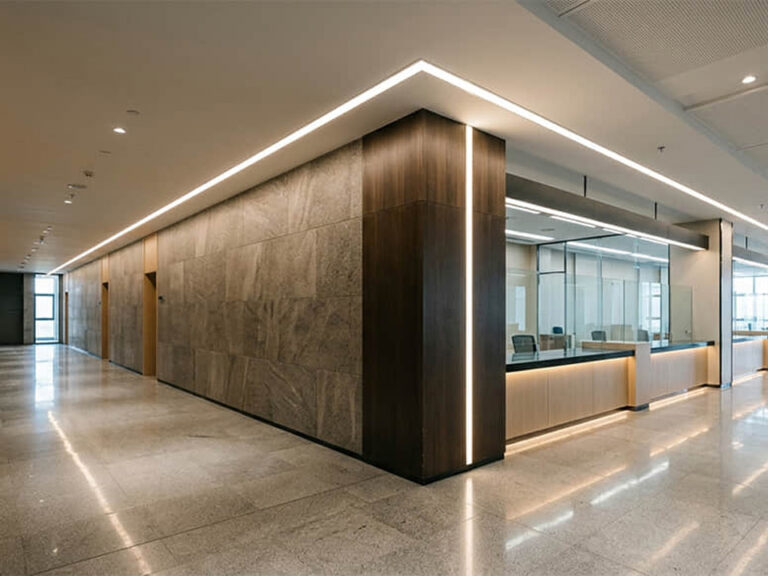
Em escritórios abertos e zonas comerciais partilhadas, normalmente pretendo que a luz ambiente provenha de luminárias silenciosas: linhas lineares embutidas ou suspensas, downlights controlados ou luminárias de teto limpas que não produzam brilhos, vieiras ou remendos óbvios. É aqui que Iluminação linear LED para espaços comerciais modernos e Iluminação de teto LED fazem mais sentido do que tentar forçar tudo com projectores de alto rendimento.
A luz de trabalho é onde reside o desempenho
A luz de trabalho apoia o trabalho real: secretárias, balcões, espelhos de prova, estações POS, superfícies de escrita de receção, mesas de reunião e bancos de serviço.
Tenho uma forte tendência neste domínio. Se o plano de trabalho é importante, não quero que seja deixado ao sabor da luz ambiente. É assim que se obtêm olhares de soslaio, tectos demasiado iluminados, bancadas de trabalho pouco iluminadas e o hábito bizarro de “resolver” o problema aumentando toda a divisão em mais 20%. Utilize a intenção da tarefa local, não o brilho global.
A luz de realce chama a atenção
A luz de realce é a margem.
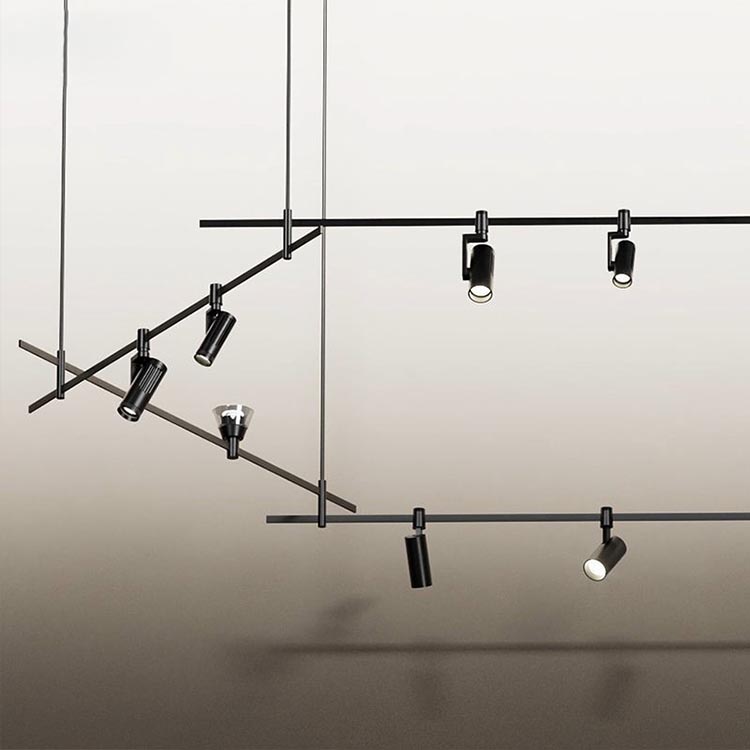
Nas zonas de retalho, de hotelaria e de utilização mista, a iluminação de realce indica ao olhar onde deve pousar primeiro. Dá forma à mercadoria, à sinalética, às texturas, às obras de arte, às prateleiras e às margens do percurso do cliente. É por isso que Iluminação de calha LED para zonas de exposição se os ângulos de feixe, a flexibilidade de mira e o CRI forem fracos, os seus acabamentos dispendiosos parecem de repente vulgares.
Os controlos são a quarta camada que a maioria das equipas não especifica
É aqui que a boa intenção morre.
O Estudo DOE CALiPER sobre a regulação da iluminação no sector retalhista afirma claramente que não existe uma definição padrão de “regulável” e que o desempenho do LED pode mudar com o dispositivo de controlo, o controlador e até mesmo com o que mais está no circuito; os resultados desagradáveis incluem viagens mortas, intermitência, ruído audível, desistência e fiabilidade reduzida. Por outras palavras, se a sua programação de controlos for vaga, o seu design de iluminação em camadas ainda está incompleto.
E isto não é apenas conversa de laboratório. A Avaliação de campo do PNNL resumida pelo Better Buildings Solution Center destacou a afinação de tarefas, os sensores de ocupação e os controlos de luz natural como caraterísticas práticas que reduzem o excesso de luz em vez de acrescentarem mais luminárias para fingir precisão. Esta é a diferença entre um esquema de iluminação e um sistema operacional.
Planear por comportamento, não por departamento
Quartos lie.
Uma “sala de conferências” pode ser uma sala de apresentação ao cliente às 10:00, uma cabina de videochamada às 13:00 e uma caixa de eventos com catering às 18:30, o que significa que o seu plano de iluminação comercial deve ser construído em torno de mudanças de cena, linhas de visão, modelação facial, reflectância, controlo de brilho e comportamento de regulação de fluxo luminoso, em vez de qualquer nome de sala que conste no conjunto de desenhos do arquiteto.
Então, porque é que os pacotes de especificações continuam a agir como se um rótulo significasse um modo?
Um exemplo útil do mundo real vem do Estudo de caso DOE GATEWAY do escritório da TeamDKB em RochesterO projeto utilizou luminárias LED de 3500 K para a maioria das áreas de tarefas visuais, luminárias OLED de 3000 K em zonas visualmente proeminentes como salas de conferências, receção e áreas de descanso, regulação de 0-10V em quase todas as luminárias OLED, contribuição da luz do dia a partir de janelas do chão ao teto, controlos de vagas e uma densidade total de potência de iluminação de 0,60 W/ft². Isto é um design de iluminação por camadas a fazer um trabalho real e não a posar para renderizações.
Também gosto do sinal enviado pelo Estudo de caso de reabilitação de troféus Better Buildings da Target, que refere que a estratégia de atualização LED do retalhista incluía a regulação sem fios. Isto é importante porque os grandes espaços comerciais polivalentes raramente falham por falta de equipamentos; falham por falta de controlo à escala.
Os números que utilizo antes de tocar no calendário de jogos
Os números são importantes.
Não porque todos os projectos devam ter o mesmo aspeto, mas porque um plano de iluminação em camadas sem intervalos de objectivos funcionais se transforma numa negociação política entre o arquiteto, o engenheiro eletrotécnico, o cliente e a pessoa mais barulhenta do departamento de compras.
Pretende um esquema de iluminação LED comercial que sobreviva à VE e à colocação em funcionamento?
Zona
Camadas de iluminação primária
Lógica de aparelhos com que eu começaria
Gama CCT de funcionamento
Gama CRI de funcionamento
Viés de controlo
O que normalmente corre mal
Postos de trabalho em open office
Ambiente + tarefa
Suporte local controlado + linear encastrado/suspenso
3500K
80-90
Regulação da luz do dia + ocupação + ajuste de cena
Teto demasiado iluminado, brilho do ecrã, faces planas
Regulação da intensidade luminosa com base na ocupação ou no horário
Efeito túnel, contraste acentuado, má orientação
O meu preconceito é simples: Prefiro utilizar uma camada de ambiente ligeiramente mais leve e adicionar um suporte preciso para tarefas ou realces do que inundar todo o teto e fingir que o brilho é igual a qualidade. Não é verdade. Normalmente, significa apenas que se pagou mais para que a divisão pareça mais barata.
A armadilha das aquisições que ninguém menciona suficientemente cedo
As especificações perdem-se rapidamente.
No momento em que um projeto mistura zonas de escritórios, zonas de retalho, toques de hospitalidade e momentos de marca, já não se está a comprar uma única família de luminárias; está-se a comprar consistência em termos de ótica, ângulos de feixe, acabamentos, lógica de recorte, controladores, protocolos de controlo e planeamento de substituição, razão pela qual prefiro trabalhar a partir de uma família coordenada do que juntar seis catálogos não relacionados.
Porquê convidar um circo de garantias para um projeto que já tem partes móveis suficientes?
É exatamente aqui que os percursos internos de Meagree se tornam úteis no contexto: um leitor que comece aqui deve poder passar para estudos de casos de iluminação comercial para prova, depois para Capacidades OEM/ODM para decisões personalizadas de feixe, CCT e acabamento, e depois para as famílias de produtos relevantes sem perder o fio condutor do problema original. Para um leitor B2B cético, este é um caminho muito mais limpo do que atirá-lo para uma página de categoria genérica e esperar que ele se auto-classifique.
FAQs
O que é a iluminação em camadas num espaço comercial?
A iluminação em camadas num espaço comercial é um método de planeamento que combina estratégias de ambiente, de tarefas, de realce e de controlo para que cada zona satisfaça as necessidades visuais, operacionais e de marca sem iluminar demasiado toda a placa de pavimento ou forçar um tipo de luminária a resolver todos os problemas.
Esta é a definição correta. Na prática, significa que o teto deixa de ser a única resposta e que a sala começa a comportar-se melhor para o trabalho, as vendas, a circulação e a utilização fora de horas.
Como criar um plano de iluminação comercial para espaços comerciais multiusos?
Um plano de iluminação comercial para espaços comerciais polivalentes começa por mapear comportamentos, linhas de visão, horas de funcionamento e mudanças de cenário por zona, atribuindo depois camadas de ambiente, tarefa, realce e controlo a cada caso de utilização antes da seleção final das luminárias, dos horários de regulação e da coordenação das aquisições.
Eu nunca começaria com contagens de fixações. Começo pelo que as pessoas fazem, pelo que precisam de ver e pelo que a marca precisa que reparem.
Que temperatura de cor funciona melhor para projectos de utilização mista de escritórios e retalho?
A melhor estratégia de temperatura de cor para projectos de utilização mista de escritórios e retalho utiliza normalmente o branco neutro para zonas centradas no trabalho e luz mais quente para áreas de exposição, hospitalidade ou espera, com definições exactas moldadas pelos acabamentos, cor da mercadoria, altura do teto, disponibilidade de luz do dia e tom emocional necessário.
O meu pensamento padrão é 3500K onde a concentração é importante e 3000K onde o conforto, a apresentação e o calor do material são mais importantes. Mas não forço um CCT em todas as zonas, a menos que o espaço se comporte verdadeiramente como um só.
Por que razão ocorrem problemas de regulação da intensidade luminosa do LED em projectos comerciais?
Os problemas de regulação da intensidade luminosa dos LEDs em projectos comerciais ocorrem quando os controladores das luminárias, os dispositivos de controlo, as condições da cablagem e o comportamento da carga não são testados como um sistema, causando problemas de incompatibilidade, tais como viagens mortas, cintilação, intermitência, ruído audível, desistência ou desempenho instável de regulação da intensidade luminosa de baixa gama.
É por isso que “regulável” numa folha de corte não é suficiente. Quero uma lógica de controlo verificada, cenas reais de colocação em funcionamento e nada de suposições fantasiosas sobre o comportamento do condutor.
Qual é o melhor design de iluminação para escritórios e espaços comerciais num único projeto?
O melhor design de iluminação para escritórios e espaços comerciais num único projeto utiliza uma luz ambiente silenciosa para as áreas de trabalho, uma luz vertical e focal mais forte para as áreas de exposição, um controlo mais rigoroso do encandeamento em zonas partilhadas e controlos baseados em cenários que permitem que a mesma área de implantação passe do modo de produtividade para o modo de atendimento ao cliente.
Tentar reunir essas necessidades num sistema insípido é o caminho mais rápido para a desilusão. Os espaços de utilização mista necessitam de um contraste intencional e não de um compromisso disfarçado de consistência.
Os seus próximos passos
Começar com pouco.
Audite a planta do piso e marque cinco coisas a vermelho: onde as pessoas trabalham, onde decidem, onde esperam, para onde quer que olhem e o que muda depois das 18:00.