Still Not Seeing the Right Commercial Lighting Solution? Talk to Our Project Team.
If you have reviewed the website or already discussed options with sales but still need a clearer direction, send your request here. Our team will review your application, target specifications, and project constraints, then reply with a practical next step: what fits, what needs confirmation, and the fastest route to a quote and spec-ready files for your project.
Direct review of your application, specs, and project constraints for a clearer quote path.
Product matching across beam angle, CCT / CRI, drivers, dimming, and controls options.
Project documentation support, including cut sheets, wiring notes, and IES / LDT files where available.
OEM / ODM guidance for labels, packaging, housing finish, and private-brand requirements.
Get a Fast Quote for Commercial LED Lighting
Built for designers, architects, contractors, wholesalers, and project buyers. Share your application, quantity, and target specifications to get factory-direct pricing, lead-time guidance, and spec-ready support for US and EU projects.
How to Choose Low-Glare, High-Uniformity Downlights for Offices
Most office downlights fail. I mean that in the practical, expensive sense, because buyers still approve fittings by wattage, diameter, and unit price while ignoring the things that actually decide whether a ceiling performs over eight-hour screen days: visual comfort, controllability, spacing discipline, color consistency, and proof that the glare claim survives outside the brochure. Why are we still buying office lighting like it is a commodity can with a nicer label? According to ENERGY STAR’s commercial lighting guidance, lighting still makes up 17% of electricity used in U.S. commercial buildings, and the U.S. Department of Energy’s March 2024 determination on ANSI/ASHRAE/IES 90.1-2022 makes it plain that energy performance rules are still tightening, not relaxing.
Hotspots matter. The nastiest trick in this industry is not fake data; it is technically tidy data that hides the wrong visual reality, and the DOE glare research is the piece I wish more office buyers would read, because it shows how luminaires with the same conventional UGR value of 13.7 can jump to alternative UGR′ values of 21.6 or 29.6 once the luminous parts become smaller and brighter within the same aperture. Why would I trust the printed UGR badge if the luminous geometry is still screaming at the eye?
Standards still help. について BS EN 12464-1:2021 preview makes clear that indoor workplace lighting covers Display Screen Equipment, and the EN 12464 material circulated via CIBSE says authenticated UGR data produced by the tabular method should be provided by the luminaire manufacturer. That means “UGR<19 office lighting” is not something I treat as decorative copy; I treat it as a documentation test. If the supplier cannot send the table, the room assumptions, and the spacing basis, I assume the claim is soft.
And here is the hard truth. A low-glare office downlight is not low-glare because the cut sheet says “anti-glare.” It is low-glare because recess depth, shielding angle, optic discipline, luminance distribution, and actual room layout work together well enough that people stop noticing the fitting after five minutes. Isn’t that what office lighting is supposed to do? The DOE’s 2024 LED overhead-glare paper is a reminder that modern LED sources can push much higher luminance than legacy sources, which is exactly why old comfort assumptions break when specifiers chase miniaturized bright apertures without discipline.
目次
High uniformity is a layout result, not a catalog feature
Spacing decides more. I have watched teams buy perfectly decent downlights and still produce ugly, tiring ceilings because the layout was guessed from lumen output instead of modeled from ceiling height, workstation density, reflectance, and actual viewing angles, and that is where “high uniformity downlights” becomes a misleading phrase: no downlight is inherently high-uniformity in every room. How could it be? EN 12464 verification guidance stresses that measurement points must follow the design grid, and even the standard-training example shows how verification geometry can radically change peak results if you use the wrong grid.
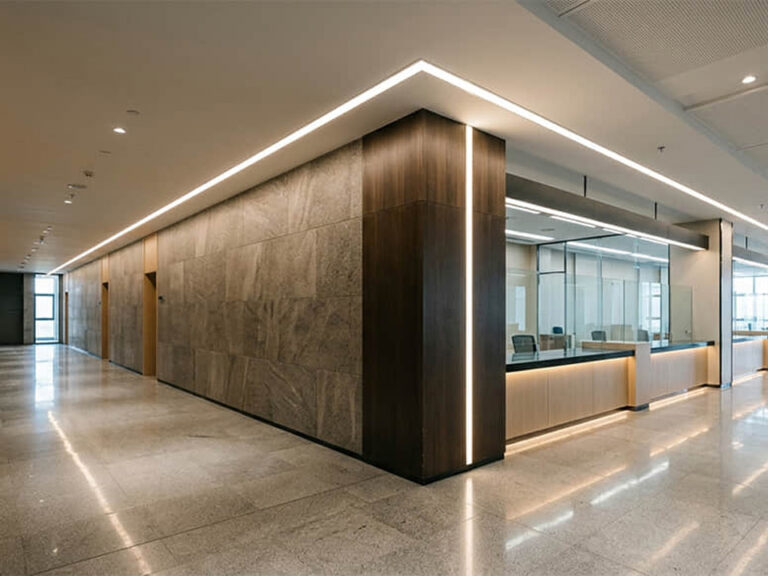
So I rarely use office downlights alone. For screen-heavy open-plan zones, I usually trust a mixed ceiling more than a downlight-only ceiling: let LED linear lighting for modern office ceilings carry the ambient plane, then use disciplined commercial recessed LED downlights for office interior projects for meeting rooms, perimeter transitions, reception points, and selective emphasis. That is not indecision. That is how you avoid the classic office mess of bright dots, dark desks, and endless post-handover aiming by complaint.
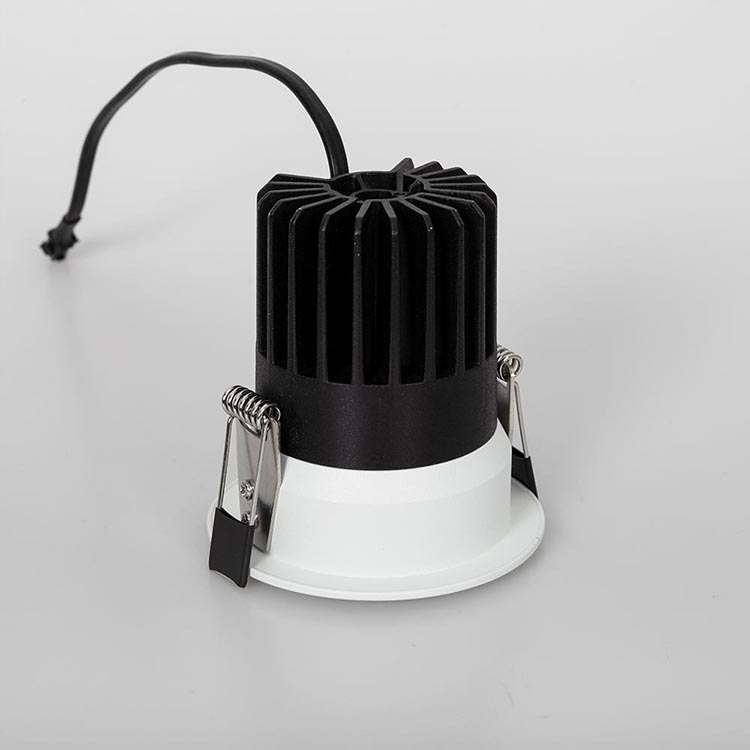
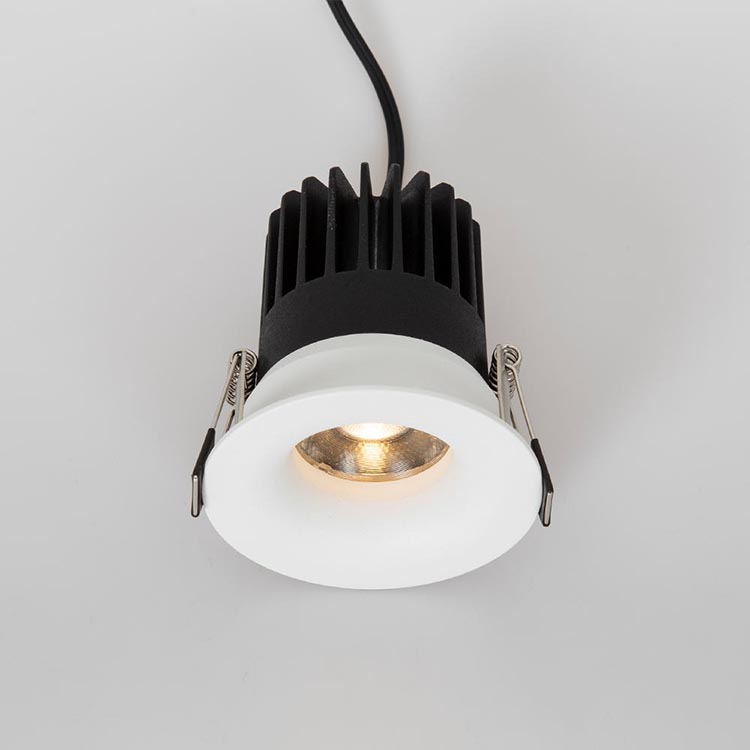
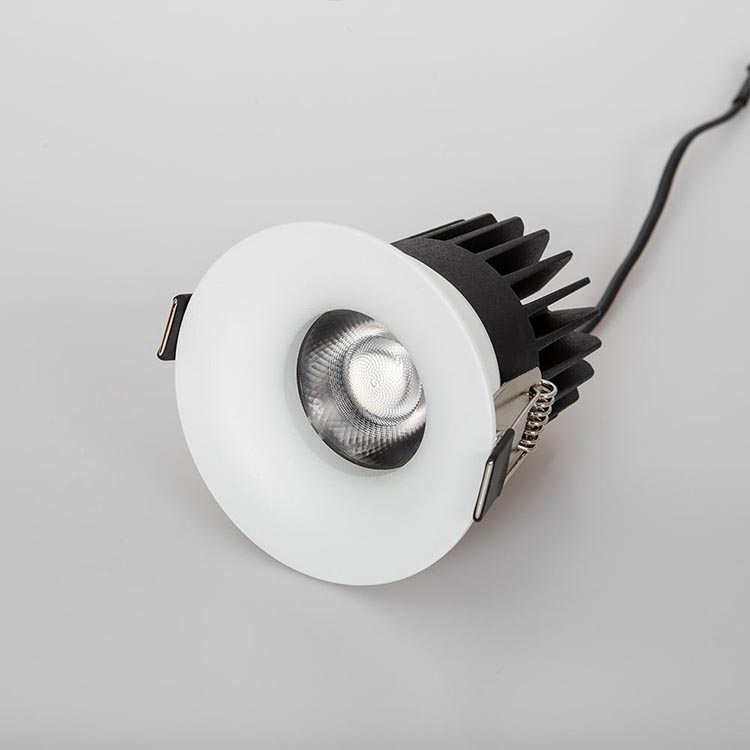
The corridor lesson matters too. Meagree’s anti-glare LED downlight for corridors and lobbies is described for circulation zones, lobbies, offices, and retail interiors, which is exactly where I would keep these tighter comfort-led downlights: transitional areas, perimeter routes, reception approaches, and secondary zones where you want calm ceilings without asking one fitting to do the whole office job. Why do so many specs still expect a corridor logic fixture to solve a workstation plane by itself?
The procurement matrix I actually use before approving office downlights
チェックポイント
What I reject fast
What I will consider
なぜそれが重要なのか
Glare claim
“UGR<19” with no tables, no room assumptions, no aperture photos
Tabular UGR data, room assumptions, luminous aperture visuals, mock-up plan
Same printed UGR can hide very different hotspot behavior
These are my filters, not brochure theater. They are also grounded in what the standards and federal guidance actually reward: EN 12464 treats workplace lighting as a visual-comfort and performance problem, not a wattage contest; GSA guidance warns that efforts to limit glare and improve directionality can reduce efficacy; and Meagree’s own quote flow explicitly says it can discuss beam optics, CCT, CRI, SDCM, drivers, dimming, and IES/LDT files, which is exactly the language a serious office buyer should force into the submittal conversation.
The dirty trade-off nobody explains
Physics bites. A lot of specifiers still chase the highest lm/W number as if that alone proves a better office fitting, even though GSA’s LED lighting guidance flatly notes that efforts to limit glare and improve color, directionality, and other features can reduce efficacy, while also showing downlight lamp ranges around 50 to 85 lm/W. So no, I do not panic when a better-controlled office downlight is not the absolute efficacy hero. But I also do not forgive weak optics just because the spreadsheet likes the number.
Systems beat fixtures. The best evidence is not another catalog promise; it is what happens when office lighting is treated as a whole system of luminaires, controls, daylight response, and occupant acceptance. In the Byron G. Rogers Federal Building case study, GSA cut annual lighting energy from 814,200 kWh to 337,200 kWh, a 59% reduction, after upgrading 3,300 troffers and using advanced controls, and a separate DOE application guide says the New Carrollton Federal Building cut energy use 82% and reduced annual lighting cost from $291,000 to $53,500 by replacing 11,800 fluorescent troffers with LED fixtures and controls. Why are we still pretending the driver and control layer is optional when the operating data keeps saying the opposite?
That is why I push mock-ups. The Byron Rogers team did not simply trust the first LED story they heard; they tested options in an office setting, assessed light quality, efficacy, and light levels, and then selected a solution that worked for both performance and acceptance. I wish more downlight buyers copied that behavior instead of approving office fittings from a JPEG and a price sheet.
What I would tell a skeptical buyer looking at Meagree
Start narrow. I would begin with the LED downlights for commercial interiors category because it already separates adjustable, anti-glare, recessed, and deep-recessed options, then cross-check open-office needs against LED linear lighting for modern office ceilings, because that is where cleaner ambient uniformity usually gets solved without forcing downlights to do stupid amounts of work. Isn’t that a smarter path than pretending one recessed can will fix every ceiling condition from workstation rows to corridor turns?
Then I would get specific. For general office and meeting-room use, Meagree’s commercial recessed LED downlight for office interior projects is framed around workspaces, meeting areas, corridors, and reception zones, while the anti-glare LED downlight for corridors and lobbies is better read as a comfort-led circulation and transition fixture. That distinction matters, because office downlights fail the moment specifiers confuse “pleasant corridor optic” with “whole-office ambient strategy.”
And I would not stop at product pages. I would send the procurement team into how to choose the right LED fixture types for commercial spaces そして LED lighting quality control process, because supplier quality is where good office specs either survive or die. Meagree says it can support cut sheets, IES/LDT files, optics, CCT/CRI/SDCM targets, drivers, and dimming, and its QC page claims IQC, IPQC, batch traceability, ISO-managed workflows, and a 96-hour aging test on all LEDs. That does not mean I trust everything automatically. It means I know exactly what proof to ask for next.
よくあるご質問
What are low-glare office downlights?
Low-glare office downlights are luminaires designed to reduce direct visual discomfort in screen-based work areas by controlling brightness at critical viewing angles through deeper recesses, shielding geometry, tighter optics, and documented glare calculations instead of relying on high lumen output and vague diffuser language. In plain English, they should disappear into the ceiling psychologically, not keep announcing themselves every time someone looks up from a monitor. When a supplier shows only a UGR badge and hides the aperture behavior, I get suspicious fast.
What is high-uniformity office lighting?
High-uniformity office lighting is a lighting result in which the work area, circulation paths, and surrounding field maintain steady enough brightness distribution that users do not experience distracting bright islands, dead patches, or abrupt contrast shifts across desks, screens, and sightlines during normal office tasks. That is why I treat uniformity as a layout and photometric problem, not a product adjective. A good room calculation beats a thousand glowing product renders.
Is UGR<19 enough for office downlights?
UGR<19 is a commonly used office comfort shorthand that signals an acceptable discomfort-glare threshold in many professional discussions, but it is not a stand-alone guarantee of visual comfort because aperture brightness, source non-uniformity, room geometry, and actual line-of-sight conditions can still make a nominally compliant fitting feel harsh. I use UGR as an entry ticket, not the final verdict. If the luminous parts are concentrated and bright, the room can still feel cheap even when the paperwork looks polite.
Should offices use downlights only or combine them with linear lights?
A mixed office lighting scheme combines downlights for focal, perimeter, meeting, or transition zones with linear ambient lighting for broader desk coverage, producing steadier brightness, fewer hotspots, and cleaner control zoning than a downlight-only ceiling in most screen-heavy workplaces with open-plan or multi-use layouts. That is the route I trust for real offices. Downlights-only plans can work in selected rooms, but they go wrong very quickly once ceiling height, spacing, and desk density start fighting each other.
Your Next Step
Stop buying office downlights like decorative holes. If you are serious about low glare office downlights and high uniformity downlights, ask your supplier for six things in one email: tabular UGR data, room-based layout assumptions, luminous-aperture images, IES or LDT files, driver and dimming details, and proof of QC discipline including aging and traceability. Then demand a mock-up before full approval. That is how I would use Meagree’s LED downlights for commercial interiors, LED linear lighting for modern office ceilings, そして LED lighting quality control process pages in the real world: not as sales browsing, but as a document checklist for a ceiling you can defend after handover.