Vous n'avez toujours pas trouvé la bonne solution d'éclairage commercial ? Parlez-en à notre équipe de projet.
Si vous avez consulté le site web ou si vous avez déjà discuté des options avec le service des ventes, mais que vous avez encore besoin d'une orientation plus claire, envoyez votre demande ici. Notre équipe examinera votre application, les spécifications visées et les contraintes du projet, puis vous répondra en vous indiquant la marche à suivre : ce qui convient, ce qui doit être confirmé et la voie la plus rapide pour obtenir un devis et des fichiers prêts à l'emploi pour votre projet.
Examen direct de votre application, des spécifications et des contraintes du projet pour un devis plus clair.
Correspondance des produits en termes d'angle de rayonnement, de CCT / CRI, de pilotes, de gradation et d'options de contrôle.
Soutien à la documentation du projet, y compris les feuilles de coupe, les notes de câblage et les fichiers IES / LDT lorsqu'ils sont disponibles.
Conseils OEM / ODM pour les étiquettes, l'emballage, la finition du boîtier et les exigences de la marque privée.
Obtenir un devis rapide pour l'éclairage LED commercial
Conçu pour les concepteurs, les architectes, les entrepreneurs, les grossistes et les acheteurs de projets. Faites-nous part de votre application, de la quantité et des spécifications souhaitées pour obtenir des prix directs, des conseils sur les délais de livraison et une assistance prête à l'emploi pour les projets aux États-Unis et dans l'Union européenne.
Options prêtes à l'emploi : faisceau / optique, cibles CCT / CRI / SDCM, pilotes, gradation et intégration des commandes.
Documentation du projet : feuilles de coupe, dessins et fichiers IES / LDT, le cas échéant.
Support OEM / ODM : UGS, emballages, étiquettes, manuels et étiquettes prêtes à l'emploi pour les codes-barres sous marque privée
Qualité stable pour les déploiements : UGS répétables, points de contrôle du contrôle qualité et approvisionnement modulable pour les appels d'offres et les réapprovisionnements.
NDA disponible sur demande pour les dessins détaillés et les dossiers de projet
Packaging Standards That Reduce Freight Damage on LED Fixtures
The problem commonly starts long prior to a carrier approves the shipment: a carton is selected by rate, a foam insert is reused from another item, or a packaging line thinks that a steel real estate can hold up against the exact same effect as a compact LED bulb. During distribution, nonetheless, resonance, abrupt drops, compression, shifting pallets, and duplicated handling can subject weak points that a regular visual assessment will certainly never reveal. Who pays when a completely useful component ends up being a damaged distribution?
In commercial lighting, the solution is seldom simple. Producers may blame providers, importers might decline whole batches, and contractors may deal with installation delays while substitute elements take a trip with the supply chain once again.
My placement is straightforward: LED component product packaging ought to be crafted around the product’s failure factors and actual delivery conditions, not around the cheapest container that passes a warehouse examination. One of the most reliable technique integrates product-specific protection, documented packaging specs, and reasonable transportation screening.
Why LED Component Packaging Needs Greater Than a Solid Cardboard Box
LED luminaires are not mechanically similar. A round ceiling downlight, an adjustable spotlight, an outside bollard, and a lengthy building linear component existing different packaging challenges.
A small downlight may be at risk to lens scrapes, reflector deformation, harmed mounting clips, or cracked electrical links. A long direct luminaire produces a various trouble: bending tons, end impacts, and inadequate support can damage its housing even when the external container reveals little noticeable contortion.
Think about 3 instances from business lighting:
A round LED ceiling downlight ranked at 20 W needs security for its optical surface, trim, housing, and placing equipment.
A 20 W industrial ceiling LED downlight might be delivered in duplicated quantities, making carton setup and unit separation crucial.
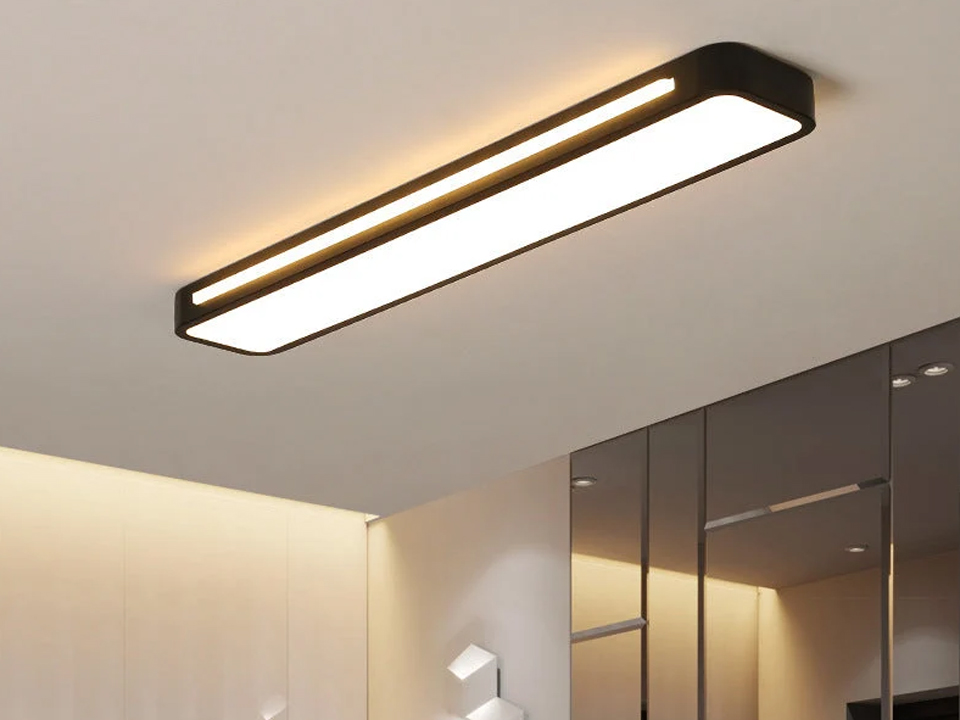
A 30 W trimless linear LED light requires interest to size, rigidity, end security, and assistance versus bending.
These are not interchangeable packaging troubles. An universal insert could reduce acquiring intricacy, however it can likewise leave one of the most vulnerable element unsupported.
The tough fact: a carton can remain intact while the product inside is damaged. Packaging inspections that focus specifically on outside appearance therefore provide an insufficient picture of delivery efficiency.
The Products Damage Mechanisms Manufacturers Usually Underestimate
Freight damage is not one failure setting. It is a collection of mechanical and environmental stress and anxieties that interact differently relying on the delivery course, package measurements, handling procedure, and filling configuration.
Effect and shock
Drops and unexpected influences can break optical covers, flaw slim metal real estates, dislodge accessories, or damage internal electric links. The highest-risk locations are not constantly the wide faces of the container; edges, sides, and exposed ends can transmit significant forces into the component.
Resonance and duplicated movement
Truck vibration and duplicated handling can trigger an improperly restrained component to move against its insert. In time, call between a lens and a more difficult component can develop abrasion, while loosened installing brackets might scrape repainted or anodized surfaces.
Compression and pallet loading
Containers positioned near the bottom of a pallet might experience sustained tons from packages stacked above them. If the box sheds its structural stamina, internal clearance can disappear and the fixture can birth lots it was never ever designed to hold up against.
Wetness and temperature variation
Moisture can damage some corrugated materials, while temperature level adjustments might affect adhesives, protective movies, and certain padding materials. Condensation can also create troubles for revealed metal surfaces and electric settings up when product packaging and storage space conditions are improperly controlled.
Handling and load instability
Lengthy cartons, unequal pallet stacks, and poorly safeguarded lots are susceptible to moving. An apparently appropriate specific bundle might carry out terribly as soon as it is compressed between various other products or subjected to repeated transfers between lorries and distribution centers.
The sensible lesson is straightforward. A packaging requirements need to mirror the total circulation environment, not merely the minute when a product leaves the factory.
Writing
Product packaging Materials: What In Fact Safeguards LED Fixtures During Transit?
More material does not immediately mean far better security.
The very best product packaging materials for LED fixtures rely on product mass, delicacy, surface finish, plan geometry, anticipated effect energy, and the delivery environment. I would rather see a thoroughly developed insert inside a correctly specified container than a big quantity of supporting that enables the fixture to relocate easily.
The following contrast supplies a functional starting factor. Last specs need to be established with screening as opposed to presumed from material summaries alone.
Packaging material
Primary feature
Finest application
Main limitation
Corrugated cardboard
Outer containment and stacking strength
Private cartons and master situations
Efficiency degrades when wet or crushed
Formed pulp
Shape-specific restraint and padding
Repetitively delivered components with appropriate geometry
Needs ideal tooling and fit validation
Broadened polyethylene (EPE) foam
Padding and surface area separation
Painted housings, optical parts, and irregular shapes
Incorrect density or density may give inadequate security
Broadened polypropylene (EPP)
Durable supporting and repeated-use defense
Larger components and reusable product packaging systems
Higher preliminary product or tooling costs might apply
Polyethylene foam sheets
Surface security and separation
Ornamental trims, reflectors, and lens covers
Thin sheets alone can not soak up significant impacts
Corner and side guards
Neighborhood reinforcement and load distribution
Long linear luminaires and palletized cartons
Do not change correct inner restraint
Moisture-resistant linings
Defense against external dampness and contamination
Damp storage space and chosen export routes
Do not eliminate condensation threat or replace suitable storage space controls
These products ought to be reviewed as a system. For example, EPE cushioning might shield a luminaire from influences, but if its geometry enables the component to move inside the carton, the bundle can still stop working. Furthermore, a solid outer box can not compensate for an in need of support lens or an improperly restrained mounting brace.
LED Illumination Shipping Requirements: Why ISTA Screening Issues
A packaging spec is a case. A repeatable test gives proof.
The International Safe Transportation Organization (ISTA) publishes distribution-testing treatments made to mimic risks run into throughout transport. The ideal treatment depends on just how the shipment really moves, as opposed to just on the item group.
For specific parcels weighing 70 kg (150 pound) or less, ISTA Treatment 3A addresses typical parcel-delivery risks. For less-than-truckload products, Treatment 3B is designed for packages relocating with blended freight networks. Procedure 3E addresses unitized lots of similar items carried by full truckload.
These distinctions matter to lighting manufacturers because a bundle developed for a single parcel might experience a different sequence of taking care of and loading events when delivered on a pallet with various other business products.
According to ISTA’s released assistance, general simulation screening can include decreases, vibration, and environmental conditioning. The specific series and seriousness rely on the picked treatment and bundle setup.
A further warning originates from a September 23, 2024, Packaging Digest short article, “The Trouble with Distribution Plan Examining.” Its main concern is that items can continue to suffer damage even after passing a distribution test when supply-chain conditions transform or the examination does not represent actual taking care of risks.
That is the constraint purchase teams need to recognize: passing an examination does not imply a bundle is immune to every delivery condition. It suggests the checked setup satisfied specified acceptance requirements under the defined procedure.
Just How to Bundle LED Fixtures to avoid Products Damages
A dependable process begins with the fixture, not the container.
1. Identify the parts probably to fall short
File the prone locations of each product family prior to picking product packaging products. Tape optical surface areas, slim extrusions, placing hardware, electrical ports, attractive surfaces, and any type of element that might move or strike an additional component throughout transportation.
For a flexible 15 W LED track light, the packaging design need to limit the flexible head and safeguard the optical surface without applying harmful stress to movable components.
A flexible 12 W LED limelight may need a different insert geometry also if its general product packaging dimensions are comparable.
2. Prevent movement inside the bundle
Internal restraint is not optional. The fixture ought to remain in its desired placement during typical handling and transportation.
Usage formed inserts, appropriately developed end sustains, divider panels, or other verified restrictions to avoid direct get in touch with between vulnerable surface areas and more challenging components. Protected devices individually to make sure that screws, braces, ports, and installment hardware can not move right into the optical setting up.
Stay clear of relying specifically on loose-fill products when an item’s shape or weight makes motion likely.
3. Define container stamina for the delivery configuration
Carton choice need to make up gross plan weight, measurements, stacking height, moisture direct exposure, pallet setup, and anticipated handling.
Do not specify corrugated board entirely by its small density. Appropriate variables include board building and construction, edge-crush performance, box dimensions, closure methods, and the tons enforced by the total distribution system.
For lengthy components, consist of ideal support versus flexing and localized end influences. For pallet shipments, assess the stability of the total lots, not simply the toughness of one carton.
4. Protect optical and decorative finishes
LED components regularly combine steel housings, covered surface areas, reflectors, lenses, and decorative trims. Call in between inappropriate products can trigger scratches, abrasion, or finish transfer.
Use clean, non-abrasive separators and verify compatibility with the real surface finish. Where safety films are made use of, validate that they can be gotten rid of without leaving adhesive deposit or harmful coatings.
5. Confirm the packed item
Conduct a recorded inspection prior to testing and establish pass/fail criteria ahead of time. Test the full product-and-packaging setup making use of a procedure suitable to the distribution network.
After testing, examine the component for fractured optics, curved real estates, loosened elements, harmed surfaces, connector troubles, and useful failings. Record photos, plan condition, test parameters, and any kind of inconsistencies.
6. Retest after purposeful adjustments
A change in supplier, insert geometry, carton building and construction, fixture weight, or assembly procedure can change product packaging performance. ISTA’s advice advises review when changes might influence the tested system.
Do not think that an effective test of one component instantly confirms every relevant design. Similarity between products is not evidence of equal security.
A Practical Product Packaging Standard for Different LED Fixture Kind
The adhering to matrix is a beginning factor for design evaluations, not an alternative to product-specific screening.
Component kind
Principal product packaging threat
Suggested style concern
Recognition emphasis
Round ceiling downlight
Lens damages and trim deformation
Formed padding and surface splitting up
Face and side effects
Commercial ceiling downlight
Movement within multi-unit containers
Private restraint and divider panels
Handling and container compression
Outdoor LED bollard
Long geometry and end influences
Stiff end supports and tons security
End effect and flexing resistance
Magnetic direct LED component
Lengthened housing and component motion
Continual assistance and secure restraint
Vibration and deformation
Adjustable track light
Movement of the flexible head
Head restriction and optical security
Shock and resonance
Retail limelight
Lens scratches and real estate damage
Non-abrasive inserts and safe positioning
Influence and practical inspection
Trimless straight fixture
Long-span flexing and side damages
Length-appropriate supports and enhanced ends
Flexing, compression, and impact
An outside LED bollard light for pathway and landscape tasks shows why measurements matter as high as weight. A high, narrow component might call for a different support setup from a portable ceiling downlight, also if both items have similar mass.
The same principle relates to a 20 W magnetic straight LED component: the packaging must limit the real assembly and devices instead of merely fill up the space around them.
How to Determine Whether Freight Damage Prevention Is Functioning
Packaging improvements need to be gauged versus operational outcomes. A reduced material expense is not an effective outcome if the business ultimately absorbs even more returns, substitute deliveries, installation delays, and client problems.
I recommend tracking five metrics:
Damages price: harmed devices split by total systems shipped, reported independently by product and delivery approach.
Damage price per delivery: replacement worth, return products, reshipping, assessment labor, and other documented costs attributable to damage.
Packaging price each: all pertinent packaging products, labor, and amortized tooling costs.
Test pass price: the proportion of specified packaging setups fulfilling recorded acceptance criteria.
Repeat-damage rate: the regularity with which the exact same failing setting reappears after restorative action.
Compare results across equal shipment volumes and time periods. A decrease from 20 harmed devices to 10 means little bit without knowing whether shipment quantity continued to be constant.
A beneficial interior workout is to calculate the break-even factor for a packaging upgrade. If a revised insert costs an additional EUR0.40 per unit, the annual incremental price for 10,000 units is EUR4,000. The upgrade comes to be economically eye-catching when its recorded decrease in damage-related costs exceeds that quantity, after accounting for any extra handling or storage space expenses.
The numbers in this example are illustrative, not sector criteria. Each supplier needs to substitute its very own product quotes, delivery quantities, and confirmed damages costs.
The Business Price of Deciding On Product Packaging by Rate Alone
Product packaging decisions usually sit in between purchase, manufacturing, quality control, and logistics. Each division has a various reward: purchase desires reduced unit expense, manufacturing wants much faster packaging, top quality desires less problems, and logistics desires predictable distribution.
When no one has the complete price of damage, the most inexpensive product packaging requirements can win even when it performs poorly after send off.
Research published in the Journal of Industrial Ecology on August 13, 2024, taken a look at returnable and non reusable ecommerce product packaging systems. The research study found that ecological outcomes differed by packaging model, transport distance, and reuse cycles. It was not a study of LED fixture damages, yet it shows a more comprehensive factor: packaging choices should be analyzed across the entire os rather than on product selection alone.
For lighting manufacturers, the equivalent evaluation should include security, freight efficiency, storage, material waste, returns, and substitute distributions.
My referral is to designate a called owner to packaging performance and require proof prior to authorizing product decreases. A distributor proposition that conserves EUR0.20 per unit need to not be accepted without examining whether the proposed modification maintains the called for protection.
Often Asked Questions
What is the best product packaging requirement for LED components?
LED component product packaging requirements are product-specific needs that define just how a luminaire is limited, supported, contained, and examined to withstand its designated distribution setting. The proper specification relies on fixture geometry, weight, vulnerable components, shipping method, and handling problems, so producers ought to verify the complete packaged item instead of choose a global carton requirements.
Which ISTA test appropriates for LED lights items?
ISTA screening procedures are distribution-simulation approaches made use of to assess packaged items under specified transportation threats. Treatment 3A pertains to numerous specific parcel shipments considering as much as 70 kg, while Procedure 3B addresses less-than-truckload shipments and Treatment 3E addresses unitized full-truckload shipments; the last option depends on the real distribution system.
What are the most effective packaging products for LED fixtures?
The most effective packaging products for LED fixtures are materials that supply sufficient cushioning, restriction, structural strength, and surface protection for the certain product. Corrugated cardboard generally gives external containment, while formed pulp, EPE foam, EPP foam, and polyethylene sheets can give interior defense when their geometry and performance are confirmed for the component.
Exactly how can makers reduce products damages to straight LED components?
Products damages to straight LED fixtures can be minimized by sustaining the housing along proper factors, shielding revealed ends, protecting against internal motion, and choosing cartons that withstand anticipated compression and flexing lots. Suppliers ought to also evaluate pallet security and carry out circulation screening due to the fact that a plan that shields a specific unit may not execute adequately in a stacked products setup.
Should product packaging be retested when an LED fixture adjustments?
Product packaging needs to be reflected on whenever a product, product packaging material, insert style, carton construction, or packaging procedure modifications in such a way that could impact defense. Retesting assists develop whether the modified system still fulfills its approval standards; manufacturers need to document the change and prevent assuming that results from a similar design instantly apply to the modified item.
How do you compute the cost-effectiveness of protective packaging?
The cost-effectiveness of protective product packaging is established by contrasting its total step-by-step expense with the verified reduction in damage-related expenses. Manufacturers need to consist of product and labor expenses, substitute products, return freight, reshipping, evaluation, and task delays where quantifiable, then contrast equal shipment quantities prior to and after application.
Shield Your LED Fixtures Before They Leave the Manufacturing facility
Freight damage is not merely a provider issue. It is a packaging-design, quality-control, and supply-chain problem that calls for proof, liability, and product-specific engineering.
Start with your highest-risk fixtures. Recognize reoccuring failing settings, evaluate the existing packing configuration, establish quantifiable acceptance requirements, and confirm the revised bundle against the distribution environment it will really encounter.
At Meagree Light, buyers and job teams can check out the business’s variety of industrial and architectural illumination items to determine product packaging needs early in the purchase procedure. Discuss fixture dimensions, optical protection, accessory splitting up, carton setup, and shipping problems with your vendor prior to confirming a large order.
The goal is not to ship a more powerful box. It is to provide a useful, undamaged LED component– with recorded proof that the product packaging is fit for objective.