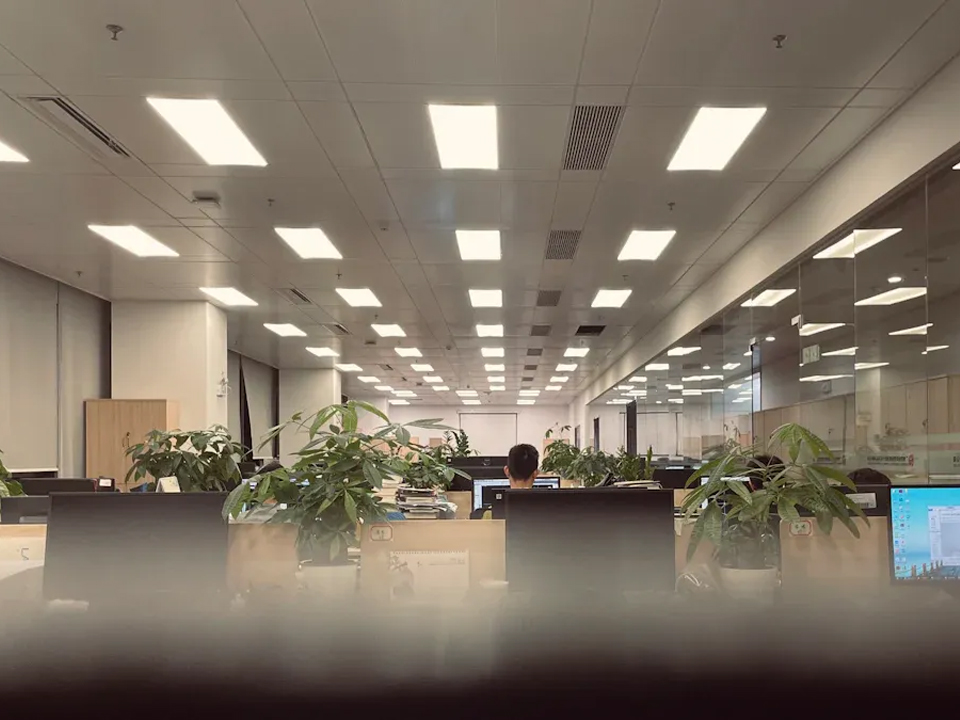
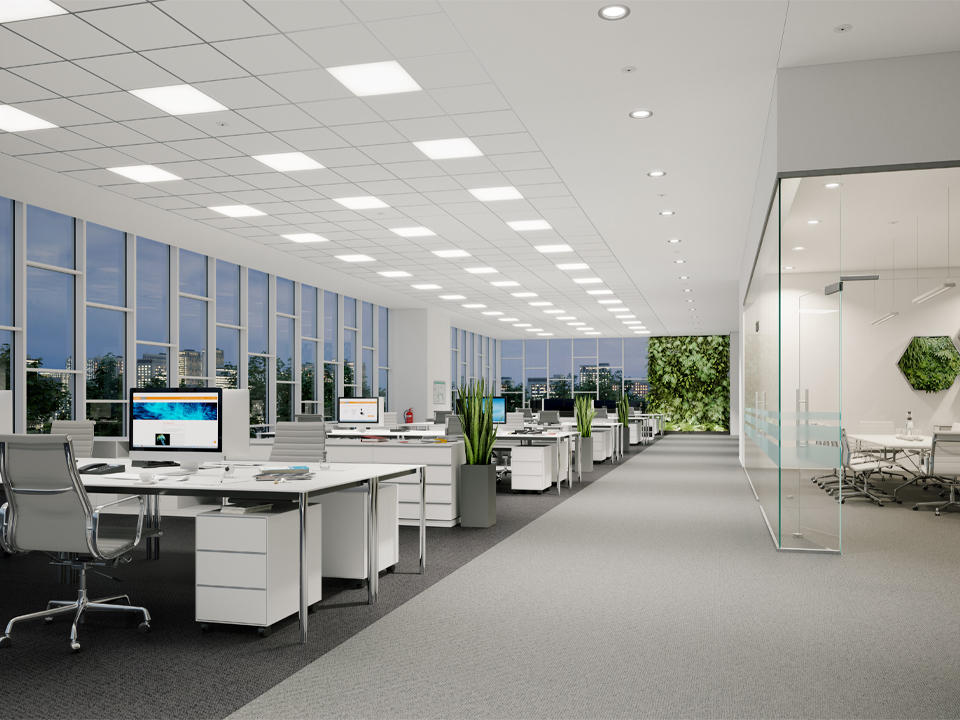
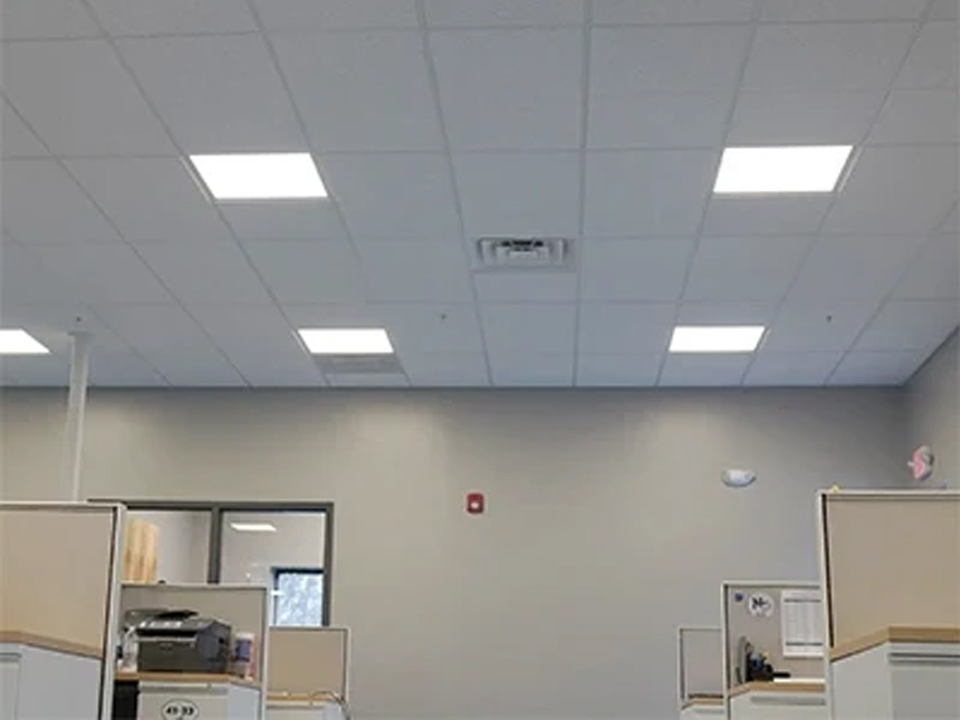
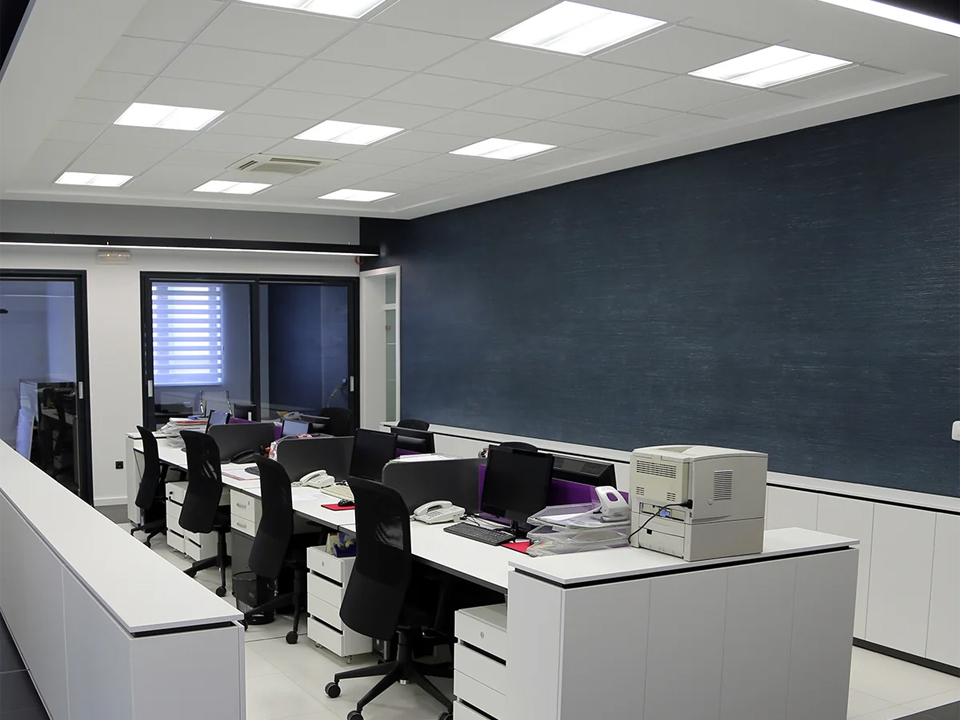
Vous n'avez toujours pas trouvé la bonne solution d'éclairage commercial ? Parlez-en à notre équipe de projet.
Si vous avez consulté le site web ou si vous avez déjà discuté des options avec le service des ventes, mais que vous avez encore besoin d'une orientation plus claire, envoyez votre demande ici. Notre équipe examinera votre application, les spécifications visées et les contraintes du projet, puis vous répondra en vous indiquant la marche à suivre : ce qui convient, ce qui doit être confirmé et la voie la plus rapide pour obtenir un devis et des fichiers prêts à l'emploi pour votre projet.
Examen direct de votre application, des spécifications et des contraintes du projet pour un devis plus clair.
Correspondance des produits en termes d'angle de rayonnement, de CCT / CRI, de pilotes, de gradation et d'options de contrôle.
Soutien à la documentation du projet, y compris les feuilles de coupe, les notes de câblage et les fichiers IES / LDT lorsqu'ils sont disponibles.
Conseils OEM / ODM pour les étiquettes, l'emballage, la finition du boîtier et les exigences de la marque privée.
Obtenir un devis rapide pour l'éclairage LED commercial
Conçu pour les concepteurs, les architectes, les entrepreneurs, les grossistes et les acheteurs de projets. Faites-nous part de votre application, de la quantité et des spécifications souhaitées pour obtenir des prix directs, des conseils sur les délais de livraison et une assistance prête à l'emploi pour les projets aux États-Unis et dans l'Union européenne.
Options prêtes à l'emploi : faisceau / optique, cibles CCT / CRI / SDCM, pilotes, gradation et intégration des commandes.
Documentation du projet : feuilles de coupe, dessins et fichiers IES / LDT, le cas échéant.
Support OEM / ODM : UGS, emballages, étiquettes, manuels et étiquettes prêtes à l'emploi pour les codes-barres sous marque privée
Qualité stable pour les déploiements : UGS répétables, points de contrôle du contrôle qualité et approvisionnement modulable pour les appels d'offres et les réapprovisionnements.
NDA disponible sur demande pour les dessins détaillés et les dossiers de projet
Office LED Retrofits That Reduce Glare and Overlighting Fast
Since efficient gallium nitride (GaN) and indium gallium nitride (InGaN) LED plans can drive considerable luminescent flux through a tiny aperture, a reckless one-for-one swap frequently decreases watts while raising resource luminance, display representations, aesthetic comparison, and problems from individuals that never ever requested a brighter ceiling.
So why are workplaces still acquiring lumens as if even more light instantly means much better light?
When I assess workplace LED retrofits, I seek what the proposal omits: target lux, Unified Glare Score (UGR), chauffeur dimming range, control sequences, photometric documents, and post-installation approval measurements. If those things are missing, the bid is not a lights style. It is a stock deal.
The Hard Fact: One-for-One Retrofits Protect the Incorrect Lighting
A commercial LED lighting retrofit is not immediately an anti-glare office lights job. Changing a 2 × 32W fluorescent troffer with a high-output LED panel might reduce connected tons from roughly 72W, including ballast losses, to 30W. Yet it can still make the area feel harsher.
The human eye does not review watts. It reviews luminance, comparison, position, and reflection.
Glow and overlighting are additionally various failures:
Pain glow happens when bright resources or apertures rest within the occupant’s field of view.
Mirrored glare shows up when ceiling luminaires are mirrored on displays, glass dividers, or shiny workdesks.
Overlighting indicates the supplied illuminance surpasses what the task, regional criterion, or occupant requires.
Poor harmony produces intense and dark patches, triggering the eye to adapt consistently even when ordinary lux looks appropriate.
An area can balance 300 lux and still consist of a painfully brilliant exposed LED resource. Another room can keep 800 lux with affordable uniformity and reduced determined UGR yet stay wastefully overlit.
That distinction transforms the solution. Lowering can fix excess illuminance promptly, yet it might not heal straight glow if the luminaire’s releasing surface stays noticeable. A diffuser may soften an aperture, but a cheap diffuser can also trap warm, distort circulation, and press the installer to raise result again.
Measure Lux, Luminance, UGR, Flicker, and Geometry First
The fastest office lighting upgrade begins with a brief area audit. I would certainly not approve component purchase up until the service provider records the following:
Horizontal illuminance at approximately 0.75 metres over the flooring, making use of a grid across actual workstations.
Readings after dark and during representative daylight problems.
Seated eye positions, display alignment, home window instructions, and noticeable luminaire apertures.
Minimum, average, and maximum lux– not merely the room average.
Owner grievance areas, specifically frustrations, screen reflections, and “as well intense” records.
Driver protocol, including stage dimming, 0– 10V, DALI-2, or one more control system.
Luminaire IES or LDT photometric information and room-specific UGR estimations.
A portable lux meter can not determine pain glare by itself. UGR depends upon luminaire luminance, background luminance, room dimensions, observer position, and viewing instructions. And a brochure statement such as “UGR <
Just How to Deal With Overlighting Without Creating Dark Patches
I have a blunt view: 500 lux ought to not be treated as a sacred number used wall-to-wall.
Thorough record job may warrant that degree at the task airplane. Hallways, flow locations, casual cooperation areas, and screen-heavy workstations can have different needs. Flooding every square metre to the highest task requirement wastes power and commonly creates aesthetic fatigue.
The far better approach is job– ambient lighting:
Establish comfortable, consistent ambient lights throughout the office.
Add controllable job light where detailed work really needs even more lighting.
Use premium trim to avoid luminaires from operating above the commissioned maximum.
Separate boundary and indoor fixtures right into different daylight teams.
Protect an appropriate minimum-to-average uniformity proportion while reducing output.
Review dividers, surfaces, furnishings, and monitor placements after layout modifications.
Reduce result prior to removing components. If a reduced dimming degree keeps the required minimum lux and uniformity, the issue can be dealt with without ceiling job. Component elimination need to follow a new photometric estimation; or else, the result is a checkerboard of intense and dark workdesks.
Match Each Luminaire to the Workplace Zone
Fixture selection must adhere to the aesthetic job and ceiling geometry. Power level is just an electrical input.
For open-plan ceilings, a 30W straight business LED fixture for open offices can be shortlisted where constant distribution and organized ceiling lines are needed. Approval needs to still rely on its IES data, aperture luminosity, driver efficiency, installing height, and room-specific UGR.
Where ceiling height permits, a 40W suspended direct LED light for open-office workstations might sustain a direct– indirect approach. Sending component of the output toward the ceiling can reduce severe luminance contrast, but just if suspension height, direct-to-indirect proportion, and workstation spacing are determined.
For meeting locations, perimeter zones, or adaptable ceiling systems, an 18W magnetic track grille light for workplace ceilings deals directional flexibility. I would maintain its beam of light far from seated sightlines and reflective screens; an aimable luminaire intended terribly is just adjustable glow.
And no, I would not define façade wall washing machines, retail track lights, or gallery limelights as general office ambient illumination simply due to the fact that they show up in the very same product catalogue. Application self-control issues.
Select a larger luminous surface, louvre, or better-controlled optic
Provider gives lumens however no photometric file
Screen representations
Pictures from customer setting, monitor angle, visible showed resources
Reposition screen or decrease the upseting zone
Change component placement or distribution
Examination did just while standing
General overlighting
Minimum, ordinary, and maximum work-plane lux
Dark areas to the gauged demand
Lower-output luminaires or task– ambient design
Every component defaults to 100%
Daytime overlighting
Daylight-only and combined-light readings
Retune daytime action
Smaller boundary control teams
One sensing unit manages a deep floorplate
Patchy lighting
Minimum-to-average ratio and spacing
Rebalance adjacent outcomes
Recalculate spacing and beam of light circulation
Typical lux conceals extremely low minimums
Flicker issues
PstLM, SVM, lowering degree, motorist design
Test a safe result range
Change inappropriate vehicle driver or control
“Flicker-free” shows up without examination data
Lights left on
Tenancy logs, timeout, override period
Reduce timeout and correct level of sensitivity
Payment job or luminaire-level controls
Controls set up with factory defaults
Compute Payback Without Supplier Fantasy
Think about an illustrative 100-fixture office:
Existing load: 72W per fluorescent fixture
Proposed LED lots: 30W per fixture
Procedure: 12 hours per day, 260 days per year
Power rate: $0.15/ kWh
Illustrative installed job cost: $18,000
The fixture-only saving is:
100 × (72W − 30W) × 3,120 hours ÷ 1,000 = 13,104 kWh per year
At $0.15/ kWh, that equates to $1,965.60 annually. If appointed controls remove one more presumed 25% of the post-retrofit LED usage, they conserve 2,340 kWh– or one more $351 per year.
Complete modelled energy savings become 15,444 kWh and $2,316.60 every year, producing an energy-only easy repayment of roughly 7.8 years.
If a validated $4,000 refund and $1,200 in annual prevented upkeep apply, the same instance is up to approximately 4.0 years. Those values are modelling assumptions, not product quotations.
Any type of provider promising a two-year payback without documenting operating hours, toll, need charges, labour, upkeep, discounts, control settings, and standard power level is selling a headline. Ask for the spread sheet.
Commissioning Is the Actual Product
A dimmable luminaire is not always a dimmed luminaire. That difference can eliminate both convenience and savings.
The series of operations need to state:
Maximum and minimal outcome for every room type.
Tenancy or job reasoning and timeout duration.
Daylight sensing unit grouping, sensitivity, and reaction rate.
Hand-operated override practices and expiration time.
Presentation, cleaning, after-hours, and emergency situation scenes.
Colour-temperature settings where tunable-white lights is made use of.
Practices after power loss, network loss, or motorist replacement.
Which celebration has manager access and future adjustments.
Bargain must consist of IES or LDT files, LM-79 electrical and photometric information, relevant LM-80/ TM-21 life forecasts, driver model numbers, control-zone drawings, programmed setpoints, spare-component information, and post-installation lux records.
Then return after seven and 30 days. Speak with individuals sitting under the fixtures, inspect control logs, and change the setups. Appointing is not an afternoon checkbox; it is the procedure that transforms equipment right into a workplace lighting system.
Questions fréquemment posées
What is a workplace LED retrofit?
A workplace LED retrofit is the organized replacement or alteration of existing fluorescent, halogen, or early-generation LED illumination with efficient luminaires, compatible chauffeurs, optics, and controls that fulfill determined targets for illuminance, glare, uniformity, colour high quality, flicker, power usage, maintainability, and resident convenience without rebuilding the whole ceiling system.
In plain terms, it enhances existing office lights facilities as opposed to dealing with every job as a total new-build installment.
Just how can workplace LED glow be reduced quickly?
Minimizing glare in office illumination indicates controlling high luminance within the eye’s field of vision by combining protected or diffused optics, lower premium outcome, reasonable component positioning, screen-aware intending, daytime monitoring, and dimming, after that validating the result at seated eye height across real computer workstations as opposed to judging brightness from the entrance.
High-end trim is usually the fastest reversible test. If discomfort remains after output is lowered, examine the luminaire aperture, optic, placement, and showed geometry.
How do I know whether a workplace is overlit?
Workplace overlighting is a condition in which determined illuminance surpasses what the visual job, neighborhood requirement, or owner in fact requires, usually since components run at 100% in spite of daylight, low partition elevations, altered formats, or reliable substitute luminaires that provide even more functional light than the fluorescent system they changed.
Measure minimum, average, and optimum lux at the job airplane under both daytime and after-dark conditions. Do not diagnose overlighting from wattage or resident impressions alone.
What are the best workplace LED retrofit solutions?
The very best office LED retrofit solution is a zone-specific system– usually low-glare ambient linear lights plus dimmable vehicle drivers, occupancy or vacancy picking up, daytime response, and selective job lights– selected from field dimensions and photometric estimations, not from a one-for-one power level promise or the highest lumens-per-dollar number revealed on a distributor quotation.
Open offices, exclusive rooms, reception locations, corridors, and window zones need to not be pushed into one component kind or control account.
Do business LED retrofit packages save sufficient energy to validate their cost?
Industrial LED retrofit packages save power when their gauged input watts and control behaviour reduce yearly kilowatt-hours without compeling higher result to make up for inadequate optics; financial savings rely on standard power level, operating hours, high-end trim, occupancy, daylight, vehicle driver performance, commissioning, and whether the preserved housing takes care of warmth and light distribution correctly.
Calculate power, maintenance, demand, disposal, refund, and commissioning costs individually. A brief repayment works, yet a retrofit that produces glow grievances is not an effective investment.
Demand Proof Prior To You Authorize the Retrofit
Give each bidder the shown ceiling plan, ceiling height, fixture count, baseline wattage, running hours, electrical energy toll, workstation design, issue map, and measured lux grid. Ask for 2 priced choices: a controls-first correction and a complete fixture-plus-controls retrofit.
Require each proposition to state maintained lux, UGR presumptions, lighting power density, yearly kWh, driver protocol, installed rate, guarantee, control series, and appointing extent.
After that put one problem into the approval file: the task is not complete until post-installation dimensions reveal that glow and overlighting have actually been lowered at the workdesks where people actually function.
If a prospective buyer declines that test, discover an additional prospective buyer.