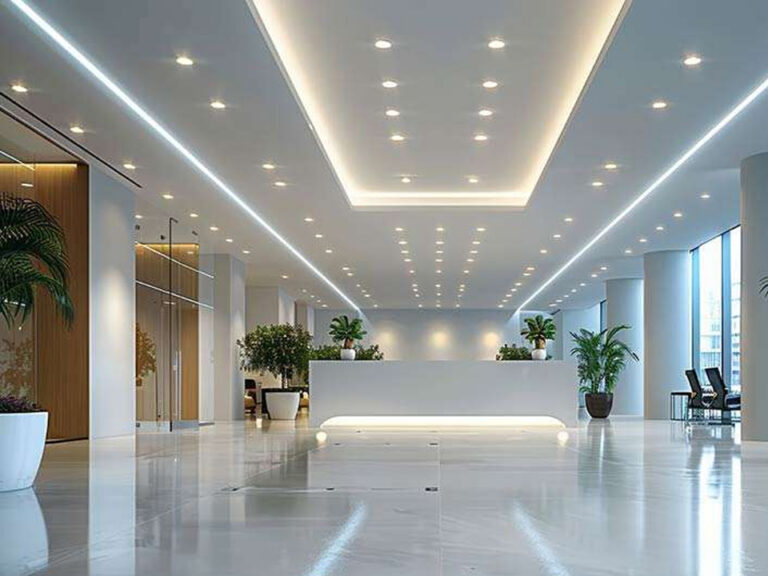
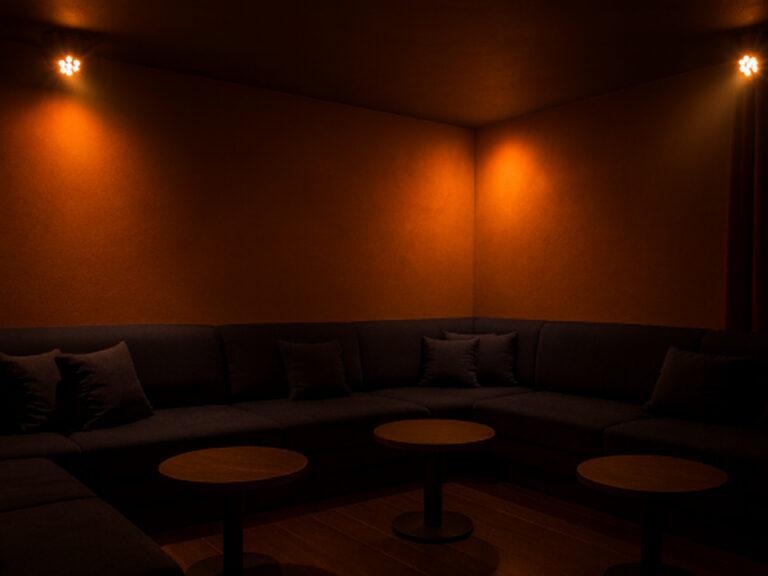
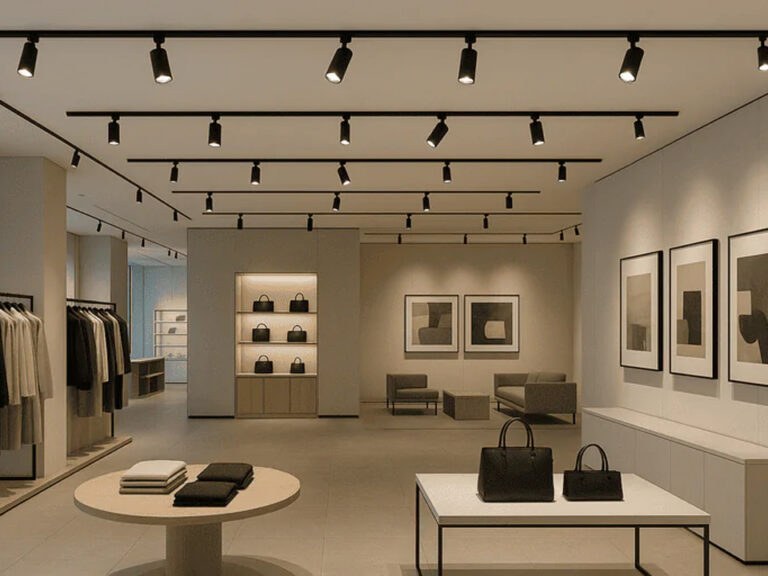
Sehen Sie immer noch nicht die richtige Beleuchtungslösung für Ihr Unternehmen? Sprechen Sie mit unserem Projektteam.
Wenn Sie sich die Website angesehen oder bereits Optionen mit dem Vertrieb besprochen haben, aber noch eine klarere Richtung benötigen, senden Sie Ihre Anfrage hier. Unser Team wird Ihre Anwendung, Zielspezifikationen und Projektbeschränkungen prüfen und Ihnen dann einen praktischen Vorschlag für den nächsten Schritt unterbreiten: was passt, was muss bestätigt werden, und wie kommen Sie am schnellsten zu einem Angebot und zu spezifizierbaren Dateien für Ihr Projekt.
Direkte Prüfung Ihres Antrags, Ihrer Spezifikationen und Projektbeschränkungen für einen klareren Angebotsweg.
Produktabstimmung in Bezug auf Abstrahlwinkel, CCT/CRI, Treiber, Dimm- und Steuerungsoptionen.
Unterstützung bei der Projektdokumentation, einschließlich Schnittzeichnungen, Verdrahtungsnotizen und IES/LDT-Dateien, sofern verfügbar.
OEM / ODM Beratung für Etiketten, Verpackungen, Gehäuseoberflächen und Eigenmarkenanforderungen.
Erhalten Sie ein schnelles Angebot für kommerzielle LED-Beleuchtung
Entwickelt für Designer, Architekten, Bauunternehmer, Großhändler und Projekteinkäufer. Teilen Sie uns Ihre Anwendungs-, Mengen- und Zielspezifikationen mit, um Direktpreise, Vorlaufzeiten und Unterstützung bei Projekten in den USA und der EU zu erhalten.
Low Glare Optics Are Gaining Ground in Offices and Premium Spaces
Yet plenty of business insides still count on brilliant LED fixtures that generate extreme reflections, noticeable hotspots, and unpleasant contrast. The problem is not necessarily insufficient light outcome. It is often the way that light leaves the component, takes a trip through the room, and gets to the human eye.
Low glare lights addresses this problem with optical engineering, consisting of recessed lights, protecting, reflectors, lenses, regulated light beam angles, and meticulously managed luminance. In modern workplaces, these information can affect display convenience and concentration. In resorts, restaurants, high-end houses, and shop retail, they likewise form how products, products, and building details are regarded.
Below is the sector’s unpleasant fact: a component can look costly, deliver impressive lumen result, and still perform poorly in a real room.
The shift toward low-glare optics mirrors an extra advanced understanding of illumination design. Architects and illumination consultants significantly need to assess the high quality of illumination rather than judge a luminaire by power level, appearance, or brochure photography alone.
Why Reduced Glare Illumination Is Becoming an Industrial Layout Top Priority
Glow is not simply an issue of a lamp appearing too intense. It can arise when a luminous source creates extreme brightness about its surroundings, when representations interfere with visual jobs, or when strong differences in luminance make the eye job harder to adjust.
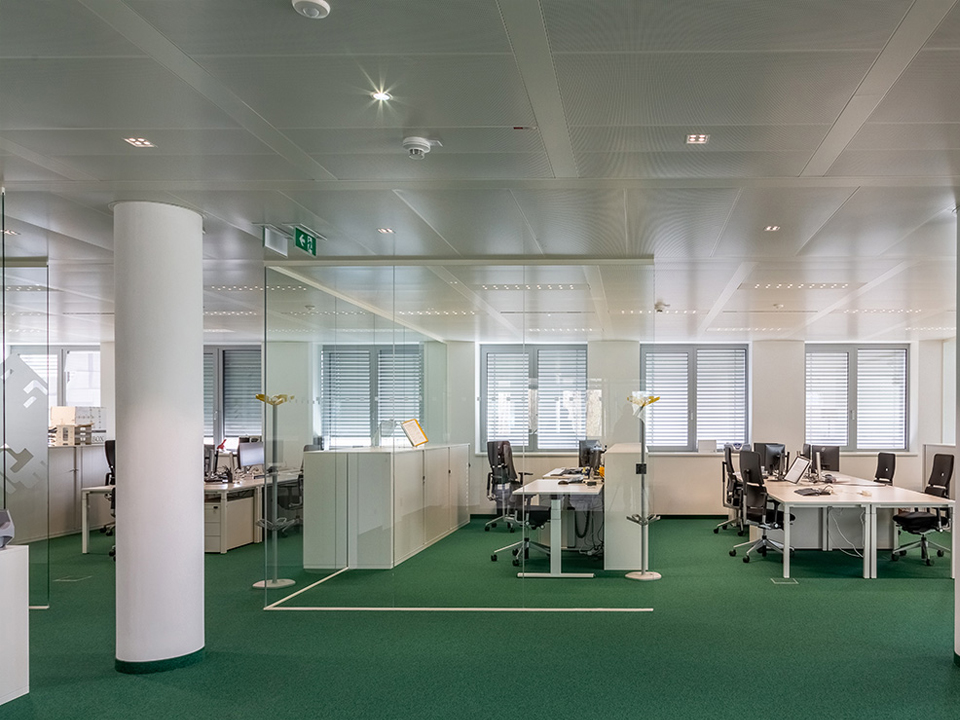
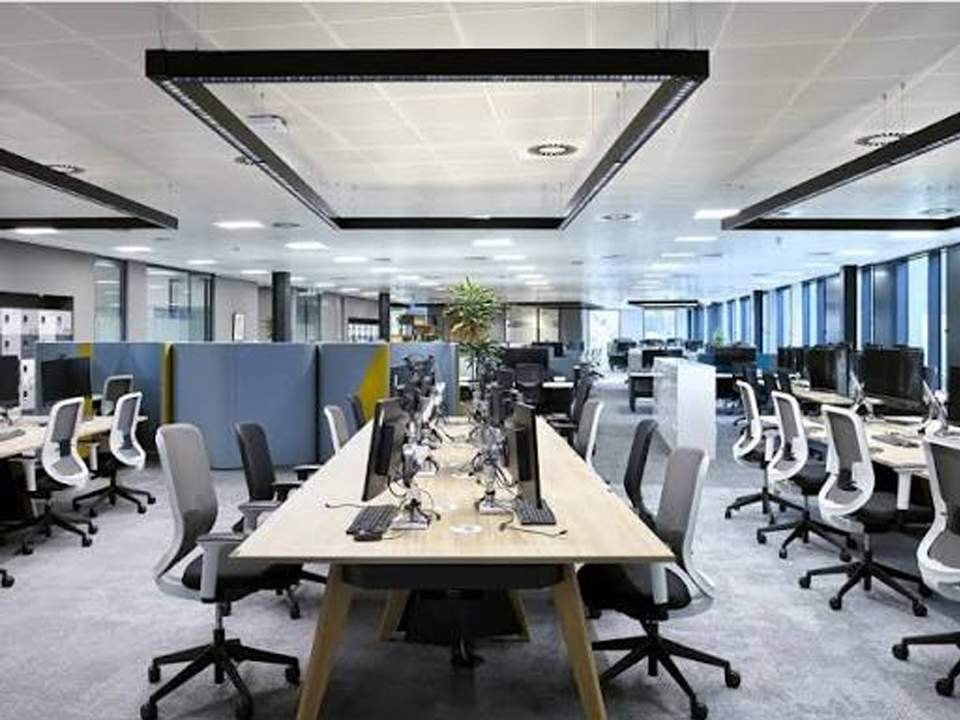
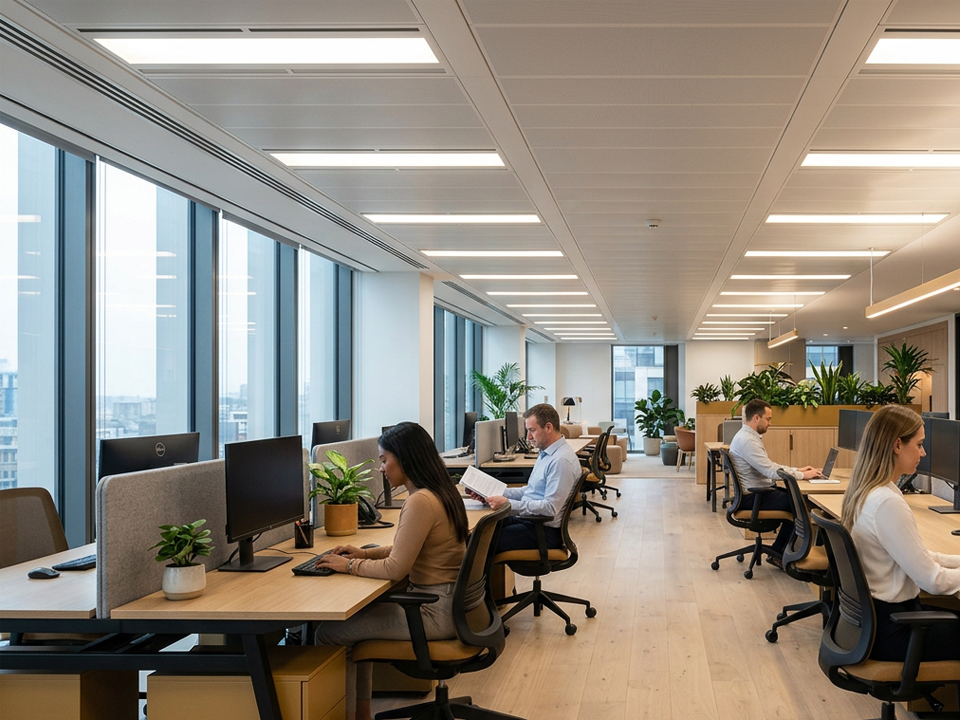
In offices, the consequences are sensible. Workers relocate between displays, records, conferences, and daylight-filled windows, often while being in taken care of positions for hours. A badly positioned downlight can show straight right into a display or remain within a worker’s field of vision throughout the day.
Costs spaces present one more set of needs. A restaurant requires comfortable table illumination without compromising ambience. A shop needs sufficient directional light to disclose material texture, jewellery coatings, and product colour without amazing clients. A gallery needs to attract focus towards displays as opposed to the luminaires brightening them.
Low-glare layout responds to these completing requirements.
Yet we need to be specific: reducing glow does not instantly make an area healthier, extra productive, or even more energy-efficient. Those results depend on the full lighting installment, including illuminance, distribution, colour top quality, daytime, controls, and the tasks happening.
What Anti-Glare Optical Innovation Actually Adjustments
The optical system identifies just how a component disperses its result. Depending upon the layout, that system may utilize deep-set LED chips, precision reflectors, lenses, baffles, diffusers, or mixes of these components.
The purpose is not always to make the light undetectable from every angle. It is to regulate where high luminance appears, lower sidetracking direct views of the LED, and provide valuable light to the surfaces that need it.
Numerous layout methods are particularly pertinent.
Deep-recessed optics: Positioning the light source further inside the real estate can restrict direct presence from common seeing angles.
Reflector-based systems: Thoroughly developed reflectors reroute light toward the target location while controlling the distribution of illumination.
Diffused optics: Diffusers spread light across a bigger apparent surface, although inadequate applications can introduce losses or create their own illumination issues.
Accuracy lenses: Optical lenses shape the beam of light for details jobs, such as brightening a conference table, retail display, or artwork.
Honeycomb louvres and protecting devices: These can restrict high-angle light and improve visual protecting, depending on the fixture and checking out position.
The important distinction is that these technologies are not interchangeable. A diffuser may soften the look of a resource, while a deep reflector might hide it better. Neither guarantees great performance without considering the space’s geometry and the designated watching angles.
That is why architectural lighting optics deserve assessment as a total system as opposed to as an attractive attribute on a product specification sheet.
Writing
UGR Scores: What Customers Need To Examine Prior To Specifying a Fixture
UGR stands for Unified Glare Ranking, a statistics made use of to examine discomfort glow from interior lights installments. It is not an universal rating published on a luminaire that ensures the exact same aesthetic experience in every room.
That difference matters.
The UGR worth depends upon the installment, consisting of luminaire luminosity, history luminosity, area geometry, and the observer’s position and checking out direction. A component promoted as low-glare might as a result generate a different result when set up over a reflective seminar table or directly over a workstation.
Developers frequently run into UGR 19 as a target in office-lighting specifications, although the ideal demand depends upon the job, applicable criteria, and job quick. Satisfying a mathematical target ought to be part of the assessment, not the entire analysis.
For purchasers, I advise asking for the complying with info prior to accepting a commercial lights plan:
UGR computations for the recommended room design, where appropriate.
Photometric documents, such as IES or LDT information, for lighting simulation.
Beam of light angle, luminous flux, and luminaire luminosity information.
Colour providing index (CRI) and associated colour temperature (CCT).
Flicker efficiency, dimming compatibility, and control choices.
Installment assistance that deals with ceiling height, spacing, and viewing angles.
A brochure claim is a starting factor. Project-specific photometric proof is a lot more valuable.
What the Research Says Regarding Aesthetic Convenience in Offices
The proof sustains an extra nuanced argument than simply changing every conventional fixture with a low-glare choice.
A 2024 research study released in Building and Atmosphere, titled Assessing the results of illuminance variants on owners’ aesthetic perceptions to figure out acceptable dimming controls of illumination in a little office, explored 33 individuals executing paper-based and computer-based reading tasks under different illumination conditions.
Researchers analyzed workplane illuminance levels of 500, 650, and 800 lux. Their searchings for showed that modifications in illuminance affected visual comfort, with the relationship depending upon the baseline light level and the dimension of the variation. The research also recognized eye exhaustion as a factor related to lowered visual comfort.
The business effects is uncomplicated: illumination controls ought to be appointed attentively. An advanced luminaire can not make up for a boldy set dimming system that develops distracting changes throughout the working day.
A separate body of workplace study enhances the significance of circulation. An analysis of 1,232 workstations across 64 office complex found higher visual complete satisfaction amongst owners with indirect-lens components than amongst those making use of prismatic ceiling lenses. In that study, contentment was 62% with indirect-lens fixtures versus 34% with prismatic lenses. The findings do not establish that every indirect fixture will outshine every prismatic layout, yet they show why optical circulation deserves severe attention.
The University of Virginia’s study right into illumination, glow, and light exposure uses another useful perspective: scientists are comparing glare simulations with high-dynamic-range images and resident actions in real office environments. This strategy highlights a relentless limitation of specification-led design– anticipated efficiency and skilled comfort are not always the same.
For specifiers, the lesson is not to go after a solitary metric. It is to incorporate photometric evaluation, suitable optical layout, practical appointing, and responses from individuals who occupy the area.
Selecting Low-Glare Fixtures for Different Business Atmospheres
The most effective luminaire relies on what the room requires to accomplish. A conference room, a store, and a luxury dining establishment have various seeing settings, ceiling problems, and visual concerns.
For office ceilings, a deep-recessed industrial LED downlight for meeting-room lights is an appropriate choice to examine when managing straight sights of the source of light is a top priority. Its actual suitability relies on verified photometric data and the setup format.
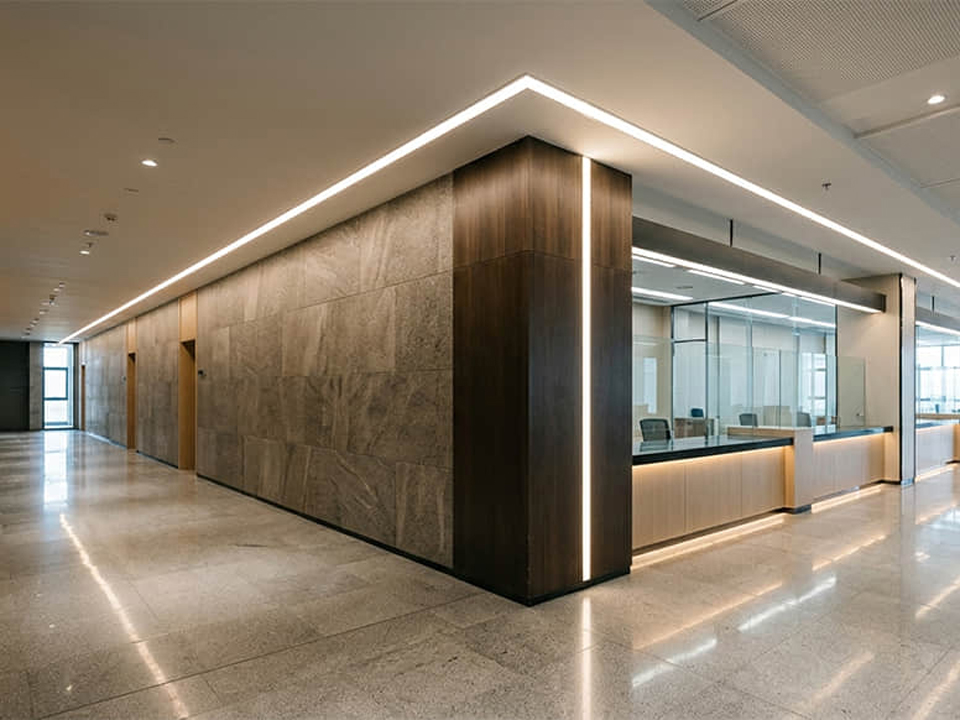
For minimalist interiors, a trimless LED ceiling light for architectural spaces can incorporate with the ceiling finish without introducing a noticeable trim ring. Nevertheless, aesthetic minimalism and glow control are separate layout considerations; the optical system still needs to satisfy the project’s demands.
Retail and friendliness projects need a different balance. A modern LED track head for boutique and gallery displays uses a directional method to highlighting goods and exhibits. A high-CRI LED spotlight for shop product screen is also worth evaluating when accurate colour presentation matters.
In dining establishments, a magnetic pendant light for friendliness layout may add to the intended ambience, yet the designer should likewise examine source visibility from seated positions, light falling on restaurants’ faces, and representations from refined table tops.
These are item categories to check out, not automatic recommendations of determined glare performance. Validate the specifications before treating any kind of certain component as a low-glare solution.
Low-Glare Lighting Compared With Traditional Lights
The complying with comparison summarises regular design tendencies. Real results depend upon the optical building, installment, and space conditions.
Examination aspect
Traditional lights method
Low-glare-oriented method
Resource presence
May subject intense LED chips straight
Typically uses shielding or recessed optics
Beam control
May prioritise wide basic illumination
May usage regulated distributions for details tasks
Visueller Komfort
Depend upon source luminance and positioning
Developed to reduce picked sources of discomfort
Office applications
General circulation and ambient lights
Workstations, meeting rooms, and screen-based jobs
Premium insides
Can offer practical illumination
Can support discreet building assimilation
Item examination
Frequently focuses on power level and lumen result
Thinks about photometry, luminance, shielding, and space geometry
Price factors to consider
Rely on fixture and setup
May involve higher optical or specification prices, however differs by item
The distinction is not that standard lights is naturally negative. A well-designed standard luminaire might outperform a badly engineered item marketed as anti-glare.
The strongest specification is the one that attaches measurable efficiency to the real problems of usage.
How to Decrease Glare in Office and Luxury Spaces
Lowering glare starts with the room, not the purchasing cart.
Initially, determine the primary viewing instructions. In workplaces, these consist of seated positions, computer system screens, meeting-room sightlines, and locations near home windows. In dining establishments and costs friendliness areas, include seated visitors, reflective tabletops, mirrors, and refined stone surfaces.
Second, coordinate component positioning with furniture and architectural components. Even an efficient optical system can become awkward if mounted directly within a common line of vision.
Third, handle luminance comparison. An extremely brilliant ceiling fixture against a dark ceiling can stay aesthetically noticeable also when the total space illumination suffices. Layered illumination can assist stabilize ambient illumination with task and accent illumination.
Fourth, choose proper colour top quality. CRI, CCT, and spooky qualities influence just how things show up, however none is a straight measure of glare. A 3000 K source of light is usually suitable for cozy hospitality setups, while 3500– 4000 K is often thought about for workplaces; the last selection must mirror the project’s aesthetic tasks and design objectives.
Finally, commission the system under practical conditions. Test daylight contributions, screen reflections, lowering changes, and resident viewpoints as opposed to counting exclusively on an illustration or a showroom demo.
Häufig gestellte Fragen
What is low-glare illumination?
Low-glare lights is a technique to lighting that uses optical style, resource securing, light distribution, and appropriate positioning to reduce unpleasant brightness and disruptive reflections while preserving helpful illumination for the job. Its efficiency depends on the fixture and the total installation, so the term alone does not assure a certain UGR worth or level of aesthetic convenience.
What UGR ranking is best for workplace lighting?
A UGR ranking is an action of discomfort glare computed for a specified indoor illumination setup, taking account of elements such as luminaire luminosity, history luminosity, and viewing geometry. UGR 19 is a frequently encountered workplace style target, but the proper limitation depends on the work done, the relevant specification, and the real space conditions.
Are recessed LED downlights instantly low-glare?
Recessed LED downlights are ceiling-mounted luminaires in which the source of light rests inside the fixture real estate, possibly lowering straight presence of the LED from selected watching angles. However, recess deepness, reflector design, beam of light distribution, and placing placement figure out the real outcome, implying that recessed building and construction alone can not establish low-glare performance.
What is the distinction between anti-glare optics and a diffuser?
Anti-glare optics are optical parts or setups created to regulate source exposure, luminance distribution, or light direction, while a diffuser belongs that scatters light to make its circulation much more consistent. A diffuser can decrease the look of private LED points, yet it does not immediately remove glow because the diffuser itself might continue to be bright.
Does low-glare illumination improve workplace productivity?
Low-glare illumination is a lighting-design method intended to lower visual pain triggered by inappropriate source brightness, representations, or circulation, therefore supporting a much more comfy environment for aesthetic jobs. Whether it enhances efficiency depends upon numerous variables, consisting of job needs, daytime, functional designs, controls, and specific reactions; a glare-reduction function alone can not corroborate an efficiency claim.
Just how should buyers choose low-glare lighting for costs spaces?
Low-glare illumination for premium rooms must be picked by matching the component’s optical efficiency, colour quality, beam of light circulation, and aesthetic protecting to the meant use of the room. Purchasers must evaluate photometric data, evaluate representative viewing angles, take into consideration reflective surfaces, and verify performance through project-specific estimations or mock-ups before devoting to a total installation.
The Business Instance for Better Optical Design
Reduced glare optics are picking up speed because designers are being asked to provide greater than illumination. Workplaces require comfortable functioning conditions, retail environments need regulated product presentation, and friendliness locations need ambience without unnecessary visual discomfort.
However much better optics are not a substitute for far better layout.
The most defensible specification incorporates suitable UGR analysis, photometric evidence, practical fixture positioning, colour-quality needs, and properly commissioned controls. It likewise distinguishes documented efficiency from marketing language– a difference that matters when budget plans, resident expectations, and long-term job outcomes are at stake.
For your following business lights task, review the readily available fixture choices, compare their technological requirements, and shortlist products that suit the space’s actual visual needs. Check out deep-recessed business downlights, trimless building ceiling lights, and high-CRI retail limelights as starting factors for a more taken into consideration lights requirements.
The objective is not merely to make light less obvious. It is to make the light work better for individuals and rooms it offers.