Sehen Sie immer noch nicht die richtige Beleuchtungslösung für Ihr Unternehmen? Sprechen Sie mit unserem Projektteam.
Wenn Sie sich die Website angesehen oder bereits Optionen mit dem Vertrieb besprochen haben, aber noch eine klarere Richtung benötigen, senden Sie Ihre Anfrage hier. Unser Team wird Ihre Anwendung, Zielspezifikationen und Projektbeschränkungen prüfen und Ihnen dann einen praktischen Vorschlag für den nächsten Schritt unterbreiten: was passt, was muss bestätigt werden, und wie kommen Sie am schnellsten zu einem Angebot und zu spezifizierbaren Dateien für Ihr Projekt.
Direkte Prüfung Ihres Antrags, Ihrer Spezifikationen und Projektbeschränkungen für einen klareren Angebotsweg.
Produktabstimmung in Bezug auf Abstrahlwinkel, CCT/CRI, Treiber, Dimm- und Steuerungsoptionen.
Unterstützung bei der Projektdokumentation, einschließlich Schnittzeichnungen, Verdrahtungsnotizen und IES/LDT-Dateien, sofern verfügbar.
OEM / ODM Beratung für Etiketten, Verpackungen, Gehäuseoberflächen und Eigenmarkenanforderungen.
Erhalten Sie ein schnelles Angebot für kommerzielle LED-Beleuchtung
Entwickelt für Designer, Architekten, Bauunternehmer, Großhändler und Projekteinkäufer. Teilen Sie uns Ihre Anwendungs-, Mengen- und Zielspezifikationen mit, um Direktpreise, Vorlaufzeiten und Unterstützung bei Projekten in den USA und der EU zu erhalten.
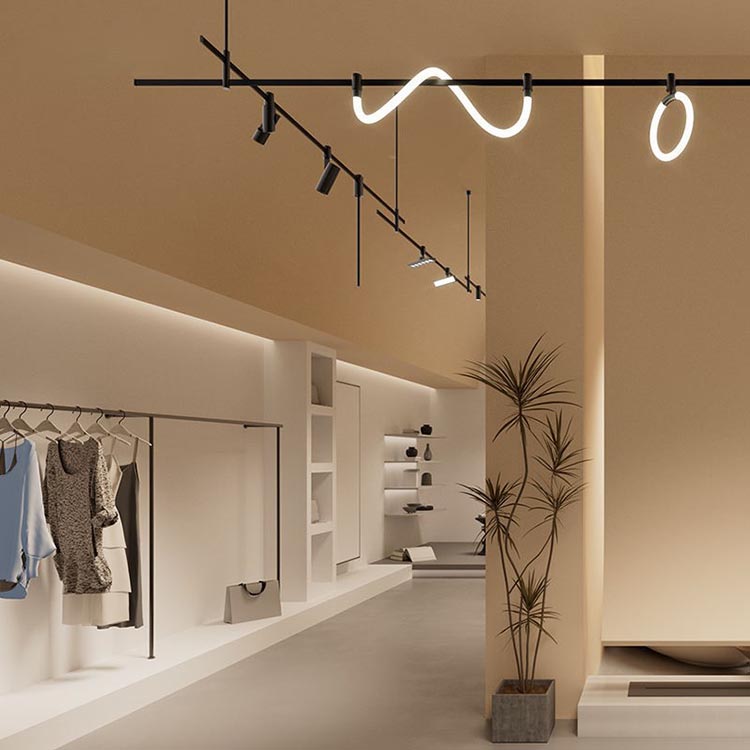
Retail Track Lighting Layouts for Flexible Merchandising Displays
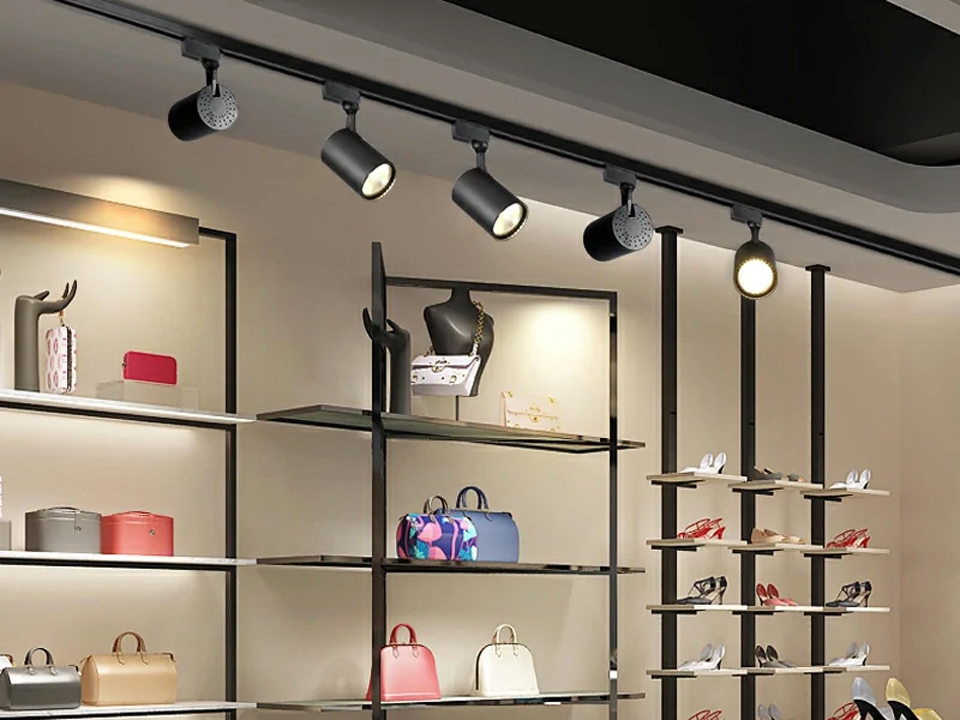
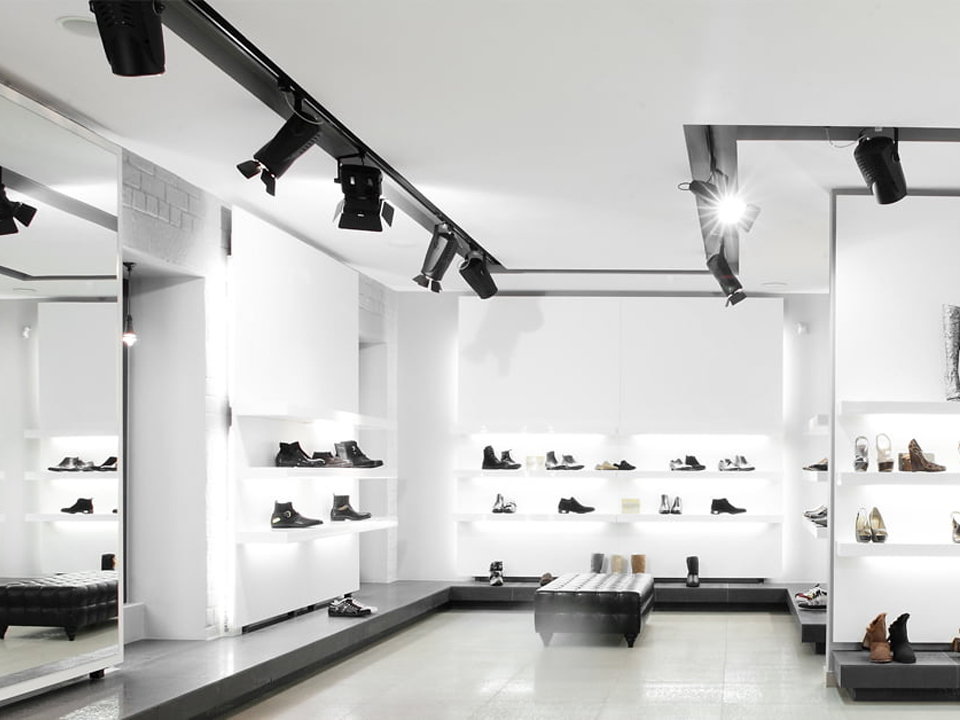
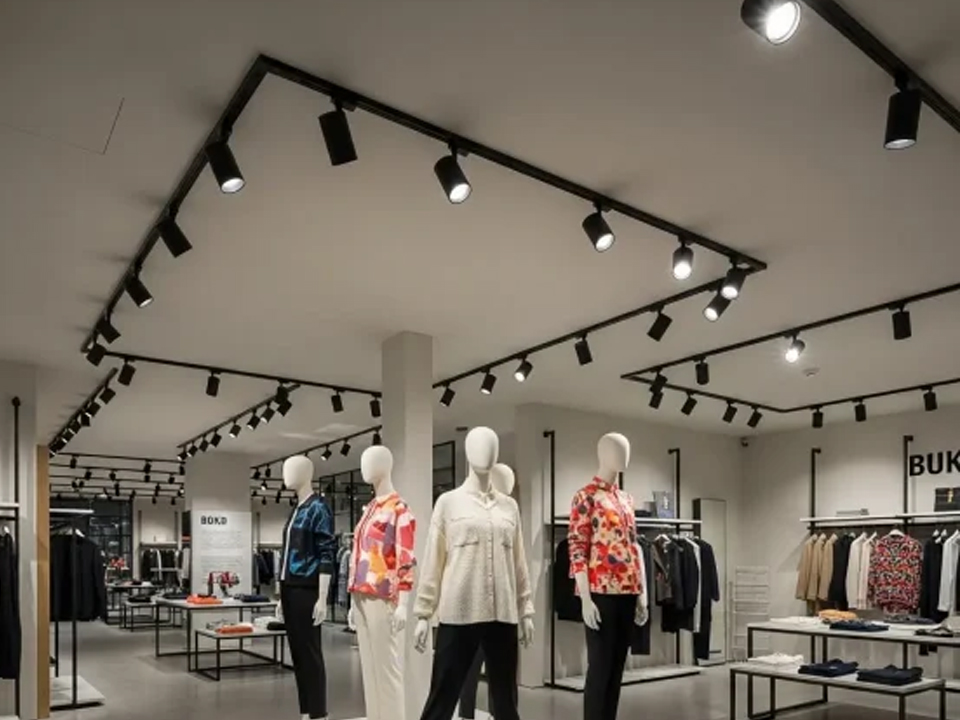
A retail mounted lights layout should respond to display tables, wall bays, mannequins, gondolas, cash money wraps, and seasonal marketing zones– even when those aspects move every six weeks and the initial electric drawing becomes obsolete.
Why do so lots of shops still prepare track heads like ceiling decorations?
Due to the fact that equally spaced components look organized on a shown ceiling plan. They are likewise simple to price. But aesthetic merchandising illumination is judged at the item aircraft, not the ceiling aircraft. A flawlessly in proportion installment can generate weak focal points, tough darkness, mirror glare, and costly pools of light falling in between components.
My setting is blunt: adaptability does not mean mounting more track. It suggests positioning helpful track in the appropriate orientation, picking interchangeable optics, separating control zones, and documenting intending placements all right that shop staff can reset the lights after a merchandising modification.
The Hard Fact About Retail Mounted Lights Layouts
Many retail illumination styles are overlit and under-directed.
A designer raises ambient illumination because the display screens look flat. Then the contractor includes even more track heads due to the fact that the shop still does not have aesthetic hierarchy. The outcome is greater linked tons, more glare, hotter ceilings, and no clear sign of where the client ought to look.
The better technique is contrast. UC Davis’s California Illumination Modern technology Center recommends utilizing lower ambient degrees to heighten the impact of screen and accent lighting, while purposefully intended luminaires accentuate merchandise. Its 2022 nonresidential guide sustains the California requirements that worked on January 1, 2023.
That principle matters greater than an universal lux target. A 1,000-lux display bordered by 700 lux feels fairly boring. A 700-lux screen versus 200 lux can look vibrant and willful.
A lot more light sheds.
The target should be a clear brightness pecking order: blood circulation initially, product 2nd, focal screens strongest, and ceilings aesthetically quiet. Would certainly a consumer recognize where to look without reviewing the signs?
Build the Layout From Product, Not Track Spacing
Start with a retailing plan revealing the potential display families:
Perimeter shelving and wall bays
Freestanding racks and gondolas
Present tables
Mannequins and feature plinths
Window displays
Advertising endcaps
Checkout and service counters
Adaptable seasonal zones
Then note the surface areas that really need illumination. An upright garments wall surface requires a different track relationship than a horizontal table. Fashion jewelry, cosmetics, shiny product packaging, and sleek shoes introduce reflections that matte textiles do not.
For border display screens, I generally like track parallel to the wall surface. This allows a number of flexible heads create overlapping vertical beam of lights and permits components to move when bays alter size. A practical starting obstacle is roughly 600– 1,200 mm from the wall, however ceiling elevation, rack deepness, intending angle, beam of light distribution, and glow establish the last setting.
For central display screens, orient track across most likely merchandising areas instead of mapping today’s fixtures. Identical runs often work well in rectangle-shaped stores; a perimeter track plus chosen cross-runs generally offers smaller sized boutiques more useful intending alternatives.
Do not amaze every feasible line. That is flexibility cinema.
Usage Beam Geometry Before Selecting Power Level
Track-light wattage is not a layout technique.
A 15 W luminaire with a focused optic can provide better strength on a little item than an improperly regulated 30 W flooding. What issues is the relationship among beam angle, placing height, aiming range, center-beam candlepower, target dimension, and surface area reflectance.
Light beam diameter can be approximated as:
$$. \ text =2 \ times \ text \ times \ tan \ left( \ frac 2 \ right). $$
At a 3 m throw range:
Small beam of light angle
Approximate beam of light size
Regular retail use
10 ° 0.52 m
Fashion jewelry, sculpture, hero item
Visible location
15 ° 0.79 m
Mannequin, stand, endcap
Harsh comparison
24 ° 1.28 m
Apparel bay, small display screen table
Spill beyond target
36 ° 1.95 m
Garment rack, wide wall surface screen
Weak focal strength
60 ° 3.46 m
General merchandise laundry
Level appearance
These are geometric beam of light diameters, not promises of kept lux. Photometric data, normally in IES or LDT format, must be tested in the real layout version.
For a hero object, a narrow-beam LED track light for focused item lighting can develop a concentrated centerpiece without raising the whole store’s ambient level. Wider optics need to after that bridge the surrounding product so the structure does not collapse right into separated circles.
The common blunder? Defining one light beam angle anywhere.
Aim for Vertical Light and Controlled Comparison
Retail environments have more upright info than a lot of illumination strategies recognize. Packaging faces consumers up and down. So do hanging garments, indicators, shelving backs, mirrors, mannequins, and brand graphics.
That adjustments whatever.
A floor-focused computation may reveal appropriate average illuminance while faces, items, and wall display screens remain aesthetically dead. We should evaluate upright illuminance at customer eye degree and throughout the complete elevation of product– not simply horizontal lux at 800 mm above the flooring.
For border display screens, an aiming direction around 30 degrees from upright is a helpful beginning factor, not a dealt with rule. Steeper aiming can create difficult shadows beneath shelves. Shallower intending rises glare and may cast consumer shadows throughout the goods.
Usage cross-aiming uniquely. 2 beam of lights showing up from different directions can reveal texture and soften deep shadows on mannequins, but unplanned cross-aiming creates visual noise.
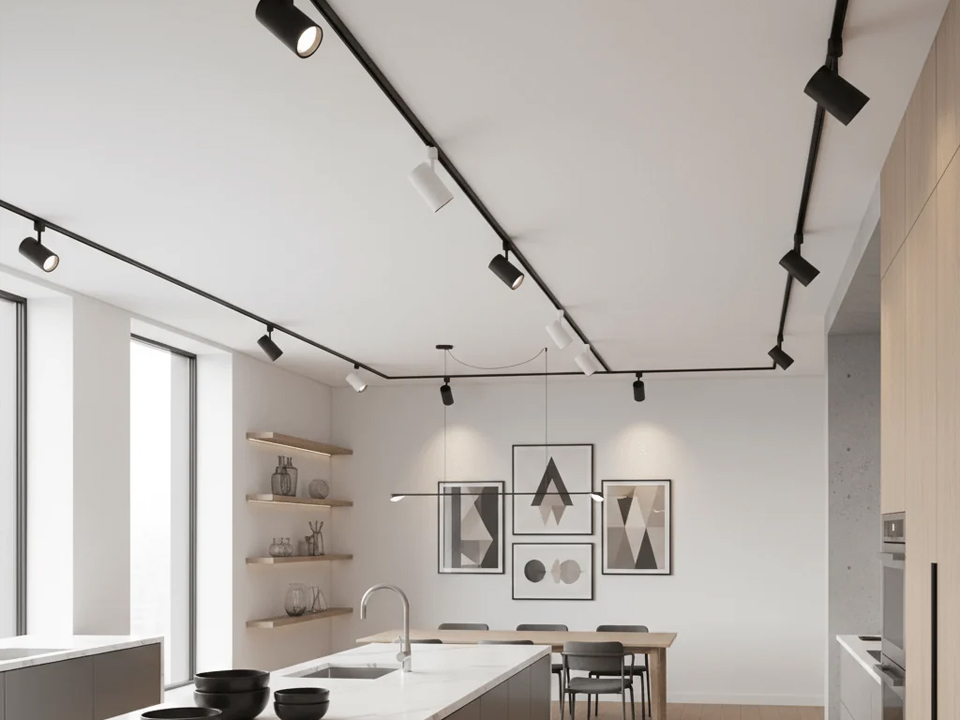
Ein adjustable magnetic track spotlight for display screen illumination is specifically beneficial where light-weight heads need to be rearranged as goods changes. The system’s electric and mechanical compatibility still requires checking; “magnetic track” is not an universal interchange requirement.
Layer Mounted Lights With Quiet Ambient Light
Mounted lights must not execute every work.
It succeeds at instructions, comparison, and adaptation. It is much less persuading as the single resource for consistent blood circulation lights, back-of-house change, or broad low-glare illumination. Loading a ceiling with wide-beam track heads merely turns a flexible system into a costly replacement for downlights.
A stronger retail store lights layout typically incorporates:
Low-glare ambient lighting for flow
Directional mounted lights for product
Slim beams for focal displays
Upright lighting for border wall surfaces
Decorative light where it sustains brand name identification
Emergency situation and egress illumination made individually
Design for Merchandising Adjustments Prior To They Take place
Adaptable retailing calls for more than movable heads. The track facilities must prepare for where displays might migrate and exactly how team will certainly run the system.
I would certainly split the shop right into useful lights zones:
Zone
Advised method
Control concern
Re-merchandising feedback
Store front
High-output accent with glow control
Daylight-linked dimming
Re-aim after every window modification
Perimeter wall surfaces
Parallel track with overlapping beam of lights
Different wall zones
Slide heads when bay sizes change
Central flooring
Cross-runs or modular magnetic track
Scene control
Reposition around tables and racks
Hero screen
Slim or zoomable optics
Individual dimming
Reset intensity for each and every campaign
Check out
Soft vertical and task lighting
Independent switching
Keep faces and counter readable
Blood circulation
Low-glare ambient layer
Scheduling and tenancy reasoning
Typically stays set
Usage physical intending marks, fixture IDs, or electronic commissioning records. A lights layout that only its original developer can bring back is not operationally flexible.
And team training matters.
Give the visual-merchandising group a simple aiming sheet revealing component number, target, optic, dimming degree, and appropriate tilt range. Or else, heads slowly move toward whatever looks dark, at some point producing a ceiling full of competing beams.
Define Color High Quality Beyond a Solitary CRI Number
CRI 80 is rarely convincing for product. CRI 90 is an affordable baseline for color-sensitive retail, but the headline number does not reveal every little thing.
Inspect at the very least:
R9 performance for saturated reds and skin tones
Color consistency, ideally within a three-step MacAdam ellipse
Correlated shade temperature level uniformity throughout fixture households
Spectral power distribution where color judgment influences purchasing
Dimming behavior at low output
Flicker efficiency
Lumen maintenance and thermal administration
For style, cosmetics, food, furniture, and vehicle finishes, mockups defeat brochure insurance claims. Always.
A nominal 3000 K source can really feel warm and costs, yet it may distort great whites or blue fabrics. A 4000 K resource can sharpen item visibility yet make hospitality-led boutiques feel scientific. Mixing color temperatures by crash looks cheap; blending them purposefully can clarify areas.
The chemistry of white LEDs additionally matters. A lot of commercial white resources use a blue indium gallium nitride, or InGaN, LED with a phosphor conversion layer. That spectral dish impacts saturated-color making even when two luminaires lug the same CCT and CRI labels.
Treat Glow as a Sales-Floor Defect
Customers ought to notice product before luminaires.
Track heads become uncomfortable when bright apertures rest inside normal sightlines, specifically along long aisles or near mirrors. Black baffles, deep reflectors, snoots, honeycomb louvers, barn doors, and cautious component alignment can assist, yet protecting can not rescue a fundamentally bad track area.
Examine the layout from:
The storefront entryway
Key aisle approaches
Seated customer positions
Fitting-room mirrors
Escalators and stairways
Check out lines up
Reduced checking out settings utilized by youngsters or wheelchair users
A bright resource reflected in a mirror can be more distracting than straight glow. Shiny black packaging, polished rock, glass shelving, and display cases need the same analysis.
Poor glow remains.
It makes an otherwise pricey indoor feeling improvisated, and clients seldom determine the cause– they merely invest less time looking comfortably at the display screen.
Make Controls Part of the Merchandising System
Controls ought to produce usable scenes, not concern team with an engineering user interface.
At minimum, different store fronts, perimeter wall surfaces, main display screens, flow, check out, and after-hours lighting. Add lowering where daylight adjustments or projects need various comparison. For large shops, scheduled scenes can reduce unnecessary operating hours without compeling workers to rebuild the aesthetic pecking order every morning.
The numbers support taking controls seriously. The United State Department of Energy’s May 2024 lighting-market upgrade approximated roughly 1.6 billion lighting installments in commercial structures and an average business set up power level of about 27 W each.
DOE’s 2024 Integrated Lights Project also reported that Shiseido America got a $30,000 energy reward for a sensor-and-controls task that created about $200,000 in reported cost savings. That was not a retail track-lighting job, so we should not move the outcome blindly; it does show the range of functional worth offered when lighting ends up being controlled infrastructure rather than a financial institution of hands-on switches.
Commission after shelves, graphics, mannequins, mirrors, and items are mounted.
Empty-room intending is almost ineffective due to the fact that the materials that identify reflectance, shadow, color reaction, and glare are missing out on. Step agent vertical and straight illuminance, however likewise photograph the store from consumer perspectives and check out light beam overlap.
My preferred commissioning series is simple:
Establish the ambient layer first.
Goal border screens.
Develop hero items and advertising areas.
Fill aesthetic spaces with medium or vast light beams.
Lower result where spill compromises comparison.
Examine reflected and straight glare.
Program scenes.
Tape-record final head placements and dimming degrees.
Reconsider after the initial retailing reset.
Do not stop when the meter gets to a target. Lux can not tell you whether a red purse looks rich, whether a mannequin’s face is shadowed, or whether 3 brilliant indicators are contending for attention.
The eye makes a decision.
Häufig gestellte Fragen
Just how do you outlined track lighting in a retail store?
A retail track lighting design placements electrified track according to product surface areas, client sightlines, ceiling elevation, and future screen modifications, then assigns adjustable light beam angles and control zones so personnel can redirect light without rewiring the shop whenever racks, wall bays, tables, mannequins, or marketing display screens relocate.
Begin with boundary track alongside retailing walls, then add cross-runs over versatile main zones. Calculate beam protection from the actual toss distance, check vertical illuminance, and payment every head against mounted goods.
What is the best spacing for retail track lights?
The very best spacing for retail track lights is the range that generates controlled light beam overlap on the goods without too much spill, visible scallops, or glare; it can not be fixed universally because placing elevation, beam of light angle, component strength, intending instructions, show dimensions, and the required accent-to-ambient ratio all transform the outcome.
Use photometric data instead of spacing heads by look. Broader beams generally permit higher spacing, while slim focal light beams must be appointed to particular products instead of dealt with as an uniform grid.
What light beam angle is best for retail display screens?
The best light beam angle for retail screens is the optic that covers the intended item location at the real throw range while maintaining most high-intensity light inside that area; slim 10 °– 15 ° light beams suit tiny focal objects, 20 °– 30 ° beam of lights suit lots of goods bays, and bigger distributions sustain racks or general laundries.
A store usually requires a number of beam of light angles. Interchangeable optics or zoomable fixtures offer more retailing liberty than buying every track head with the same distribution.
How much light does a retail screen require?
Retail screen lighting is the gauged light getting to merchandise, selected in connection with the surrounding ambient level, product reflectance, aesthetic job, brand name character, glow restriction, and wanted power structure instead of from one universal lux value; comparison and vertical illumination often influence viewed prominence a lot more highly than a high floor-level standard.
Action at the item airplane. For many stores, an accent-to-ambient partnership around 3:1 creates noticeable focus, while stronger focal discussions might need higher comparison after glare and adjustment are assessed.
Are LED track lights ideal for frequently transforming screens?
LED track lights are suitable for often changing screens when their heads can be securely relocated, intended, dimmed, and fitted with proper optics while maintaining chauffeur compatibility, color consistency, mechanical protection, and electrical loading restrictions across the track system throughout duplicated seasonal or marketing merchandising modifications.
Pick a system with replaceable optics, securing adjustment, available accessories, documented photometry, and sensible replacement support. An in theory versatile product comes to be a liability when matching heads or chauffeurs go away after two years.
Turn the Ceiling Into Retailing Facilities
A great retail mounted lights format does not merely illuminate a completed store. It provides the visual-merchandising team a multiple-use device.
Plan from product surfaces. Safeguard contrast. Mix optics deliberately. Different ambient and accent layers. Control glow from consumer perspectives. Zone the system around procedures, after that commission it with the actual merchandise in position.
If your following retail task needs adaptable display illumination, develop the component schedule around real ceiling elevations, show dimensions, light beam targets, shade requirements, and future merchandising circumstances– after that request photometric files and a sample-unit mockup prior to authorizing the final industrial track lighting package.